Thailand National Park Entrance Fees and Seasonal Guide
Thailand national park entrance fees vary by park and visitor status. Learn fee ranges, vehicle charges, and seasonal closure dates before you go.
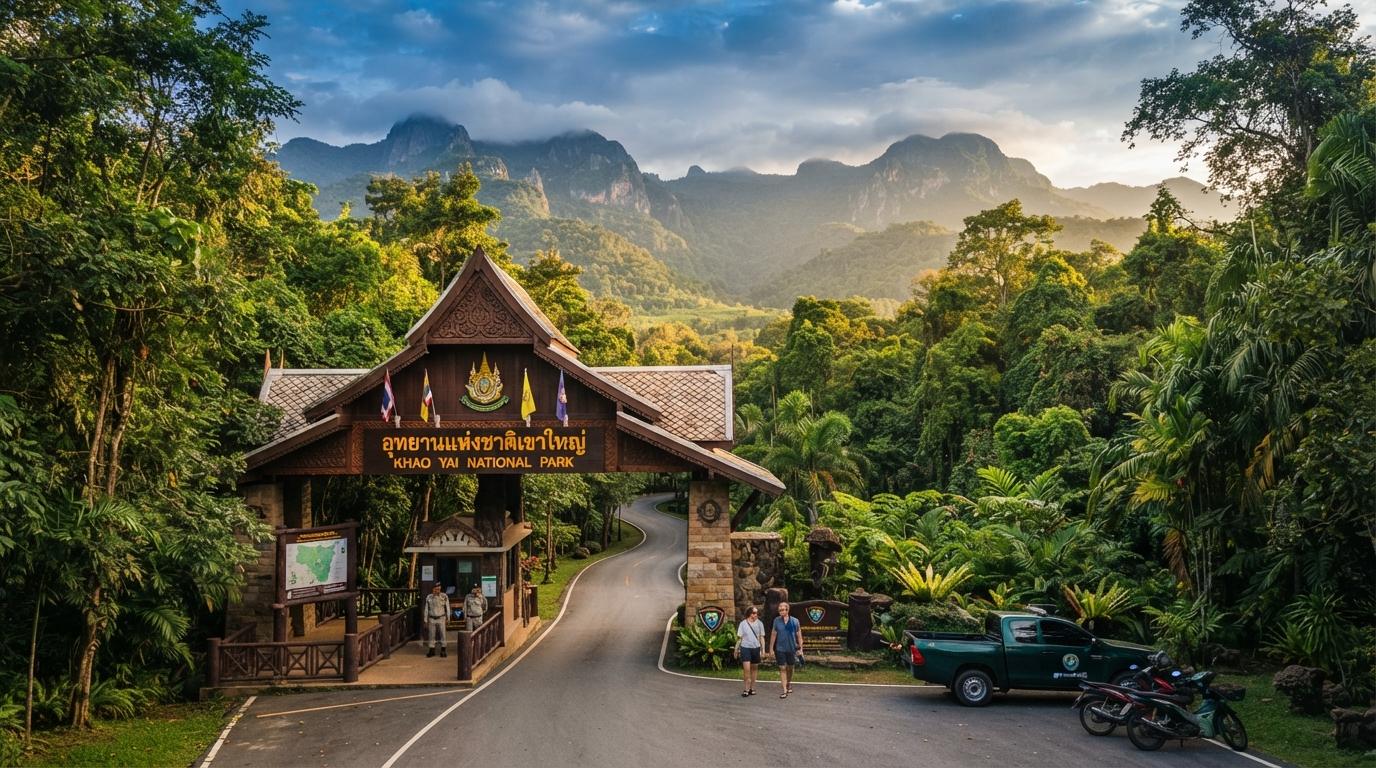
Thailand national park entrance fees are not the same at every park. The Department of National Parks, Wildlife and Plant Conservation sets different fee categories, and the price depends on the park and whether you are a Thai or foreign visitor. Some parks also charge separate fees for vehicles, accident insurance, camping, accommodation, boat trips and activities.
Explore Thailand Tours

What are Thailand national park entrance fees?
Thailand has 156 national parks and 91 forest parks. Entrance fees, opening periods and temporary closures can vary by park, so visitors should check the latest information before travelling.
Thailand national park entrance fees explained
Thailand national park entrance fees follow a general structure with 4 categories. The exact rate at each park may differ, so treat these figures as a guide rather than a guaranteed price.
- •Category 1: Thai child 10 baht, Thai adult 20 baht, foreign child 50 baht, foreign adult 100 baht.
- •Category 2: Thai child 20 baht, Thai adult 40 baht, foreign child 100 baht, foreign adult 200 baht.
- •Category 3: Thai child 30 baht, Thai adult 60 baht, foreign child 150 baht, foreign adult 300 baht.
- •Category 4: Thai child 50 baht, Thai adult 100 baht, foreign child 250 baht, foreign adult 500 baht.
Most parks use these age groups: child 3 to 14 years old, adult 15 years old or above. Children under 3 years old may enter free. Some Thai senior citizens over 60 years old may enter free, but foreign senior visitors may not always receive the same exemption.
General fee ranges and age rules
Typical fee ranges across parks are: Thai child 10 to 50 baht, Thai adult 20 to 100 baht, foreign child 50 to 250 baht, foreign adult 100 to 500 baht. These are general ranges, and the exact price must be checked with the individual national park before travel.
Khao Yai National Park, for example, states that children are under 14 years old, adults are 14 to 60 years old, and elderly visitors are over 60 years old. Age definitions can differ between parks, so always confirm the local rule.
Vehicle entrance fees at national parks
Visitors normally pay a separate fee for vehicles. The fee is charged per vehicle, not per person. Common vehicle fees are: motorcycle 20 baht, 4-wheel vehicle 30 baht, 6-wheel vehicle 100 baht, vehicle with more than 6 wheels and up to 10 wheels 200 baht, helicopter 2,500 baht.
The vehicle charge can vary according to the park's current rules. Large vehicles, tour buses, trailers and recreational vehicles may have special restrictions.
Khao Yai National Park fee example
Khao Yai currently lists these entrance fees: Thai child 20 baht, Thai adult 40 baht, foreign child 100 baht, foreign adult at the standard rate 200 baht, foreign adult at the Pak Chong or Noen Hom entrance rate 400 baht.
Vehicle charges at Khao Yai are 20 baht for a motorcycle, 30 baht for a 4-wheel vehicle, 100 baht for a 6-wheel vehicle, and 200 baht for a vehicle with more than 6 wheels but no more than 10 wheels. 1 ticket can be used to enter and exit the park on the same day. Vehicles with more than 6 wheels, double-decker vehicles, or vehicles taller than 3.50 metres may not be allowed to enter. Towed recreational vehicles are also prohibited.
Accident insurance and separate charges
Some national park information published by the Thai Government lists an optional accident insurance fee: Thai visitors 10 baht, foreign visitors 40 baht. This insurance charge may not be included in the entrance fee. Visitors should ask the park officer whether insurance is available and what it covers.
Entrance fees, insurance, parking, boat trips, camping, accommodation, guides and activities are usually separate charges. A visitor should not assume that paying the entrance fee includes every service inside the park.
How to pay national park fees
Many national parks accept payment at the entrance gate. Some parks also support advance booking or electronic tickets through the QueQ application. Khao Yai National Park says visitors can pay at the official entrance gate, at the visitor centre, or through the DNP e-ticket system using QueQ.
![Vehicles entering Khao Yai National Park through the official entrance gate]
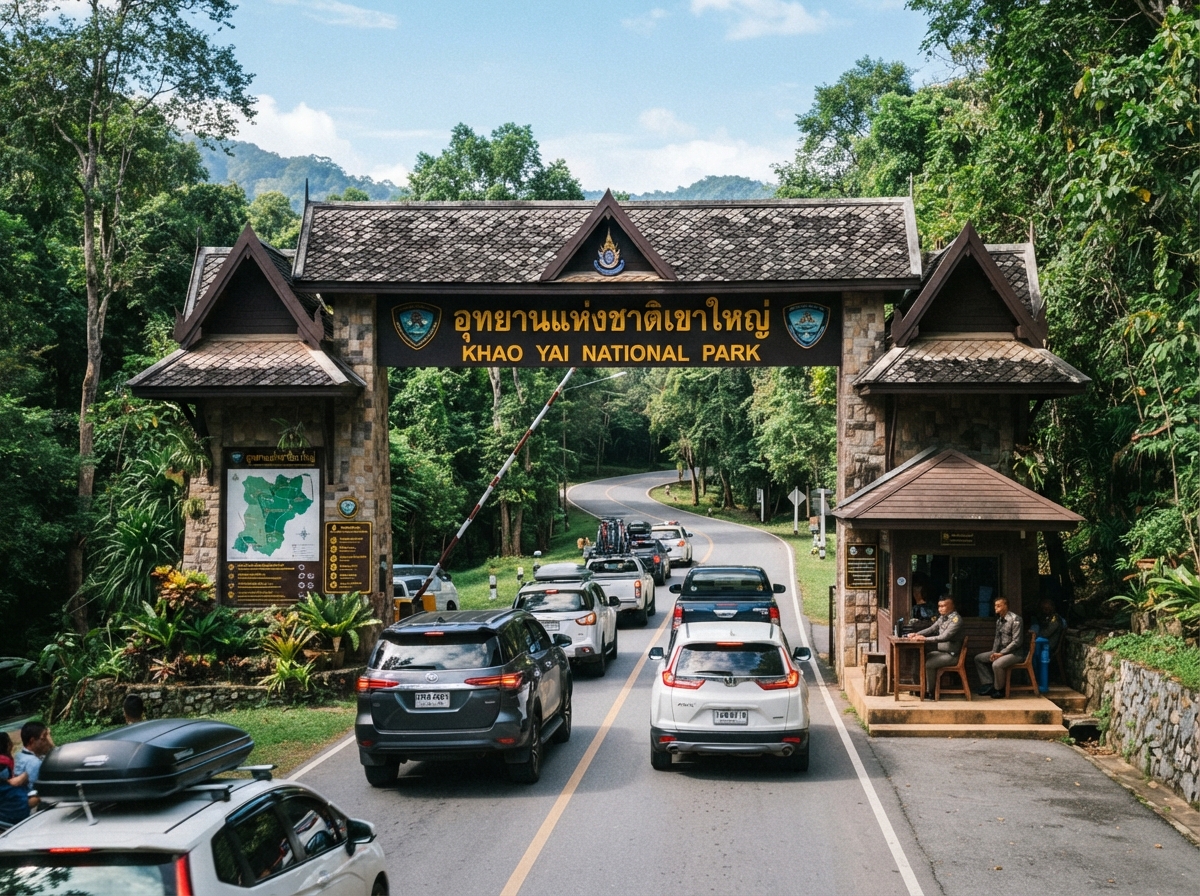
Visitors should keep their ticket until they leave the park. Payment methods may differ between parks, so carrying Thai baht is recommended, especially when visiting remote areas.
Seasonal opening and closure system
Thailand does not have a single opening season for every national park. Each park, trail, island, waterfall, cave, viewpoint or marine area may have its own operating period. The Department of National Parks publishes seasonal closure information because of heavy rain and dangerous weather, flash floods and landslides, rough seas and strong waves, wildlife breeding and ecological recovery, forest and vegetation protection, trail maintenance and visitor safety.
![A multi-tier waterfall in a Thai national park surrounded by green forest]
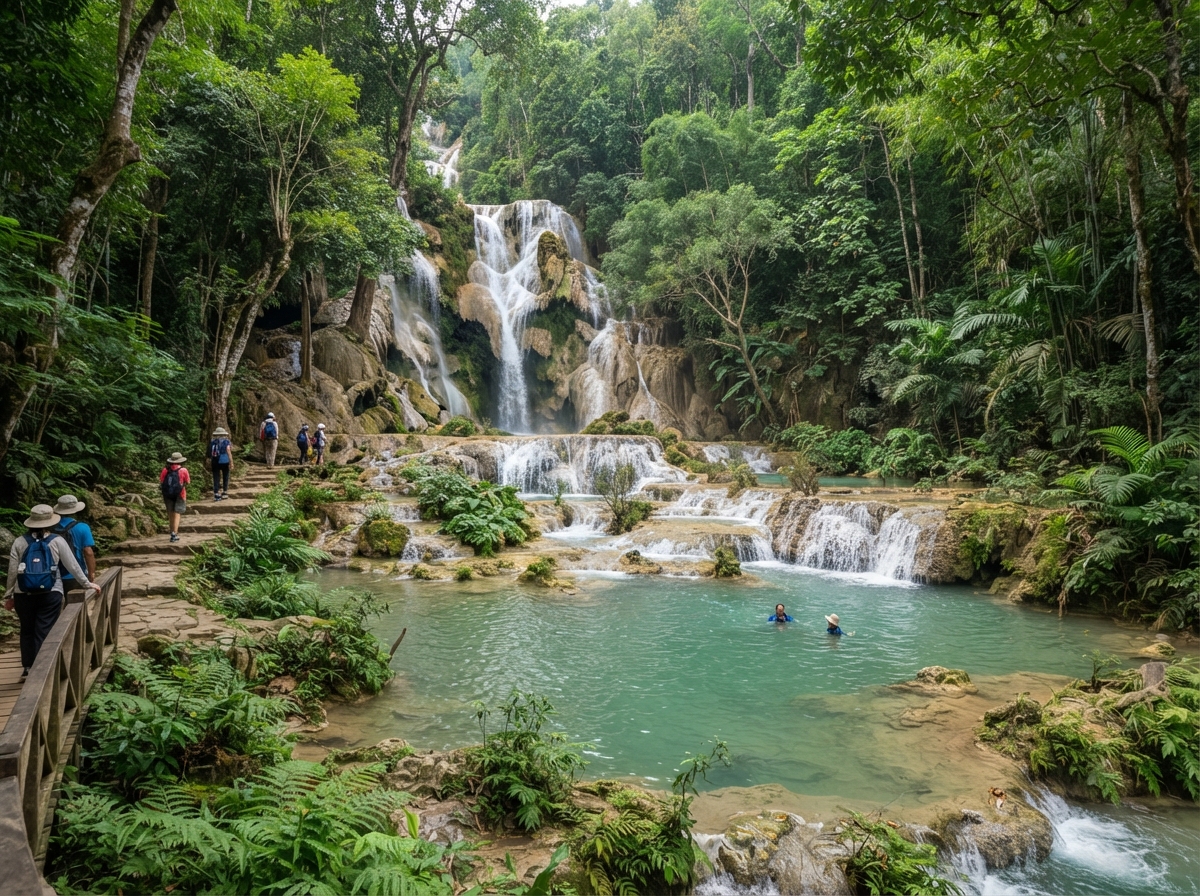
Closure dates vary according to the location and local weather conditions. A park may be officially open while a specific attraction inside the park is closed. For example, the main park may be open but a hiking trail may be closed, a waterfall may be closed because of high water, a viewpoint may be temporarily unavailable, an island or beach may be closed during the monsoon period, overnight camping may be suspended, or boat services may stop because of bad weather.
For this reason, travellers should check the status of the exact attraction, not only the name of the national park.
Main seasonal pattern by region
The following is a general travel-planning guide. It is not a replacement for an official announcement.
Northern Thailand: Mountain parks in Northern Thailand can have seasonal trail closures because of heavy rain, wildfire and smoke, dangerous mountain conditions, forest recovery, or very cold weather at high elevations. The cooler season, generally from November to February, is often popular for mountain travel. However, each park may have different camping, hiking and summit rules.
Northeastern Thailand: Parks in the Northeast often contain sandstone cliffs, waterfalls, forests and high plateaus. Some waterfalls and trails are most attractive during or shortly after the rainy season, but heavy rain can also make routes unsafe. Visitors should check waterfall conditions, cliff and viewpoint access, camping availability, road conditions and local closure announcements.
Central and Eastern Thailand: These parks may include waterfalls, forests, coastal areas, mangroves and hills. They are often accessible from Bangkok, but short travel distance does not mean that every attraction is open every day. Visitors should check the park's daily opening hours and any temporary closure of waterfalls or trails.
Southern Thailand: Southern parks include marine parks, islands, beaches, limestone mountains and rainforests. Marine attractions are especially affected by monsoon winds, high waves, storms, poor visibility and boat safety restrictions. An island or marine park may close during a seasonal period even when mainland attractions remain open.
Phu Kradueng seasonal hiking example
Phu Kradueng National Park is a good example of a park with a clearly defined hiking trail season. For the 2026 to 2027 season, the park is scheduled to reopen its hiking trail for hiking and overnight stays from 1 October 2026 until 31 May 2027.
![Hikers on the mountain trail at Phu Kradueng National Park during the open season]
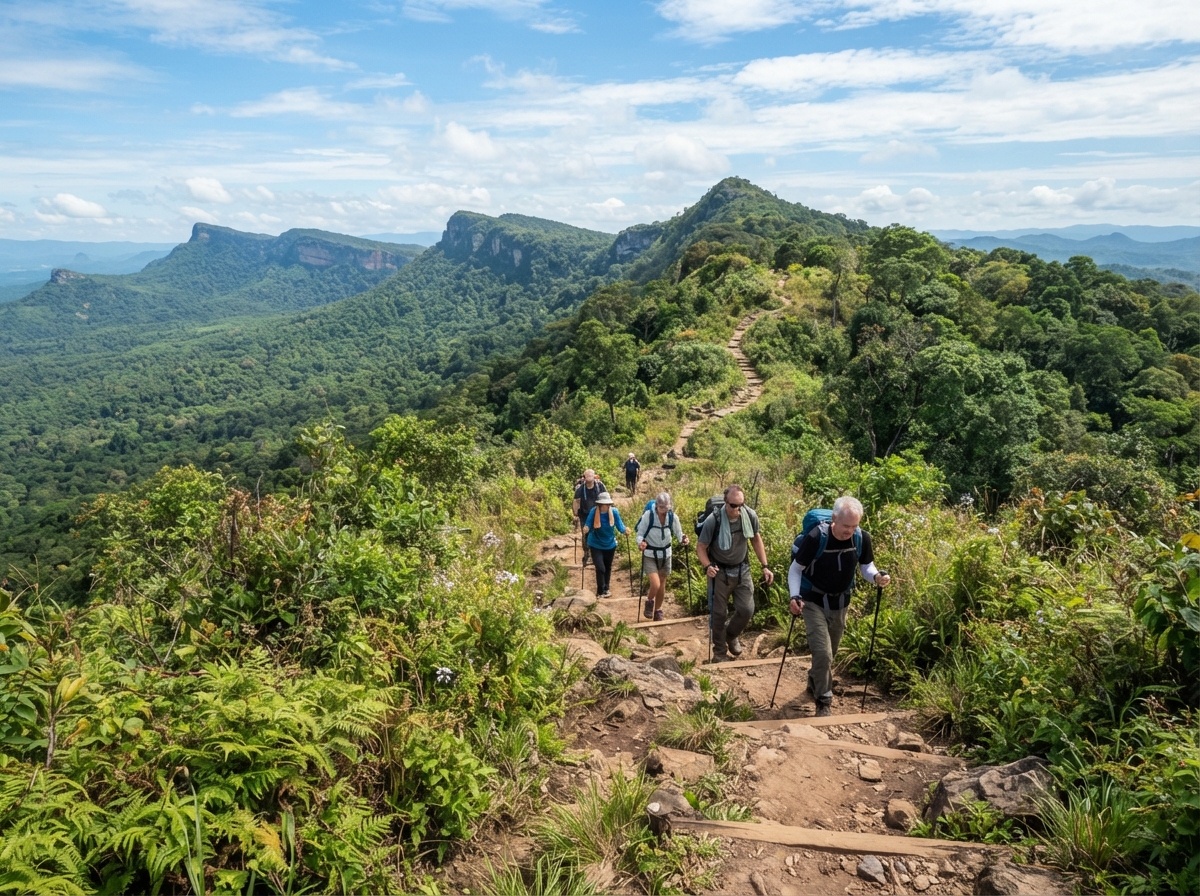
This type of park may also control the time visitors can start climbing, the time visitors can descend, daily visitor numbers, advance reservations, camping or accommodation, and access to specific summit areas. A blog post should always use the current season's official announcement because dates may change.
How to check the latest status
Before visiting, travellers should follow these steps.
- •Search for the official page of the national park.
- •Check the Department of National Parks portal.
- •Check the official Facebook page of the park or National Park Interpretation page.
- •Confirm whether the park, trail, waterfall, island or campsite is open.
- •Check the entrance fee and vehicle fee.
- •Ask about reservation requirements.
- •Confirm weather and transportation conditions.
- •Contact the park directly if the information is unclear.
The official Department of National Parks contact numbers published in the 2026 seasonal closure notice are: +66 (0) 2562 0760 to 3, and +66 (0) 2561 0777, extensions 1743 and 1744. The same notice also directs visitors to the DNP national park portal and the National Park Interpretation Facebook page.
For more help planning your Thailand trip, you can read our Bangkok travel planning tips or learn about common Thailand travel mistakes first-timers make.
Important advice for foreign visitors
Foreign visitors should prepare for the following before entering a park.
- •Foreign entrance fees are often higher than Thai entrance fees.
- •A passport or identification document may be useful at the ticket counter.
- •The entrance fee may not include a vehicle, boat, camping or accommodation charge.
- •Some parks accept only cash at remote gates.
- •The same park may have different fees at different zones or entrances.
- •A national park may be open while a specific attraction is closed.
- •Weather can change quickly in mountains and marine areas.
- •Visitors should not enter closed trails or restricted areas, and should avoid swimming when officers prohibit it.
- •Visitors should take all rubbish out of the park and never feed wild animals.
- •Visitors should follow officer instructions during storms, floods and wildlife encounters.
Want help planning this trip? Browse AsiaBuddy's Thailand tour packages.
Frequently Asked Questions
Do all Thailand national parks charge the same entrance fee?
No, Thailand national park entrance fees vary by park and visitor status. Some parks have special rates for important attractions or particular entrances.
Are children under 3 years old charged at national parks?
Children under 3 years old may enter free at many parks, but age definitions can differ between parks. Always confirm the local rule before visiting.
Do vehicle fees count as part of the entrance fee?
No, vehicle fees are charged separately per vehicle, not per person. The entrance fee does not include vehicle, boat, camping or accommodation charges.
Can I visit a national park during the rainy season?
Some parks remain open during the rainy season, but specific trails, waterfalls or islands may be closed. Check the status of the exact attraction you plan to visit.
How can I check if a national park is open today?
Check the Department of National Parks portal, the official Facebook page of the park, or contact the park directly using the published phone numbers.
More from Thailand Travel

Thailand Year-End Flights 2026: What TAT Support Means
Thailand is using emergency funds to support year-end flights. See what the TAT plan means for fares, festival trips and...

Lamphun Lantern Festival 2026 Dates and Visit Guide
The Lamphun lantern festival 2026 runs from October 1 to November 30. Get the key dates, parade day, temple etiquette an...

Siam Amazing Park Reopening in Bangkok on November 19
Siam Amazing Park is reopening in Bangkok on November 19, 2026. See which areas open, which rides stay closed, and what...
Share this post
AsiaBuddy Team
Local experts helping travelers explore Southeast Asia with confidence — trusted guides, curated tours, and real destination knowledge.