Thailand Airport Baggage Rules From 16 October 2026
Thailand’s airport baggage rules now let staff open checked bags on reasonable grounds. See what to pack, from power banks to liquids and duty-free items.
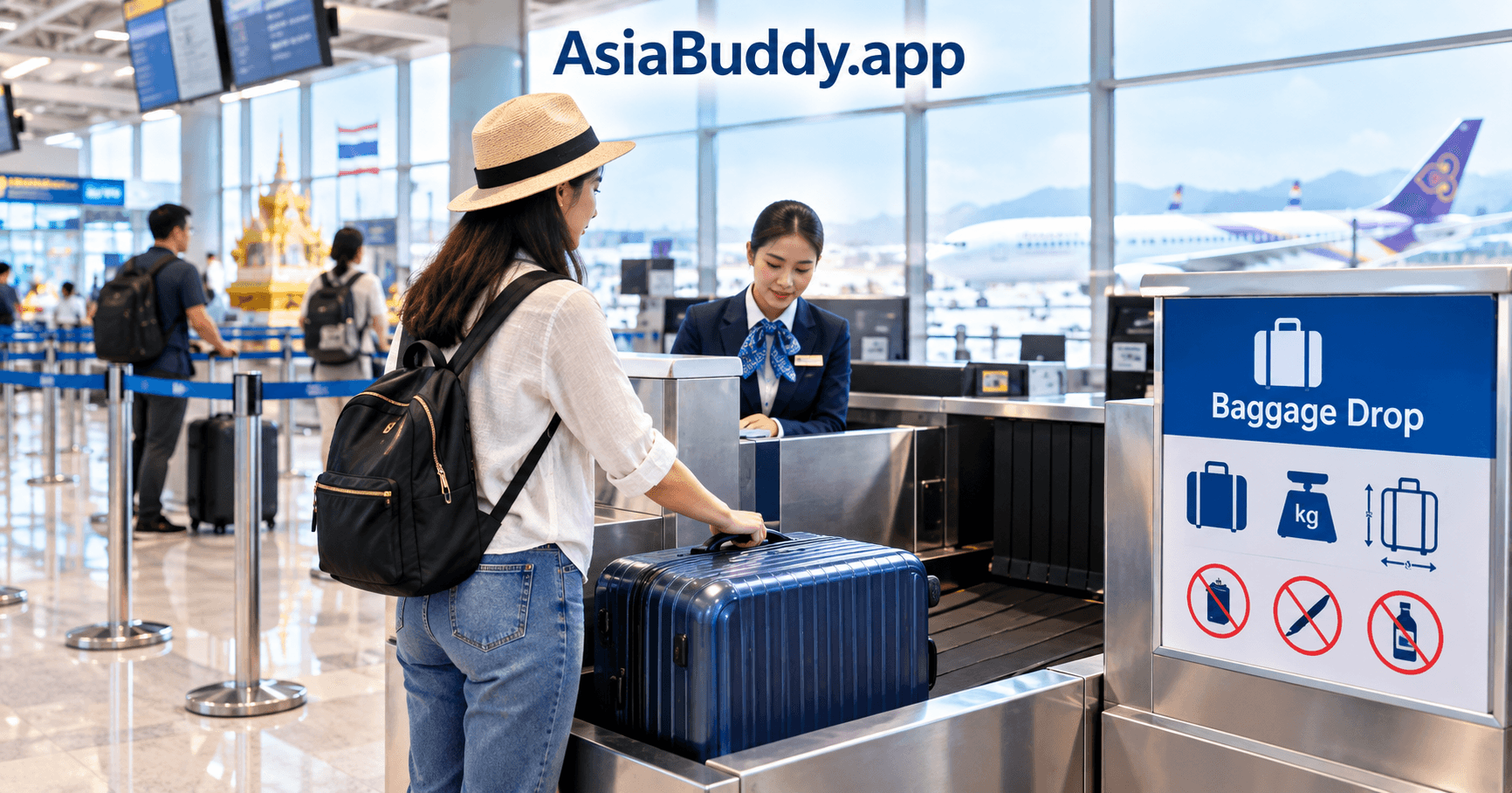
Thailand's airport baggage rules changed on 16 October 2026, and the update matters to anyone flying from a Thai airport with a checked suitcase or electronics. Security staff may now open a checked bag without the passenger present when screening gives reasonable grounds to suspect a prohibited item, a dangerous good or an aviation-safety risk.
Explore Thailand Tours

This guide covers when a checked bag can be opened, where to pack power banks, and how the cabin liquid limit works, including the exceptions for medicine, baby milk and duty-free goods.
Thailand Airport Baggage Rules Explained
Thailand's airport baggage rules let staff open a checked bag without you present from 16 October 2026, but only when screening gives a specific reason for suspicion. Keep power banks in your cabin bag, and keep every cabin liquid container at 100 ml or less.
The rule does not allow random searches of every suitcase, because staff need a specific reason to inspect a bag further.
What Changed for Checked Baggage
The change comes from a Civil Aviation Authority of Thailand (CAAT) notification on checked-baggage inspection. It was published in February 2026 and took effect on 16 October 2026.
It applies to checked baggage carried in an aircraft hold. The stated aim is to improve aviation security while reducing delays caused by waiting for a passenger to return to a flagged bag.
When Checked Bags Can Be Opened
![Traveler placing a checked suitcase on an airport baggage belt in Thailand]
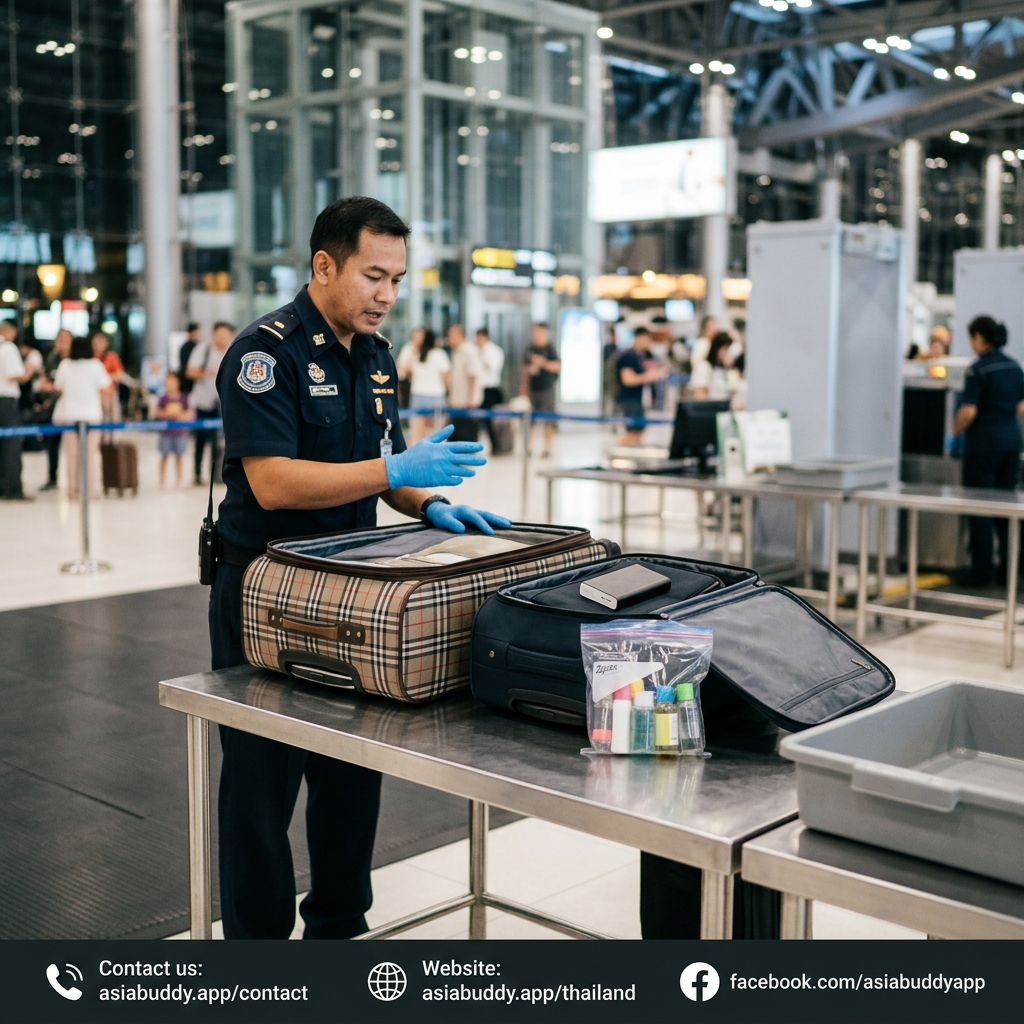
A checked bag may be opened after screening shows a suspicious item. Possible examples include explosives, firearms, ammunition, dangerous goods or another article prohibited on an aircraft.
Airport staff are not permitted to open bags as a routine or random action. There must be a security reason for further inspection.
If an inspection is necessary, it must take place in a designated inspection area under controlled conditions. The inspection is video-recorded, and records are kept so authorities can later identify who conducted it and what was found.
After opening a checked bag, staff must place a Notice of Baggage Inspection inside it. If you find this notice after arrival, your bag was opened as part of the official security process.
If you believe an inspection caused damage or another problem, contact your airline or file a complaint through the CAAT complaint system.
Power Banks and Lithium Batteries
![Power bank and spare lithium batteries packed inside a cabin bag for flying]
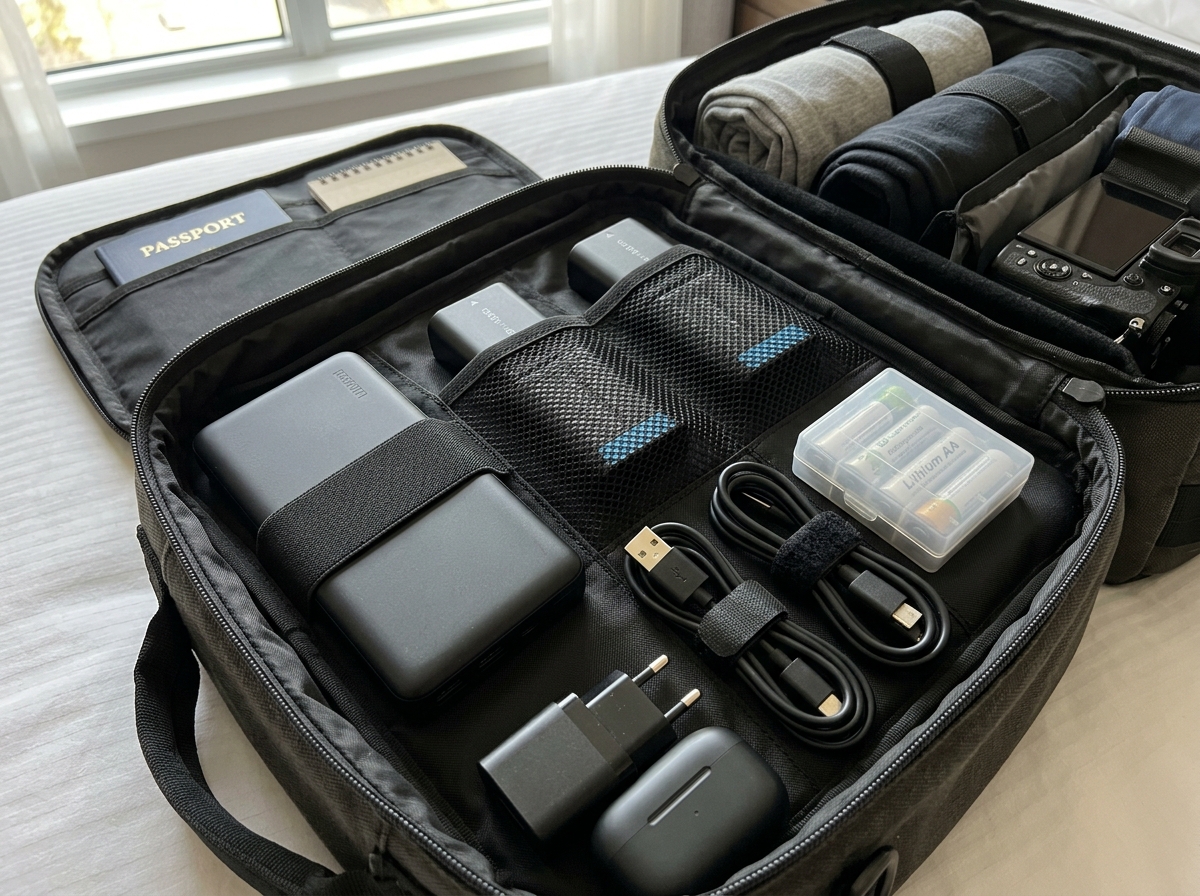
Power banks and spare lithium batteries should stay in cabin baggage, not checked luggage. Lithium batteries can create a fire risk, and keeping them in the cabin lets crew respond more quickly if an incident occurs.
Airport guidance specifically warns passengers not to place power banks in checked baggage. Airlines may also apply their own limits on battery size, quantity and carriage, so check your airline's baggage page before departure.
For watt-hour limits and carry-on details, read our guide to power bank rules on planes.
Items to Keep Out of Checked Bags
Do not pack firearms, explosives, ammunition, corrosive chemicals or other dangerous goods in checked baggage. These items can trigger a security inspection and may be prohibited from the flight entirely.
Valuables and important documents are also safer in cabin baggage. Keeping passports, money, medication, electronics and essential travel documents with you reduces problems if a bag is inspected, delayed or mishandled.
A TSA-recognized lock may reduce the chance of damage because it can be opened with an authorized master key. However, no lock can stop an inspection when security staff need to open a bag, so pack correctly and avoid restricted items in checked luggage.
If you are flying through a Bangkok airport, our guide to Bangkok airport customs rules covers the fines to avoid.
Cabin-Baggage Liquid Rules
![Small travel toiletries inside a clear resealable plastic bag at an airport]
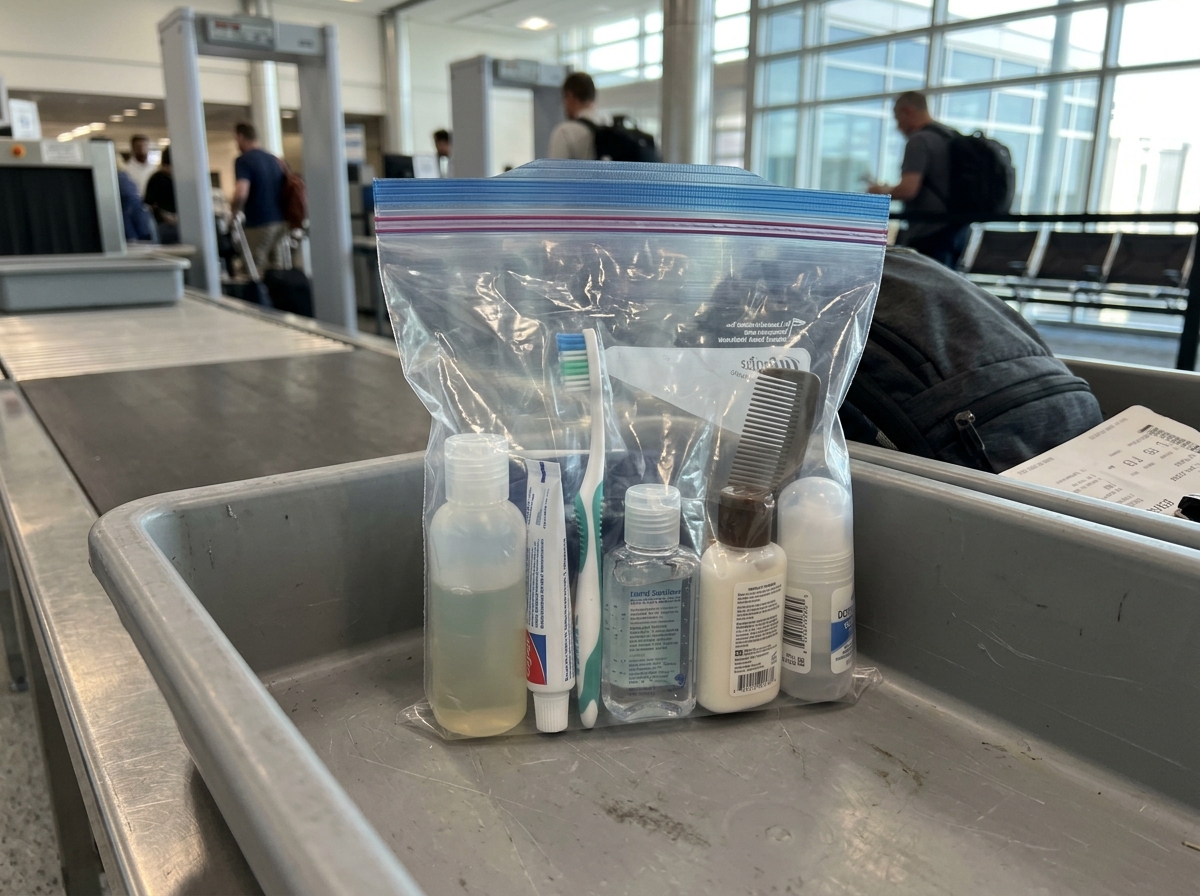
For cabin baggage, each liquid, aerosol or gel container must be 100 ml or less. All containers must fit inside 1 transparent, re-sealable plastic bag, normally up to 1 litre in capacity. Airports of Thailand recommends a bag size of about 20 cm by 20 cm, and each passenger may carry 1 bag.
The limit is based on container size, not the amount remaining inside. A 150 ml bottle is not allowed in cabin baggage even if it holds only a small amount of liquid.
Liquids include more than drinks. Creams, lotions, perfumes, oils, sprays, foam products, lip gloss, mascara, gel cosmetics, sauces, soups, jams and foods with high liquid content are all covered by the rule.
Exceptions for Liquids
Some liquids may be carried in quantities above 100 ml when they are necessary for the journey.
- •Medicine: May be permitted with a prescription, medical certificate, medicine label or other supporting document.
- •Baby milk and infant food: May be permitted in a quantity appropriate for the journey.
- •Medical or special-diet food: May be allowed when necessary for the trip.
- •Duty-free liquids: May be carried if they remain sealed in a security tamper-evident bag and are accompanied by proof of purchase.
At the security checkpoint, separate your liquids bag, laptop and outer clothing when staff ask. Duty-free shopping also falls under customs limits, which our Thailand customs allowance guide covers.
Practical Packing Advice
Before flying from Thailand, keep power banks and spare lithium batteries in hand luggage. Put liquids over 100 ml into checked baggage unless they qualify for an approved medical, infant or duty-free exception.
Use containers clearly marked at 100 ml or less for cabin liquids, and keep duty-free liquids sealed with the receipt available.
Check your airline's own baggage rules because cabin-bag weight, dimensions, battery limits and restricted-item rules can differ by airline. Also check the latest information from your departure airport, airline and CAAT before travel, because aviation-security rules can change.
Need a private car with a driver? AsiaBuddy arranges car rental and airport transfers with no deposit.
Frequently Asked Questions
Can airport security open my checked bag in Thailand?
Yes, from 16 October 2026, staff may open checked baggage without the passenger present if screening gives reasonable grounds to suspect a prohibited item, dangerous good or aviation-safety risk. It is not a random search of all bags.
Where should I pack a power bank when flying from Thailand?
Keep power banks and spare lithium batteries in cabin baggage. Do not place them in checked luggage because lithium batteries can present a fire risk.
What is the liquid limit for cabin baggage in Thailand?
Each liquid, aerosol or gel container must be 100 ml or less. All containers must fit in 1 transparent, re-sealable plastic bag, normally up to 1 litre in capacity.
Can I carry duty-free liquids through security?
Duty-free liquids may be allowed if they stay sealed in a security tamper-evident bag and you have proof of purchase. Keep the receipt available in case staff ask for it.
What should I do if I find a baggage-inspection notice?
The notice means your checked bag was opened during the official security process. If you believe the inspection caused damage or another issue, contact your airline or use the CAAT complaint system.
More from Thailand Travel
Thailand Year-End Flights 2026: What TAT Support Means
Thailand is using emergency funds to support year-end flights. See what the TAT plan means for fares, festival trips and...
Lamphun Lantern Festival 2026 Dates and Visit Guide
The Lamphun lantern festival 2026 runs from October 1 to November 30. Get the key dates, parade day, temple etiquette an...

Siam Amazing Park Reopening in Bangkok on November 19
Siam Amazing Park is reopening in Bangkok on November 19, 2026. See which areas open, which rides stay closed, and what...
Share this post
AsiaBuddy Team
Local experts helping travelers explore Southeast Asia with confidence — trusted guides, curated tours, and real destination knowledge.