How to Order Non-Spicy Food in Thailand: Simple Tips
Learn how to order non-spicy food in Thailand with simple Thai phrases, mild dish ideas, and tips to avoid chili at restaurants and street food stalls.
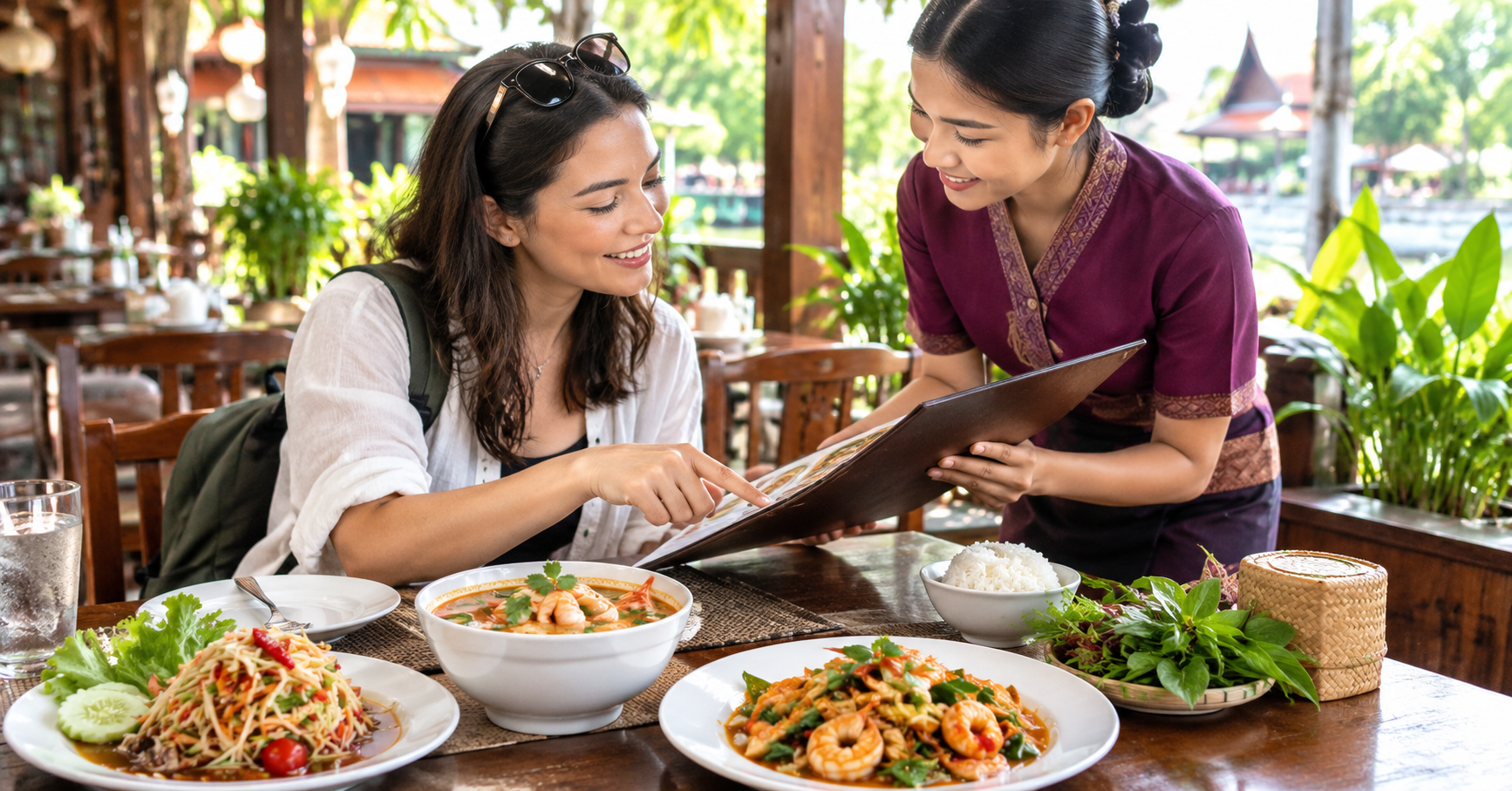
Thailand has many mild dishes, but chili can appear in soups, curries, sauces, and street food. If you cannot eat spicy food, it helps to know how to order non-spicy food in Thailand before you sit down at a restaurant or food stall.
Explore Thailand Tours


How to Order Non-Spicy Food in Thailand
![Traveler pointing at a menu to order a mild dish at a Thai stall]
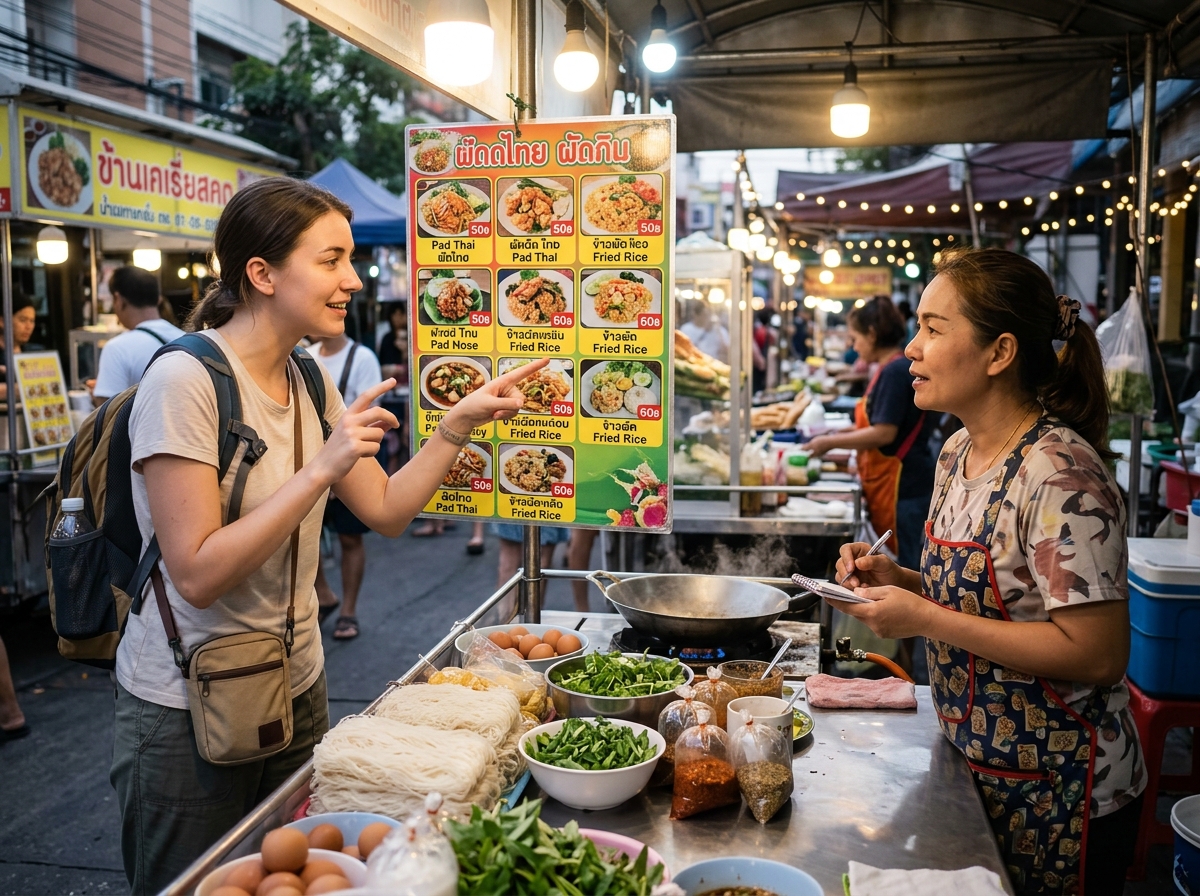
To order non-spicy food in Thailand, say mai phet for "not spicy" or mai sai prik for "no chili." Say the phrase before the cook starts preparing the dish, especially at a street food stall.
Mai phet is a useful phrase for travelers. It asks for a mild version of the dish. Mai sai prik is more direct because it asks the cook not to add chili at all.
If you want a little heat, say phet nit noi, which means "a little spicy." If you cannot eat any chili, use mai sai prik and point to the dish on the menu.
Why Thai Food Can Be Spicy
Thai food is not always spicy, but chili is common in many popular meals. Cooks often use fresh chili, dried chili flakes, chili paste, or chili sauce to add heat.
Some dishes use chili in the cooking process. Curry pastes, Tom Yum soup, papaya salad, and many stir-fry sauces may contain chili before the food reaches your table. This means that asking for a mild version is not always the same as asking for no chili at all.
Street food can also be spicy because vendors often season food quickly while cooking. If you wait until the dish is ready, it may be too late to remove the chili. Ask early, point to the ingredients, and repeat mai sai prik if chili is a serious problem for you.
Thai Phrases for Ordering Food
You do not need to speak Thai fluently to order food in Thailand. A few short phrases can make your request clear.
- •Mai phet: Not spicy.
- •Mai sai prik: No chili.
- •Phet nit noi: A little spicy.
- •Phet noi: Less spicy.
- •Mai ao prik pon: No chili flakes.
- •Mai ao nam jim: No dipping sauce.
- •Nam jim noi: A little dipping sauce.
Say the dish name, then add your request. For example, say Pad Thai mai phet for mild Pad Thai. If you want no chili at all, say Pad Thai mai sai prik.
Many staff in tourist areas understand simple English such as "no spicy" or "no chili." Still, using a Thai phrase makes your request easier to understand, especially at local restaurants and markets.
Ask Before the Food Is Cooked
Timing matters when you order non-spicy food in Thailand. At a restaurant, tell the server before you order. At a street food stall, speak before the vendor adds sauces or chili to the wok.
Many stalls cook food to order. This is good news because the cook can often leave out chili, chili flakes, or spicy sauce. Watch the cooking process if possible and politely remind the vendor if you see chili being added.
A simple way to communicate is to point at the dish and say mai sai prik. You can also show a translation app or write "no chili, please" on your phone. A friendly smile and a clear request usually work well.
Mild Thai Dishes to Try
Some Thai dishes are naturally mild or easy to customize. They are useful choices if you want to avoid strong heat. For more meal ideas, see these must-try Thai dishes before your trip.
Pad Thai
![Plate of Pad Thai with lime, peanuts, and bean sprouts on a table]
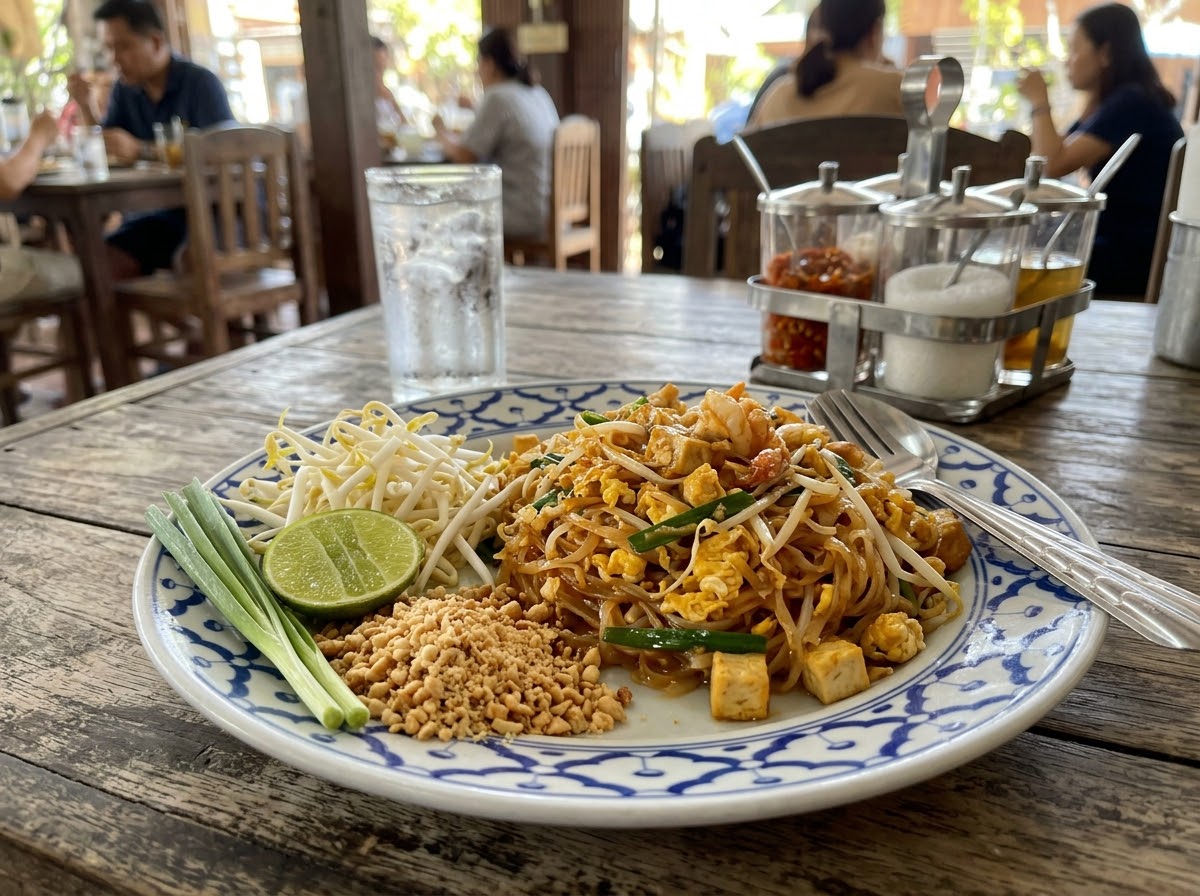
Pad Thai is a stir-fried noodle dish made with rice noodles, egg, tofu or shrimp, bean sprouts, and a sweet and sour sauce. Chili flakes are often served on the side, so you can add them only if you want them.
Ask for Pad Thai mai sai prik if you do not want chili in the dish. The cook can usually prepare it without fresh chili.
Khao Man Gai
Khao Man Gai is Thai-style chicken rice. It includes poached chicken, fragrant rice, clear broth, and a ginger-soy dipping sauce. The main dish is mild, but the dipping sauce can contain chili.
Ask for the sauce on the side or say mai ao nam jim if you do not want it. You can then taste a small amount before adding more.
Pad See Ew
Pad See Ew is a stir-fried noodle dish with wide rice noodles, soy sauce, egg, and vegetables. It is usually mild, but some cooks add chili flakes or chili sauce.
Order it with mai sai prik if you are sensitive to chili. This dish is a good option at many local restaurants and food courts.
Fried Rice
Thai fried rice, called khao pad, is another flexible choice. It can be made with chicken, pork, shrimp, or vegetables. Ask for khao pad mai sai prik to request no chili.
Fried rice is widely available and easy to adjust. It is also a useful choice if you are eating with a group and want a simple dish that most people can enjoy.
Be Careful With Soups and Curries
Soups and curries need extra care. Many Thai curries use curry paste made with chili, herbs, and spices. Tom Yum soup also commonly contains chili paste or fresh chili.
You can ask for mai phet or mai sai prik, but the cook may not be able to make the dish completely free of chili. The chili may already be part of the curry paste or soup base.
If you cannot eat any chili, choose a dish that is cooked fresh to order instead. Stir-fried noodles, fried rice, grilled chicken, and plain rice dishes are often easier to customize.
For papaya salad, ask for som tam mai sai prik. The vendor pounds the salad in a mortar, so it is important to request no chili before preparation begins.
Use Condiments Carefully
![Condiment caddy with chili flakes and sauces on a Thai restaurant table]
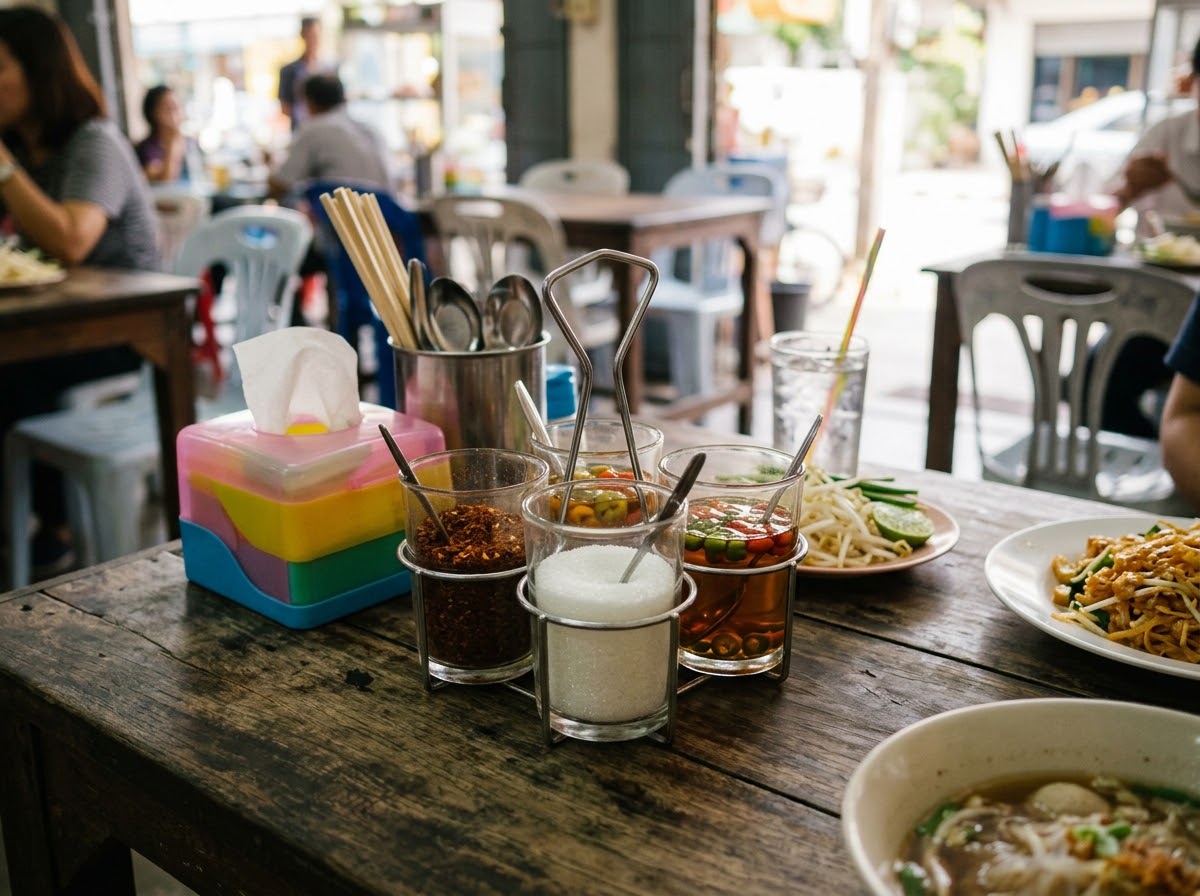
Thai restaurants often place a condiment caddy on the table. It may include sugar, fish sauce, vinegar with chili, dried chili flakes, and sometimes ground peanuts.
These condiments let diners adjust the flavor after the food is served. If you want mild food, avoid the chili flakes and chili vinegar. You can still use lime, sugar, fish sauce, or soy sauce to add flavor.
If you are not sure which container contains chili, ask the staff before using it. Do not assume that a clear liquid is mild, because some chili vinegar looks light but can be quite hot.
Tips for Street Food and Markets
![Street food vendor cooking noodles while a traveler points at ingredients]
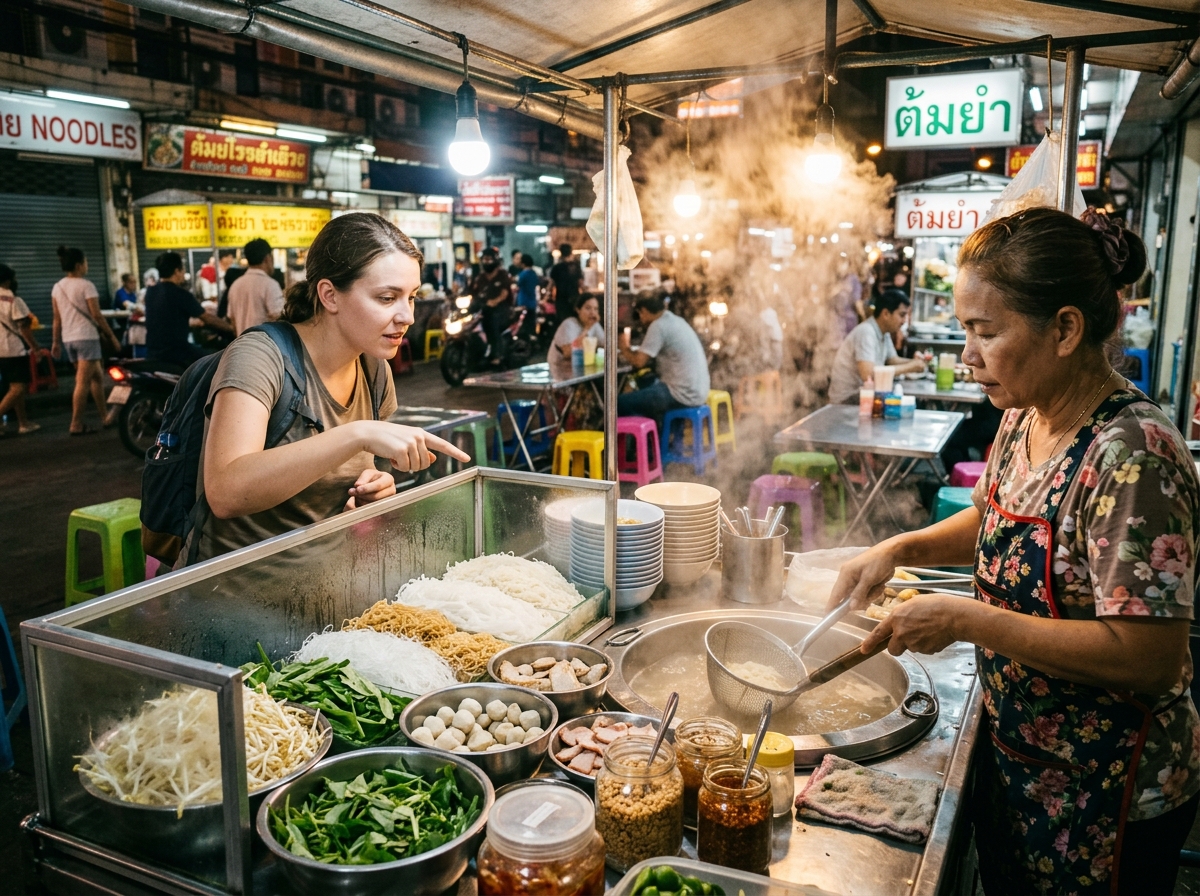
Street food is a big part of eating in Thailand. A few simple habits can help you order with confidence.
- •Choose a busy stall with a clear menu or visible ingredients.
- •Point at the dish you want before ordering.
- •Say mai sai prik early if you cannot eat chili.
- •Ask the vendor to add chili flakes separately if you want to control the heat.
- •Avoid pre-made soups and curries if chili is a serious issue.
- •Keep a translation app ready for local markets outside tourist areas.
- •Taste a small bite before adding any table condiments.
What To Do If the Food Is Too Spicy
If your food arrives too spicy, tell the staff politely. Say phet mak, which means "very spicy." They may bring plain rice, more noodles, coconut milk, or another mild item to help balance the meal.
Do not drink large amounts of water right away. Water can spread capsaicin, the compound that makes chili hot. Milk, yogurt, or a sweet drink may feel more comfortable for some people.
If you have a chili allergy or a medical reason to avoid chili, make your request very clear before ordering. Use mai sai prik and confirm that the cook understands. When in doubt, choose a simple dish that is prepared fresh in front of you.
Plan a Comfortable Food Trip
Learning how to order non-spicy food in Thailand makes travel easier and more enjoyable. Use mai phet for mild food, mai sai prik for no chili, and phet nit noi for a little heat.
If you are visiting the capital, these Bangkok travel planning tips can help you prepare for local food, transport, and sightseeing.
New visitors should also review common Thailand travel mistakes to avoid confusion with local customs, transport, and daily planning.
Have a question about your trip? Contact AsiaBuddy.
Frequently Asked Questions
Does mai phet mean no chili?
Not always. Mai phet means "not spicy," but some cooks may still add a small amount of chili. For no chili at all, say mai sai prik.
Can I ask for non-spicy Tom Yum?
You can ask, but Tom Yum often contains chili in its soup base or paste. Ask for Tom Yum mai phet and confirm with the staff. If you cannot eat any chili, choose a different dish.
What is the difference between mai phet and mai sai prik?
Mai phet asks for a non-spicy dish. Mai sai prik asks the cook not to add chili. Mai sai prik is the better choice if you are very sensitive to chili.
Are Pad Thai and Khao Man Gai spicy?
They are usually mild. Pad Thai often comes with chili flakes on the side, and Khao Man Gai may come with a spicy dipping sauce. Ask for no chili or no dipping sauce if needed.
Can street food vendors make food less spicy?
Many can, especially if the dish is cooked to order. Ask before cooking begins and say mai sai prik clearly. Pointing at the ingredients can also help.
More from Thailand Travel

Thailand Year-End Flights 2026: What TAT Support Means
Thailand is using emergency funds to support year-end flights. See what the TAT plan means for fares, festival trips and...

Lamphun Lantern Festival 2026 Dates and Visit Guide
The Lamphun lantern festival 2026 runs from October 1 to November 30. Get the key dates, parade day, temple etiquette an...

Siam Amazing Park Reopening in Bangkok on November 19
Siam Amazing Park is reopening in Bangkok on November 19, 2026. See which areas open, which rides stay closed, and what...
Share this post
AsiaBuddy Team
Local experts helping travelers explore Southeast Asia with confidence — trusted guides, curated tours, and real destination knowledge.