Yaowarat Bangkok History: From Sampheng to Chinatown
Yaowarat Bangkok history began in 1782, when Chinese traders moved from the old royal area to Sampheng and slowly built the Chinatown travelers know today.
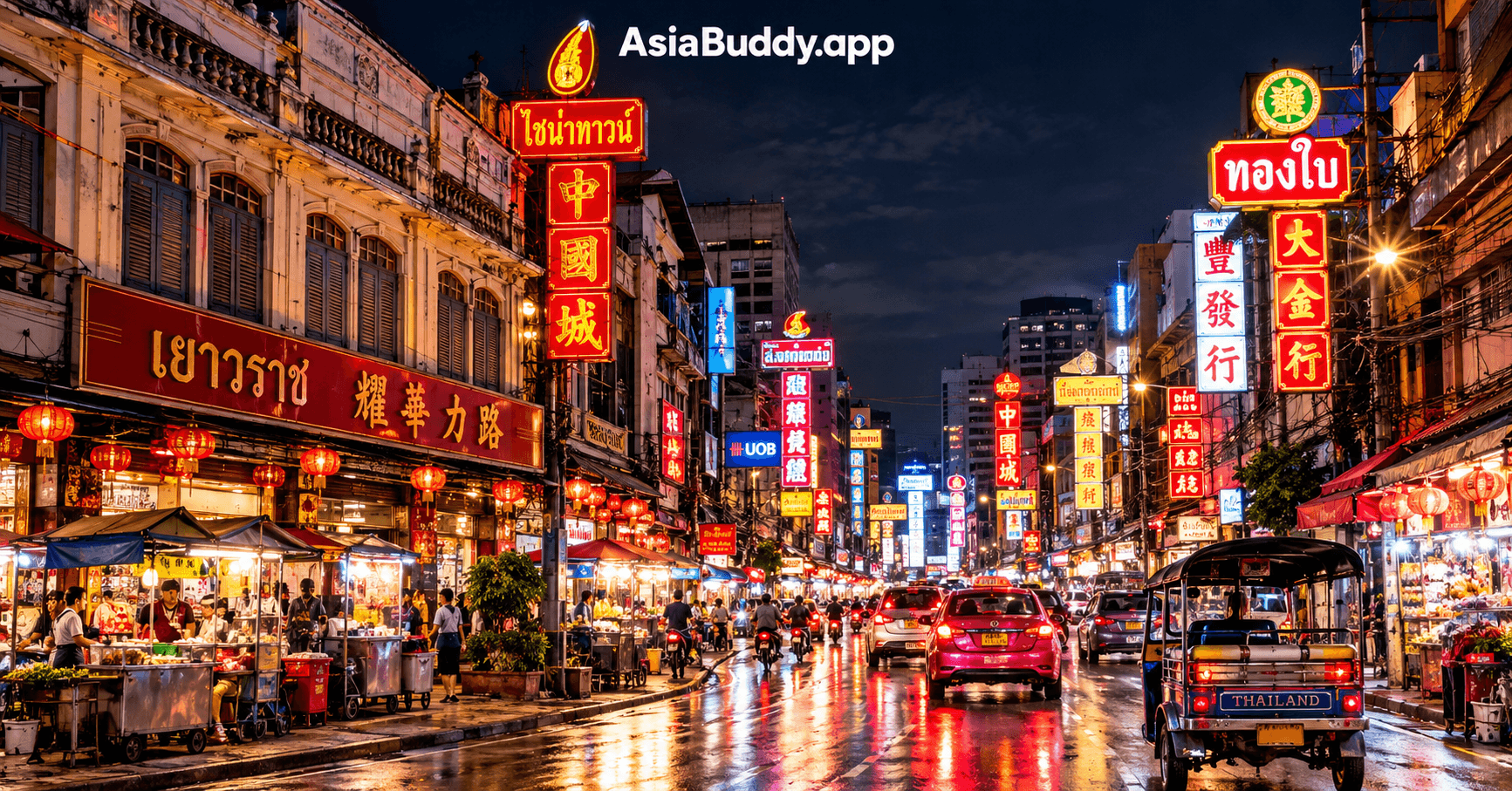
Yaowarat is often seen as Bangkok's great street food street, but its story started long before food stalls, neon signs, and evening crowds. Yaowarat Bangkok history began in 1782, when Chinese traders were moved from the site of the new royal palace to Sampheng and gradually built the Chinatown that travelers know today.
Explore Thailand Tours

How Yaowarat Bangkok history began
![Yaowarat Bangkok Chinatown street at night with illuminated signs]
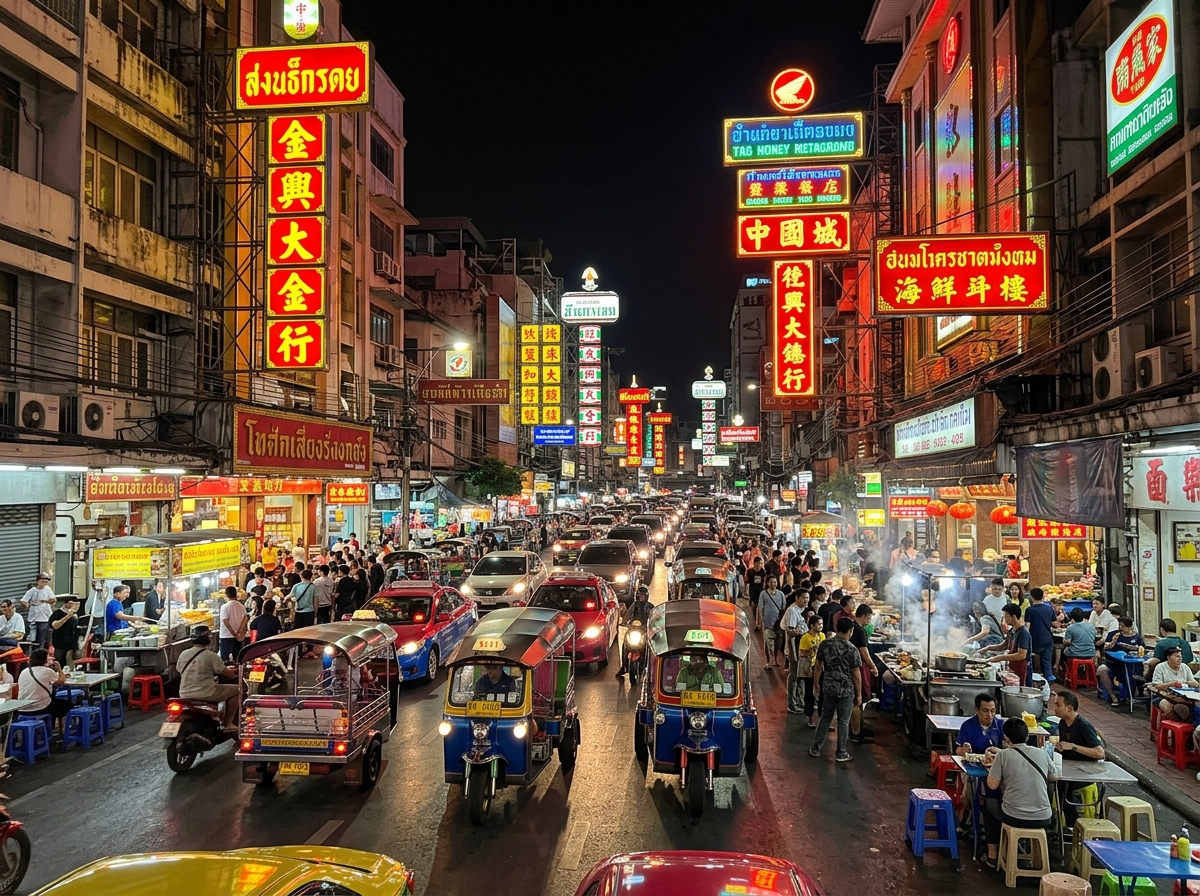
Quick answer: Yaowarat Bangkok history began in 1782, when Chinese traders moved from the old royal area to Sampheng. The neighborhood grew through river trade, family businesses, and community life before Yaowarat Road turned it into a major commercial street.
Yaowarat did not begin as a tourist district or a planned street food destination. It began as a place where displaced traders rebuilt their livelihoods, opened shops, and formed a community.
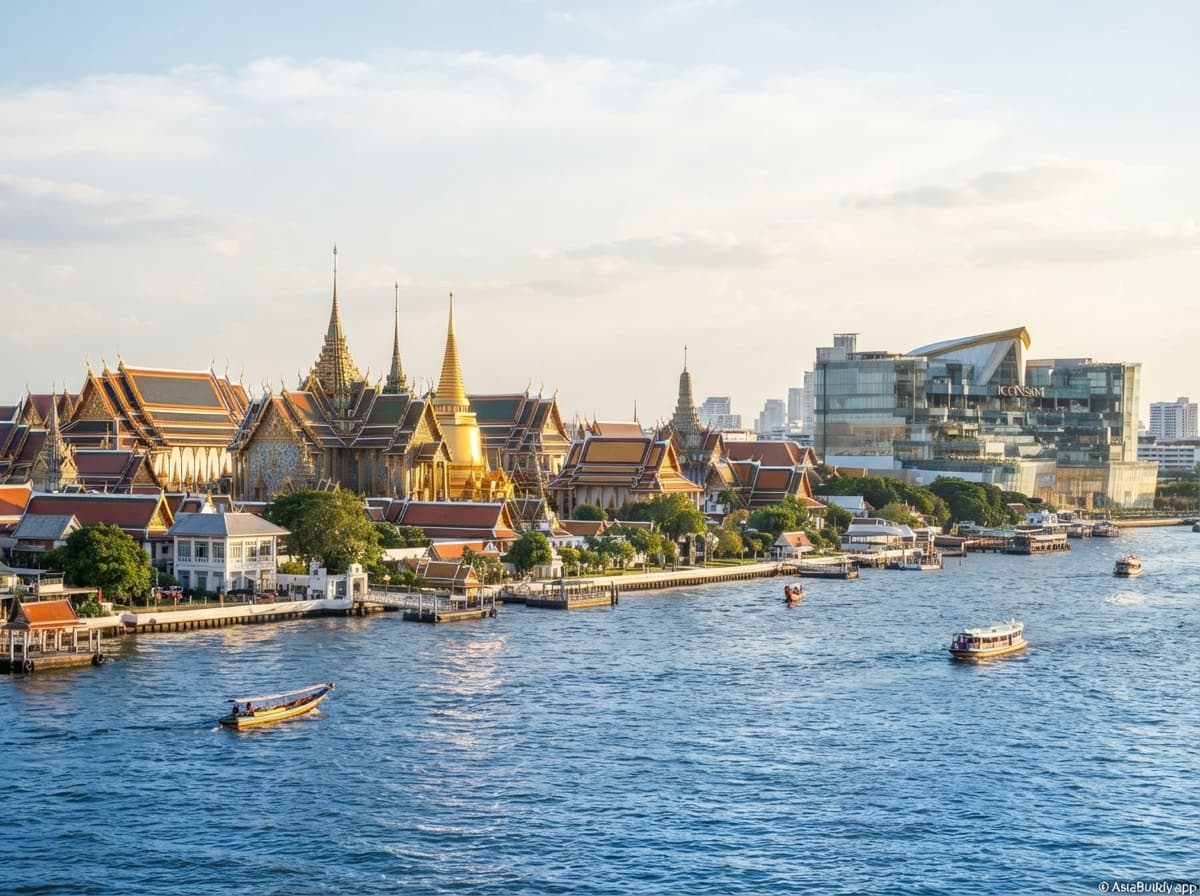
In 1782, King Rama I moved the capital from Thonburi to Rattanakosin, on the east bank of the Chao Phraya River. This area is the Bangkok of today. The location of the present Grand Palace and Wat Phra Kaew already had a Chinese trading community, so those residents were asked to move farther downstream.
They settled around Sampheng, an area outside the old city walls that was then sparsely populated. Over time, Sampheng became the heart of Bangkok Chinatown. Yaowarat grew from that community, rather than being created for visitors.
From the Grand Palace site to Sampheng
The move in 1782 was not a small relocation. The Chinese community that had lived near the future Grand Palace had to leave the area so the new royal center could be established.
Sampheng became their new base. At the time, it was outside the main settled area of Rattanakosin, but its position near the river made it practical for trade. Traders could receive goods, store them, sell them, and build businesses around the river route.
This is an important point for understanding Yaowarat. The district was not invented as an attraction for tourists. It developed because people needed a place to work, trade, live, and support one another.
The Chao Phraya River that built early Bangkok
![Boats on the Chao Phraya River near Bangkok's historic trading area]
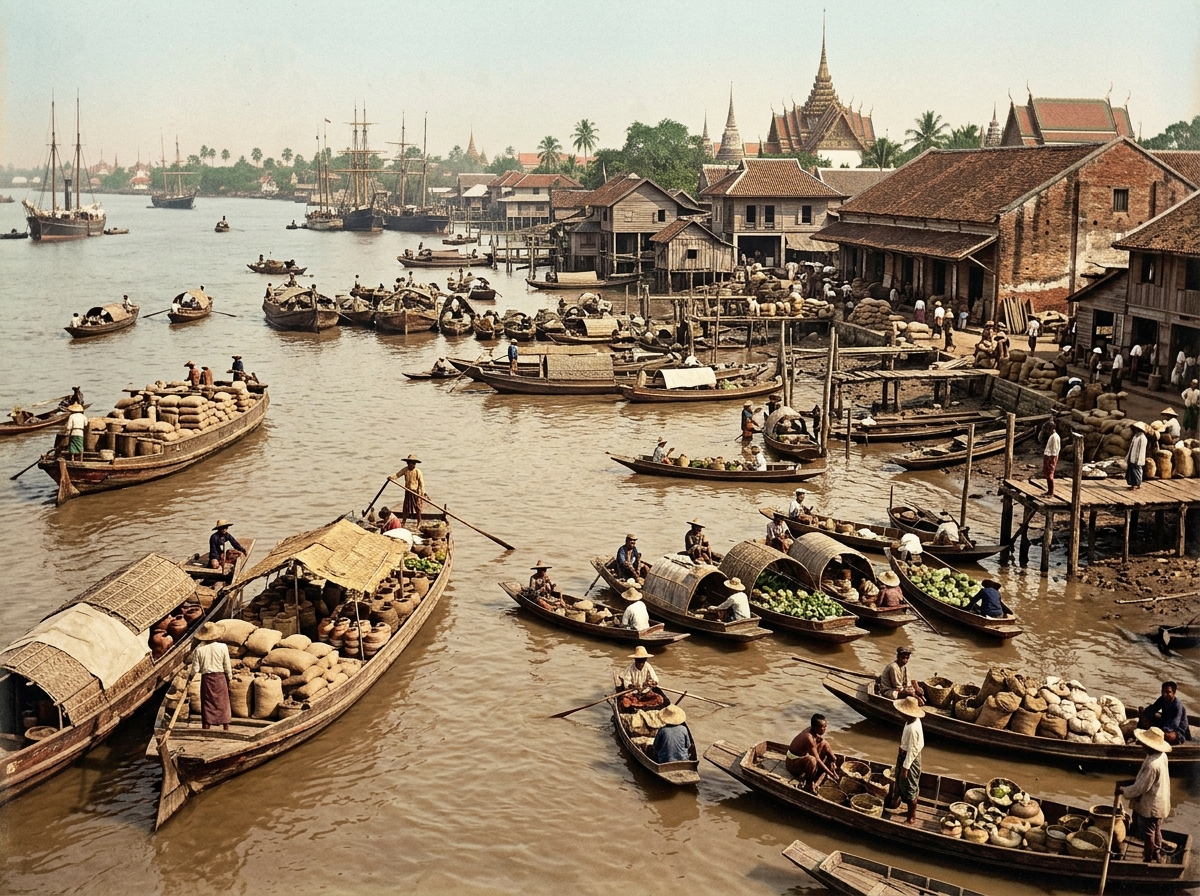
In early Bangkok, the Chao Phraya River worked much like a main road does today. Boats brought goods into the city, unloaded them at riverside points, and supplied warehouses and wholesale traders.
Merchants went where goods arrived. Workers went where jobs were available. As more people gathered, they also needed food, lodging, daily goods, and services. Sampheng gradually changed from a settlement into a busy commercial and social district.
That river-based economy explains why Chinatown became so dense. Shops, warehouses, homes, temples, and family businesses grew close together because the river connected them to trade.
Why community mattered more than shops
For the Chinese residents who settled in the area, Chinatown was more than a collection of food shops and trading houses. Temples, clan associations, merchant groups, and mutual-support networks developed alongside commerce.
These networks helped newcomers find housing, work, goods, and assistance during illness or hardship. They also supported family businesses, religious life, and community festivals.
That social foundation helped the district survive through generations. Yaowarat remained strong not only because it had shops, but because it had people, institutions, and shared traditions that kept the community connected.
From river trade to Bangkok roads
As Bangkok expanded, transport gradually shifted from the river to roads. This change reshaped Chinatown and gave Yaowarat its modern form.
Charoen Krung Road
Under King Rama IV, also known as King Mongkut, Charoen Krung Road was built. It is commonly described as the country's earliest modern road. Construction began in 1862, and the road officially opened on March 16, 1864.
Charoen Krung marked a shift in how Bangkok moved and developed. Roads allowed carts, vehicles, and later motor traffic to complement river transport. For Chinatown, this meant new connections beyond the riverbank.
Yaowarat Road and the Dragon Road
![The curved route of Yaowarat Road lined with shophouses and gold shops]
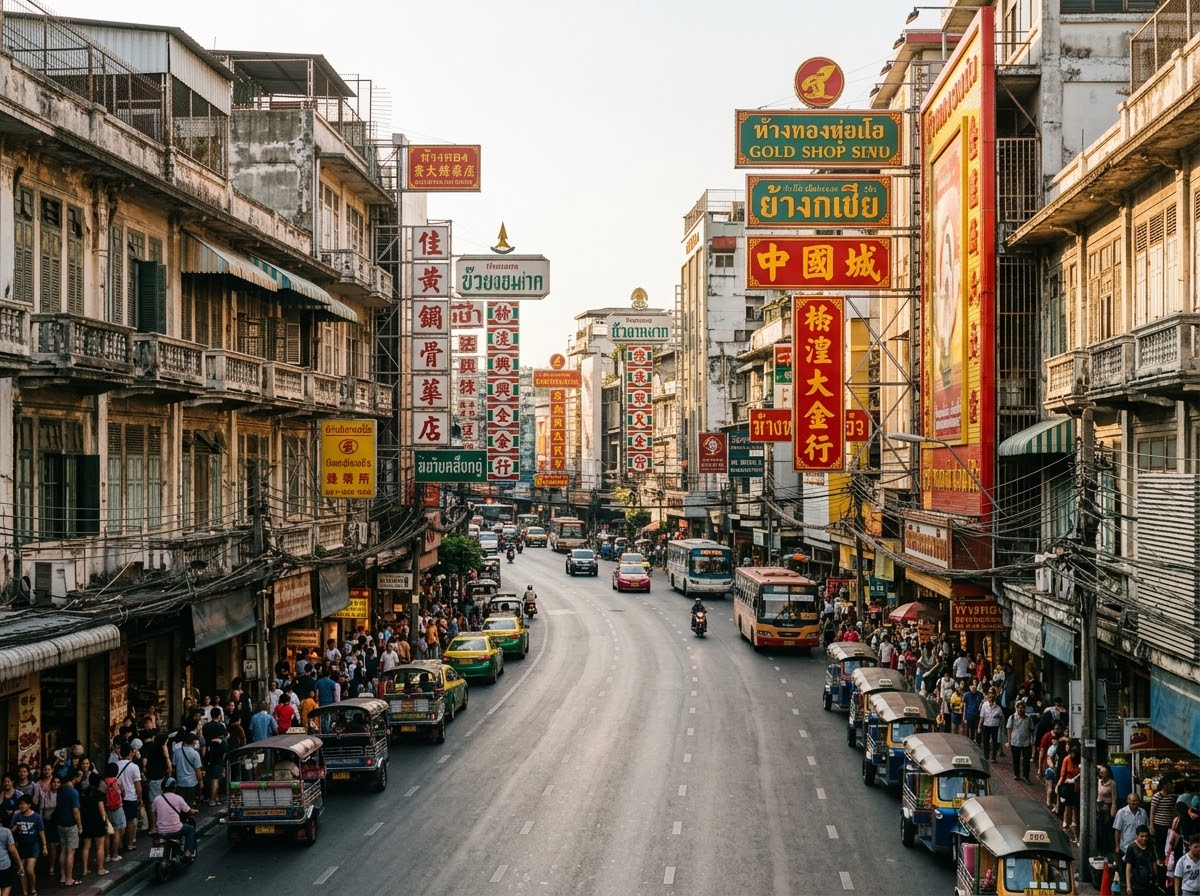
Under King Rama V, also known as King Chulalongkorn, Yaowarat Road was built. Most historical accounts place the start of construction around 1891 or 1892, with completion around 1899 or 1900.
The road was built through an area that already had buildings, narrow lanes, ridges, and canals. That is why its route curves rather than running in a straight line. Many sources explain that the alignment avoided existing structures and followed the available space.
Locals came to call Yaowarat the Dragon Road because of its winding shape. Some people saw the curve as resembling the body of a dragon.
Once the road opened, moving goods became easier. Ground-floor shops, upper-floor family homes, wholesale markets, banks, and gold shops became more concentrated along the route. Yaowarat then emerged as a wider commercial artery beside the older, narrower lanes of Sampheng.
When Bangkok grew beyond Chinatown
For a long period, Sampheng and Yaowarat were major commercial centers in Bangkok. As the capital grew, however, work, government, shopping, and tourism spread across many districts.
Silom and Sathorn became associated with offices and banks. Sukhumvit and Asok grew around the BTS Skytrain, MRT, shopping, and international living. Rama 9 and Ratchada developed with the MRT, shopping malls, office towers, and condominiums.
Bangkok no longer has a single center. Different areas serve different purposes: working, government business, shopping, history, and food. Yaowarat did not disappear in this change, but its role changed.
The district continued to build on gold trading, wholesale commerce, family restaurants, temples, and traditional festivals. At the same time, it became increasingly interesting to visitors who wanted to experience a living neighborhood rather than only a modern shopping area.
How a trading district became a travel destination
Yaowarat already had many things that later attracted travelers: gold shops, wholesale markets, family-run restaurants, temples, and festivals. To local residents, these were parts of everyday life. To visitors, they became reasons to explore.
A simple local dinner shop can become a well-known place for visitors. A family gold shop can show the district's long connection with money, trust, and commerce. A temple or festival can reveal the community traditions behind the food and shops.
A good travel destination does not need to be built entirely from new attractions. Yaowarat became a travel destination by opening its existing daily life, food culture, festivals, and family businesses to more visitors.
If you want to explore Bangkok beyond the usual tourist areas, these Bangkok travel planning tips can help you combine older districts with modern transport and major sights.
MRT Wat Mangkon and the new gateway
![MRT Wat Mangkon Station entrance in Bangkok Chinatown]
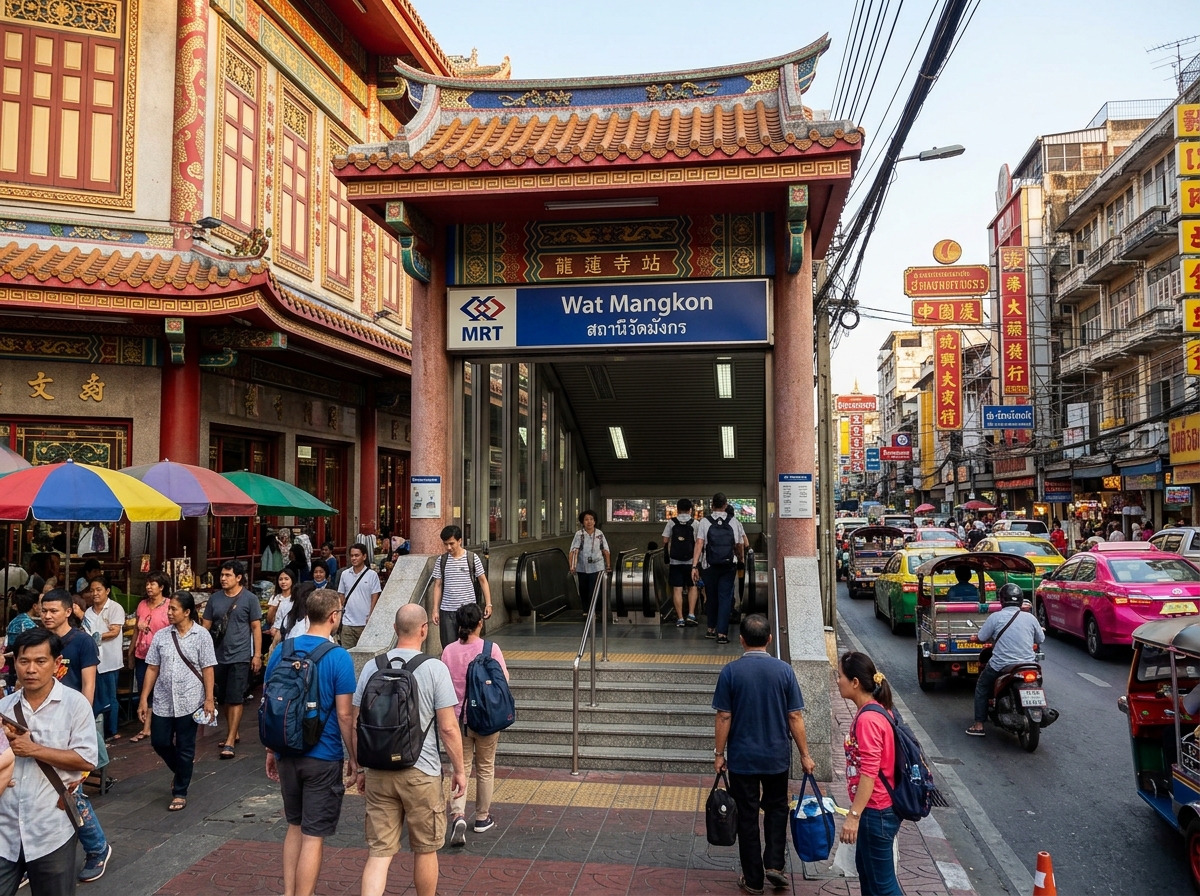
Before 2019, reaching Yaowarat usually meant using a bus, taxi, private car, or a river route. Traffic and parking could make a short visit feel difficult.
That changed on July 29, 2019, when Wat Mangkon Station opened on the MRT Blue Line. The station sits beneath Yaowarat and Chinatown, putting the main district within a short walk of the rail network.
The MRT did not create Chinatown's history. It opened a new gateway to an existing historic district, making it easier for new visitors to arrive.
After the extension, nearby Song Wat and Talat Noi also became more visible to visitors. Old buildings in these areas have increasingly been reused as cafes, restaurants, galleries, and creative spaces.
Song Wat Road runs from near Talat Noi along the Chao Phraya River for about 1.2 kilometers. It once held warehouses and shophouses connected with rice, spices, seafood, and medicinal herbs. Some of those buildings now operate as cafes, studios, galleries, and small shops, while spice wholesalers still work in the area.
For travelers using Bangkok's rail network, this guide to connecting BTS and MRT explains how the city's main lines work together.
What to notice on your next visit
Yaowarat remains busy today not because every old thing was removed and replaced, but because the district adapted while keeping its identity. Its people, food, festivals, family businesses, and accumulated memories still shape the area.
On your next visit, look beyond the street food. Walk into the narrow lanes, notice the old shophouses, and follow the streets that lead toward the river.
Those lanes hold the story of people who moved, restarted their lives, found work, and helped build a city over more than 200 years. Yaowarat is not only a place to eat. It is a living record of how Bangkok Chinatown grew.
If you plan a food-focused visit, this guide to must-try Thai dishes can help you understand the wider food culture around Bangkok. For festival timing, the Yaowarat Vegetarian Festival shows how the district's traditions continue today.
Want help planning this trip? Browse AsiaBuddy's Thailand tour packages.
Frequently Asked Questions
Why were Chinese traders moved to Sampheng?
In 1782, King Rama I established the new capital at Rattanakosin, where the Grand Palace and Wat Phra Kaew now stand. The Chinese community already living there was moved downstream to Sampheng.
When was Yaowarat Road built?
Yaowarat Road was built during the reign of King Rama V. Most accounts say construction began around 1891 or 1892 and finished around 1899 or 1900.
Why is Yaowarat called the Dragon Road?
Yaowarat Road curves because it was built through existing buildings, narrow lanes, ridges, and canals. Its winding shape led people to call it the Dragon Road.
What is the easiest way to reach Yaowarat?
MRT Wat Mangkon Station is a convenient rail option. It opened on July 29, 2019, and sits beneath Yaowarat and Chinatown.
More from Thailand Travel
Thailand Year-End Flights 2026: What TAT Support Means
Thailand is using emergency funds to support year-end flights. See what the TAT plan means for fares, festival trips and...

Lamphun Lantern Festival 2026 Dates and Visit Guide
The Lamphun lantern festival 2026 runs from October 1 to November 30. Get the key dates, parade day, temple etiquette an...
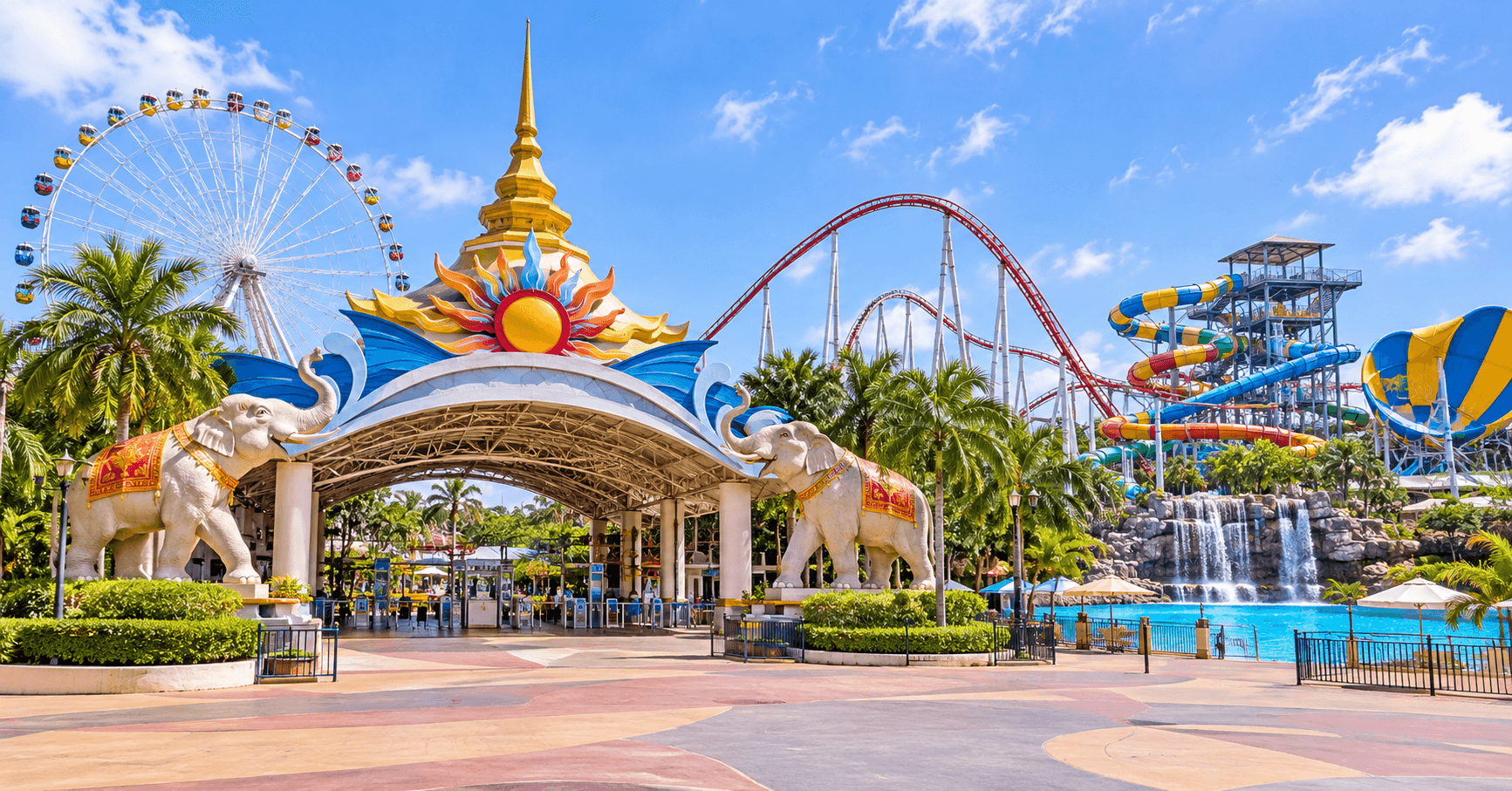
Siam Amazing Park Reopening in Bangkok on November 19
Siam Amazing Park is reopening in Bangkok on November 19, 2026. See which areas open, which rides stay closed, and what...
Share this post
AsiaBuddy Team
Local experts helping travelers explore Southeast Asia with confidence — trusted guides, curated tours, and real destination knowledge.