Thailand Travel Medicine Kit: 7 Pharmacy Essentials
A Thailand travel medicine kit can cover minor cuts, sore throats, gas and jet lag. Here are 7 Thai pharmacy items, with safety limits for each item.
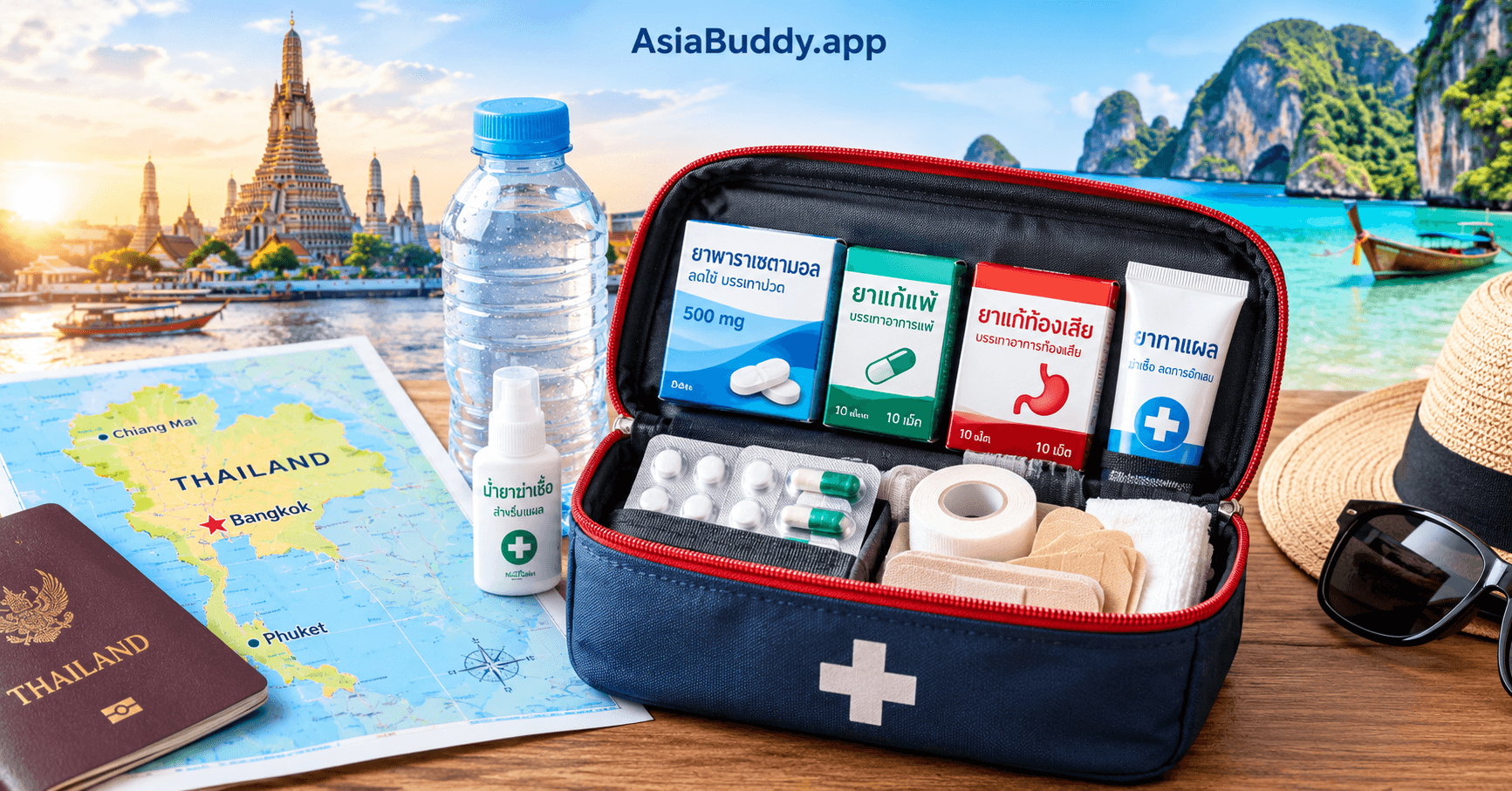
Thailand trips can involve long journeys, strong air conditioning, spicy meals, heat, humidity, and small cuts from beaches or city walks. A Thailand travel medicine kit can help you handle minor discomforts, but it should not replace professional medical care.
Explore Thailand Tours


The 7 items below are commonly found in Thai pharmacies and convenience stores. Check the product label, ask a pharmacist when needed, and avoid treating serious symptoms by yourself.
This guide explains what each item is used for, where its limits are, and which symptoms mean you should see a doctor instead. It is general travel information, not personal medical advice.
What belongs in a Thailand travel medicine kit
A Thailand travel medicine kit can include 7 items for minor symptoms: Fa Thalai Jone, activated charcoal, Betadine, Yadom, sleep gummies, propolis lozenges, and Air-X. Each item has limits, so read the label and ask a pharmacist when you are unsure.
The right choice depends on your symptoms, existing medicines, allergies, and health conditions. A kit is most useful when it is small, clearly labeled, and limited to minor problems.
What to know before you buy medicine in Thailand
Thai pharmacies are common in cities and tourist areas, and a pharmacist can often help you identify a product. Some products are also sold in convenience stores, but availability, ingredients, and strengths vary by brand and location.
Tell the pharmacist about your symptoms, allergies, pregnancy or breastfeeding status, and any regular medicines. If you are unsure about a product name, show the package or a photo of the label so the pharmacist can check the active ingredient.
Keep medicines in their original packaging where possible. Rules on bringing medicines into Thailand can differ by product, so read the Thailand customs allowance guide before you pack anything unusual.
Thai pharmacy essentials for travelers
Each item below covers a common minor travel problem. Read the limits before you buy, and treat the kit as support for small issues only.
Fa Thalai Jone
![Fa Thalai Jone herbal capsules beside a travel bag and water bottle in Thailand]
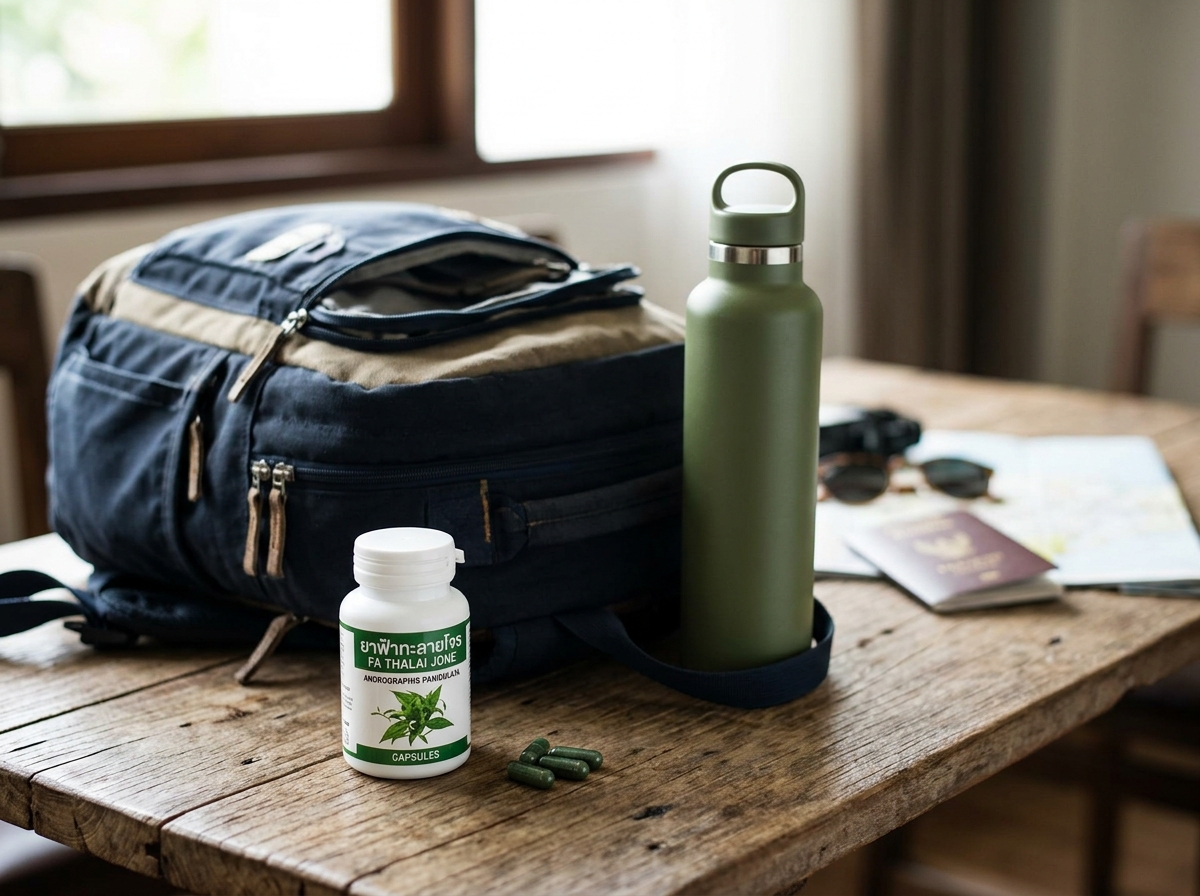
Fa Thalai Jone, also called Andrographis paniculata or green chiretta, is a traditional Thai herbal product used for some cold and sore throat symptoms. Evidence suggests it may provide symptomatic relief for uncomplicated upper respiratory infections, but it is not a natural antibiotic, vaccine, or cure.
Product strengths vary, so do not copy a capsule count from another product. Follow the label or ask a Thai pharmacist, especially because andrographis products can cause allergic reactions and may interact with some medicines. Avoid it during pregnancy or breastfeeding unless a qualified clinician specifically advises it.
Stop and seek medical help for breathing difficulty, facial swelling, severe rash, persistent fever, or worsening symptoms.
Activated charcoal
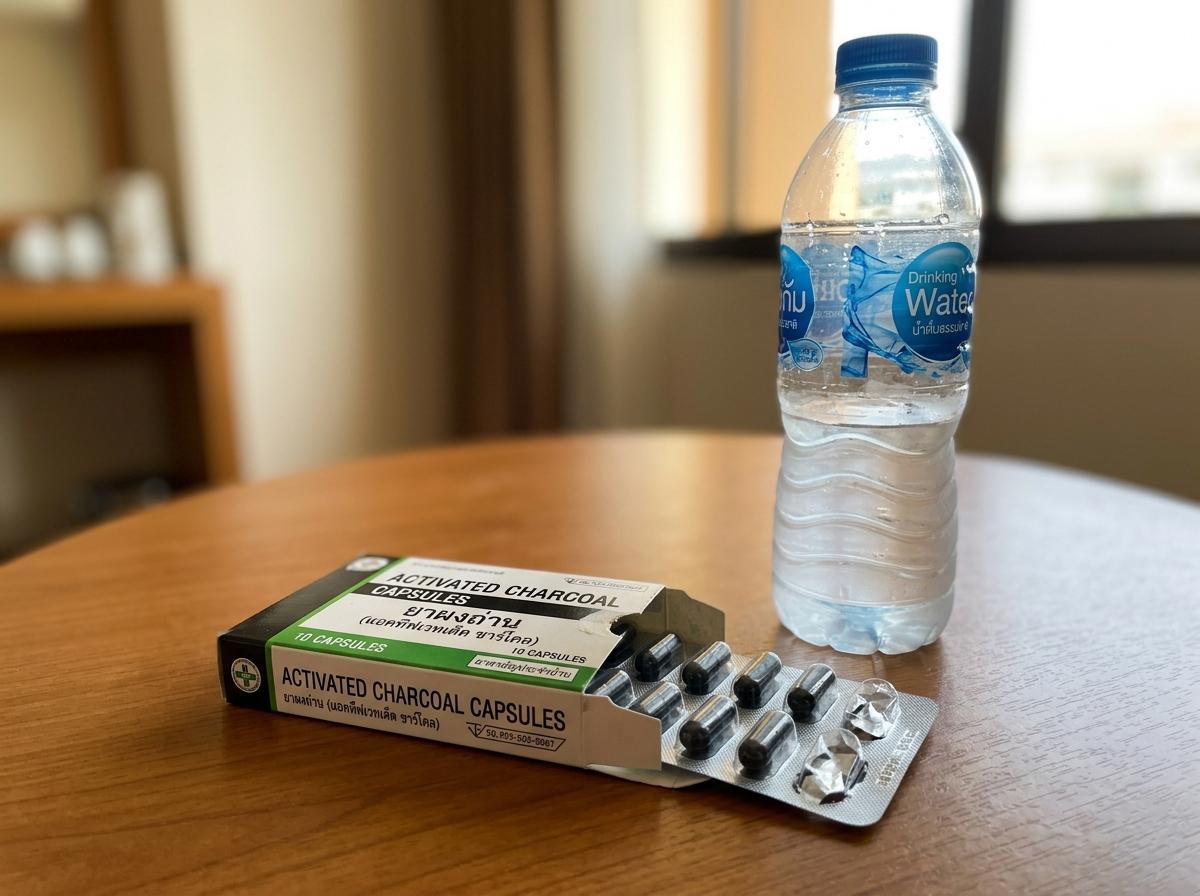
Activated charcoal can bind some substances in the digestive tract, but it is not a general treatment for food poisoning or traveler diarrhea. It does not treat most infections and is not suitable for every poison or chemical.
Use it only according to the package label or advice from a pharmacist or poison specialist. It can reduce the effect of other medicines, so ask about spacing and interactions before taking it. Do not force fluids or charcoal into anyone who is drowsy, unconscious, vomiting repeatedly, or unable to swallow.
Severe diarrhea, blood in the stool, repeated vomiting, high fever, confusion, or signs of dehydration require medical assessment rather than self-treatment.
Betadine
![Betadine antiseptic bottle with bandages and clean water for a minor travel cut]
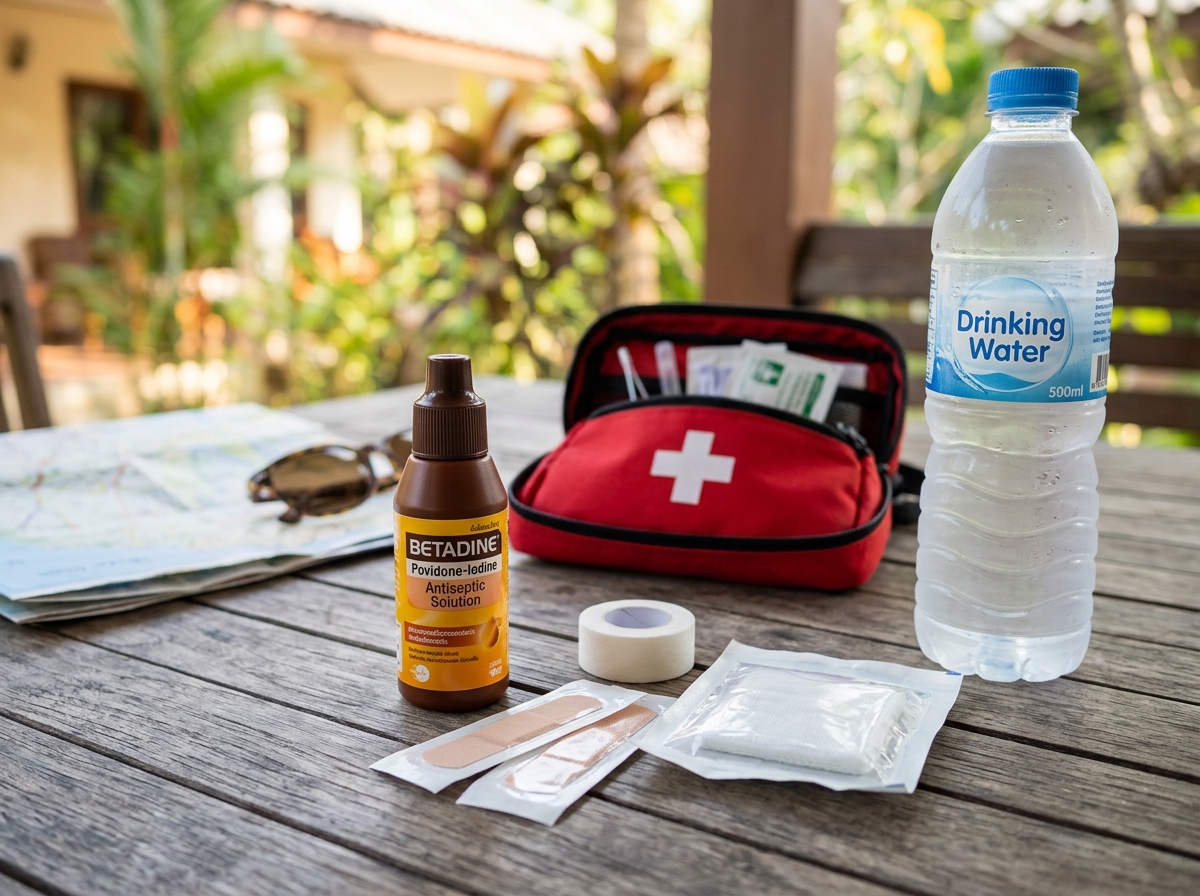
Betadine contains povidone-iodine and can be used as an antiseptic for some minor cuts and scratches. Rinse the wound thoroughly with clean running water before using it, remove visible dirt, and follow the product directions. Do not pour seawater into a wound.
For a cut exposed to coastal water in Thailand, wash it promptly with soap and clean running water and monitor it closely. Coastal water can carry Vibrio bacteria that cause wound infections, particularly in people with increased risk, and infected wounds need prompt medical attention.
Seek care if the wound becomes increasingly red, hot, swollen, painful, discoloured, or starts leaking fluid. Fever, red streaks, blisters, or rapid worsening are urgent warning signs.
Povidone-iodine is not suitable for everyone. Ask a pharmacist before use if you have an iodine allergy or a thyroid condition.
Yadom
![Small Thai Yadom nasal inhaler resting on a pharmacy counter in Thailand]
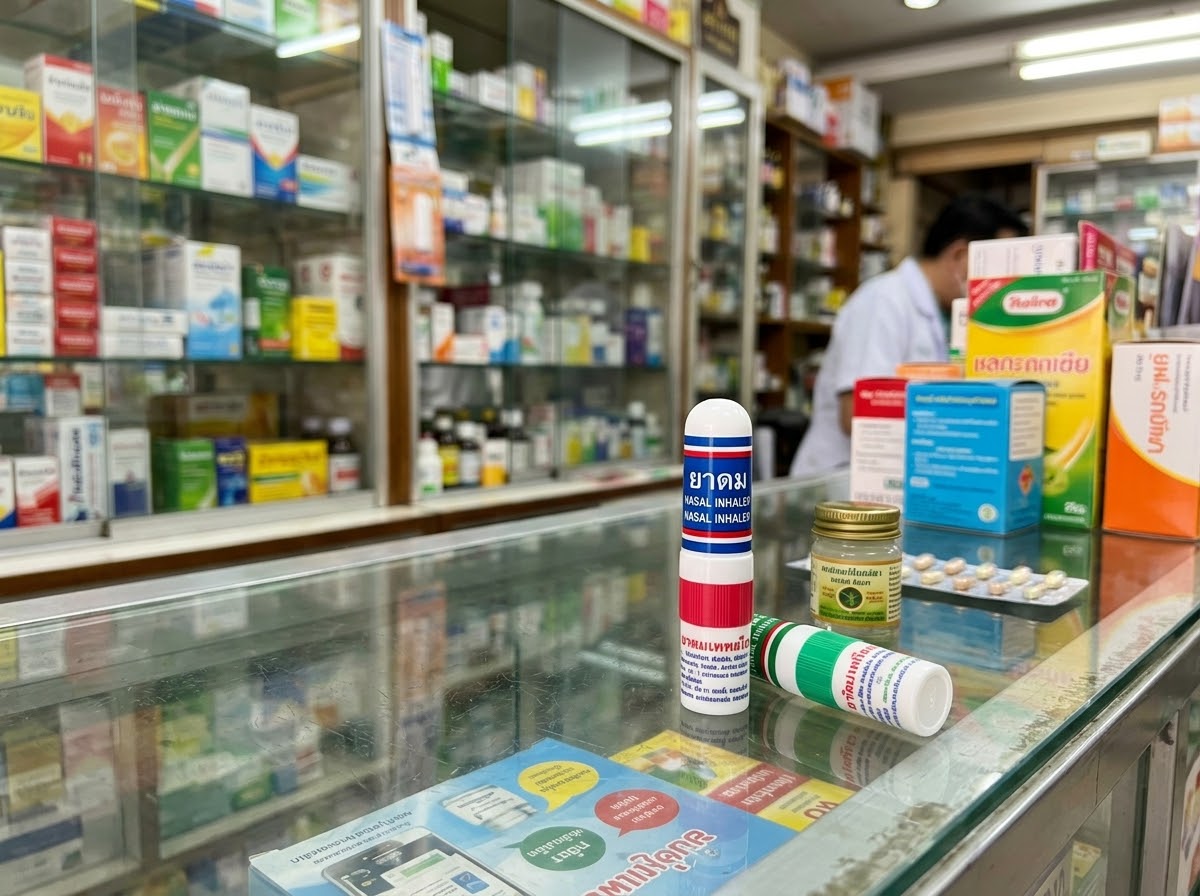
Yadom is a small Thai nasal inhaler that usually contains strong aromatic ingredients such as menthol, camphor, borneol, or eucalyptus oil. Travelers use it for a temporary feeling of clearer breathing, freshness, alertness, or relief from mild nausea.
Hold it below the nostril rather than inserting it into the nose. Stop if it irritates your nose, causes headache, or makes breathing uncomfortable. People with asthma or sensitivity to strong scents should use caution and should not treat breathing difficulty with an inhaler like Yadom.
Sleep gummies
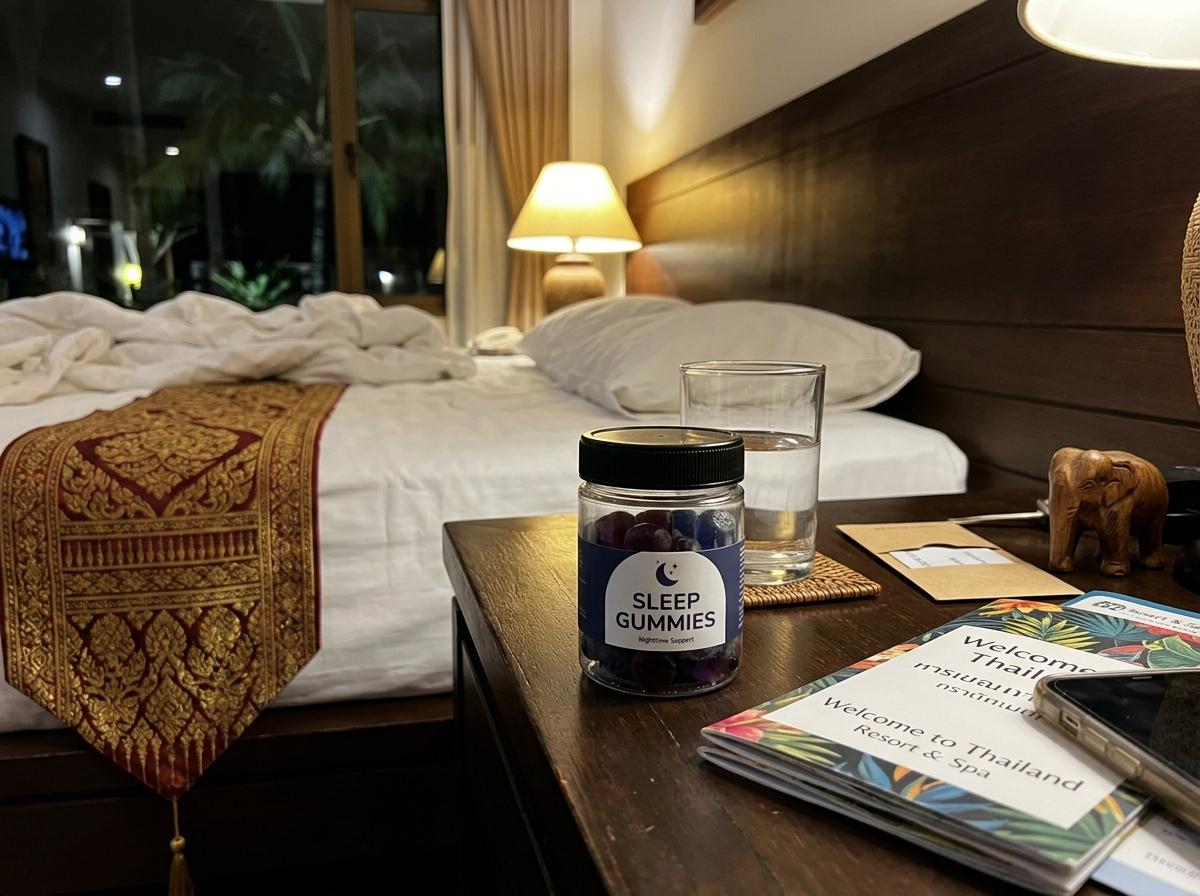
Some sleep gummies sold in Thailand contain melatonin, while other sleep products contain herbs such as chamomile or passionflower. Ingredients and strengths vary significantly, so check the label rather than assuming that 2 gummies have a particular dose.
Melatonin may help some travelers adjust to a changed sleep schedule, but it can cause drowsiness and may interact with medicines. Avoid combining it with alcohol or driving after taking it. Ask a pharmacist or clinician before use if you are pregnant, breastfeeding, taking regular medicine, or managing a medical condition.
Propolis lozenges
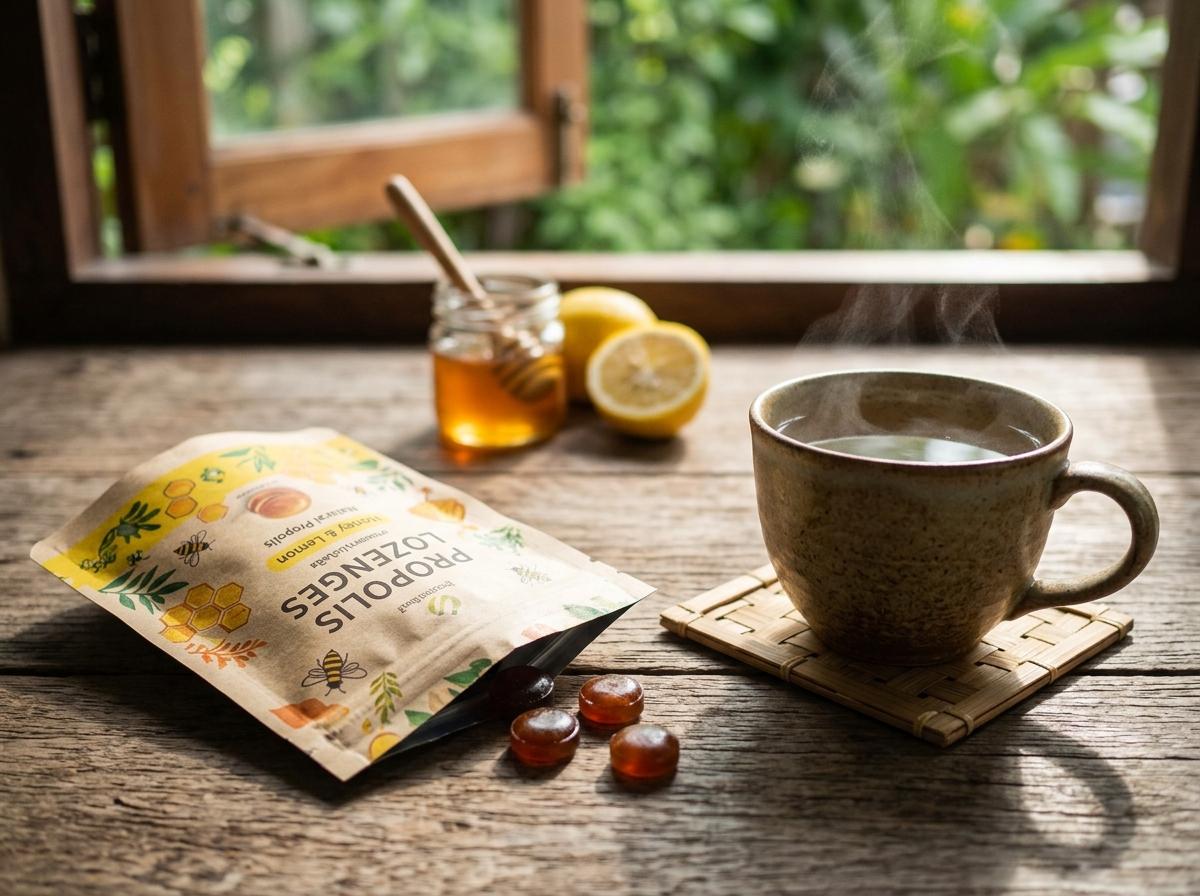
Propolis lozenges can soothe a dry or irritated throat, including discomfort linked to hotel, mall, or shop air conditioning in Thailand. They may contain propolis, honey, vitamin C, ginger, citrus, or menthol, depending on the product.
Let the lozenge dissolve slowly and follow the package maximum. Avoid propolis if you have a known allergy to bee products, pollen, or honey. Stop using it and seek help if you develop swelling, wheezing, hives, or other signs of an allergic reaction.
Air-X
![Air-X simethicone chewable tablets in a blister pack beside a glass of water]
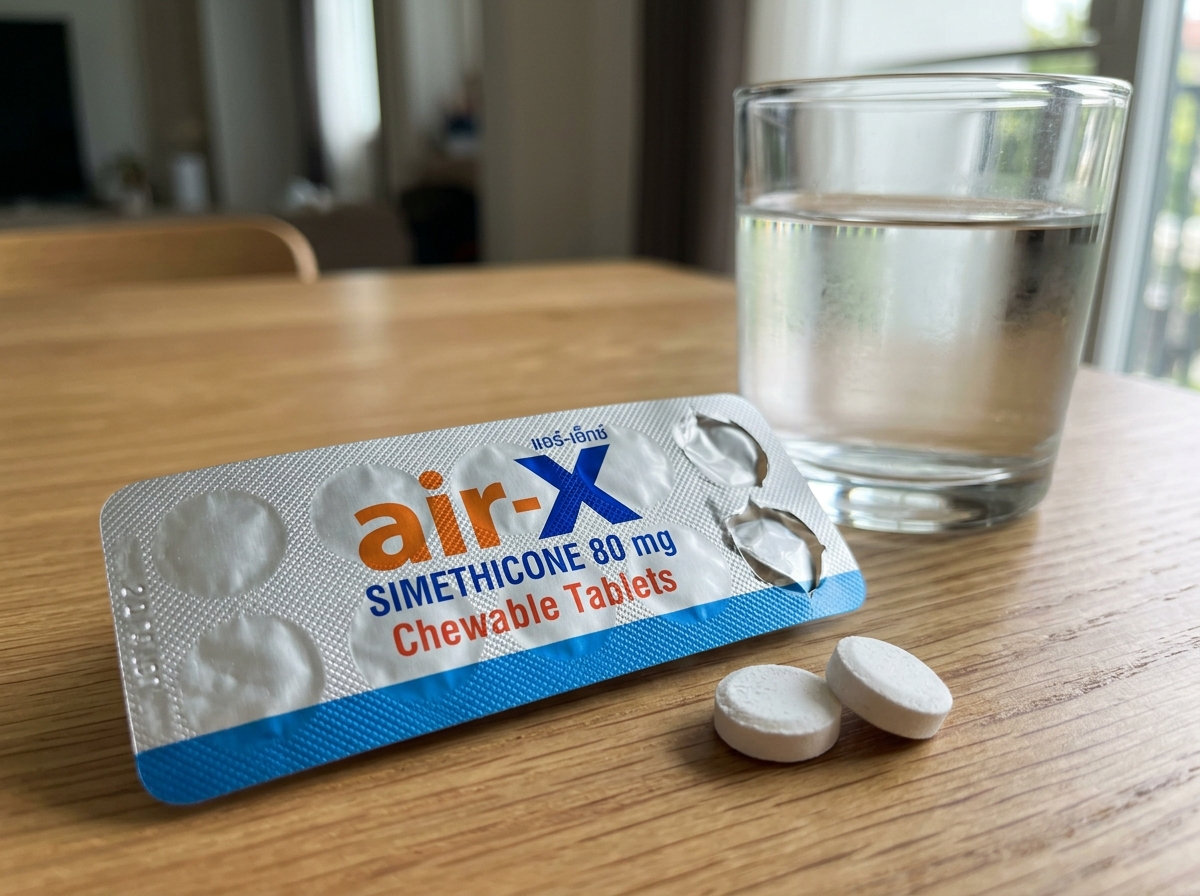
Air-X contains simethicone, which can help relieve gas-related bloating, belching, and abdominal fullness after a large meal. It does not reduce stomach acid, treat ulcers, or cure an intestinal infection.
Chew tablets as directed and follow the strength and maximum daily amount printed on the package. Ask a pharmacist if you take regular medicines or have persistent abdominal symptoms. Severe pain, repeated vomiting, a swollen abdomen, blood in the stool, or symptoms lasting more than a few days need medical advice.
When to see a doctor instead of using your kit
A travel medicine kit is only for minor symptoms. Breathing difficulty, facial swelling, severe rash, persistent fever, confusion, signs of dehydration, blood in the stool, or a wound that keeps getting worse all need medical assessment.
Do not wait for severe symptoms to pass, especially if you are traveling with a child, an older adult, or someone who is pregnant. Go to a clinic or hospital, and show the staff the product name or package so they know what you have already taken.
Bring your passport, your travel insurance details, and a list of regular medicines when you visit a clinic. Save local emergency contacts before you leave your hotel.
How to use a Thailand travel medicine kit safely
Pack original labels when possible and keep medicines away from excessive heat. Heat and humidity in Thailand can affect some products, so avoid leaving your kit in direct sun, a parked car, or luggage stored outside.
Do not combine several products without checking their active ingredients, because different brands may contain overlapping substances. Keep a short note on your phone listing your regular medicines and allergies, so you can show it to a pharmacist or doctor.
A Thai pharmacy can help you identify a product, but explain your symptoms, allergies, pregnancy or breastfeeding status, and regular medicines clearly. For urgent help, visit a clinic or hospital instead of relying on a convenience-store remedy.
If your trip includes Bangkok, review these Bangkok travel planning tips and keep your itinerary details accessible. You can also save the Thailand emergency numbers guide before departure.
Want help planning this trip? Browse AsiaBuddy's Thailand tour packages.
Frequently Asked Questions
Can these products replace a doctor in Thailand?
No. They may help with minor symptoms, but serious, persistent, or rapidly worsening symptoms require a doctor, clinic, or hospital. Coastal-water wounds with swelling, pain, discharge, or fever need prompt attention.
Is Fa Thalai Jone safe for every traveler?
No. Product strengths differ, and allergic reactions and medicine interactions are possible. Pregnant or breastfeeding travelers and people with existing medical conditions should ask a clinician before use.
Can activated charcoal treat food poisoning?
Not generally. It may bind some substances in the digestive tract, but it does not treat most foodborne infections and can interfere with other medicines.
What should I do if I cut myself at a Thai beach?
Rinse the wound promptly with clean running water and soap, keep it protected, and seek medical care if it worsens. Avoid seawater contact with an open wound, and treat fever, rapid swelling, severe pain, or discharge as warning signs.
Can I buy these items in Thailand?
Many are sold at Thai pharmacies, and some are also available at convenience stores. Product availability, ingredients, and strengths vary, so check the label and ask a pharmacist.
More Photos
More from Thailand Travel

Thailand Year-End Flights 2026: What TAT Support Means
Thailand is using emergency funds to support year-end flights. See what the TAT plan means for fares, festival trips and...

Lamphun Lantern Festival 2026 Dates and Visit Guide
The Lamphun lantern festival 2026 runs from October 1 to November 30. Get the key dates, parade day, temple etiquette an...

Siam Amazing Park Reopening in Bangkok on November 19
Siam Amazing Park is reopening in Bangkok on November 19, 2026. See which areas open, which rides stay closed, and what...
Share this post
AsiaBuddy Team
Local experts helping travelers explore Southeast Asia with confidence — trusted guides, curated tours, and real destination knowledge.