Thai Desserts to Try in Thailand: 9 Sweet Treats
Thai desserts to try in Thailand include mango sticky rice, khanom krok, coconut ice cream, and Ayutthaya roti sai mai. See what each dessert tastes like.
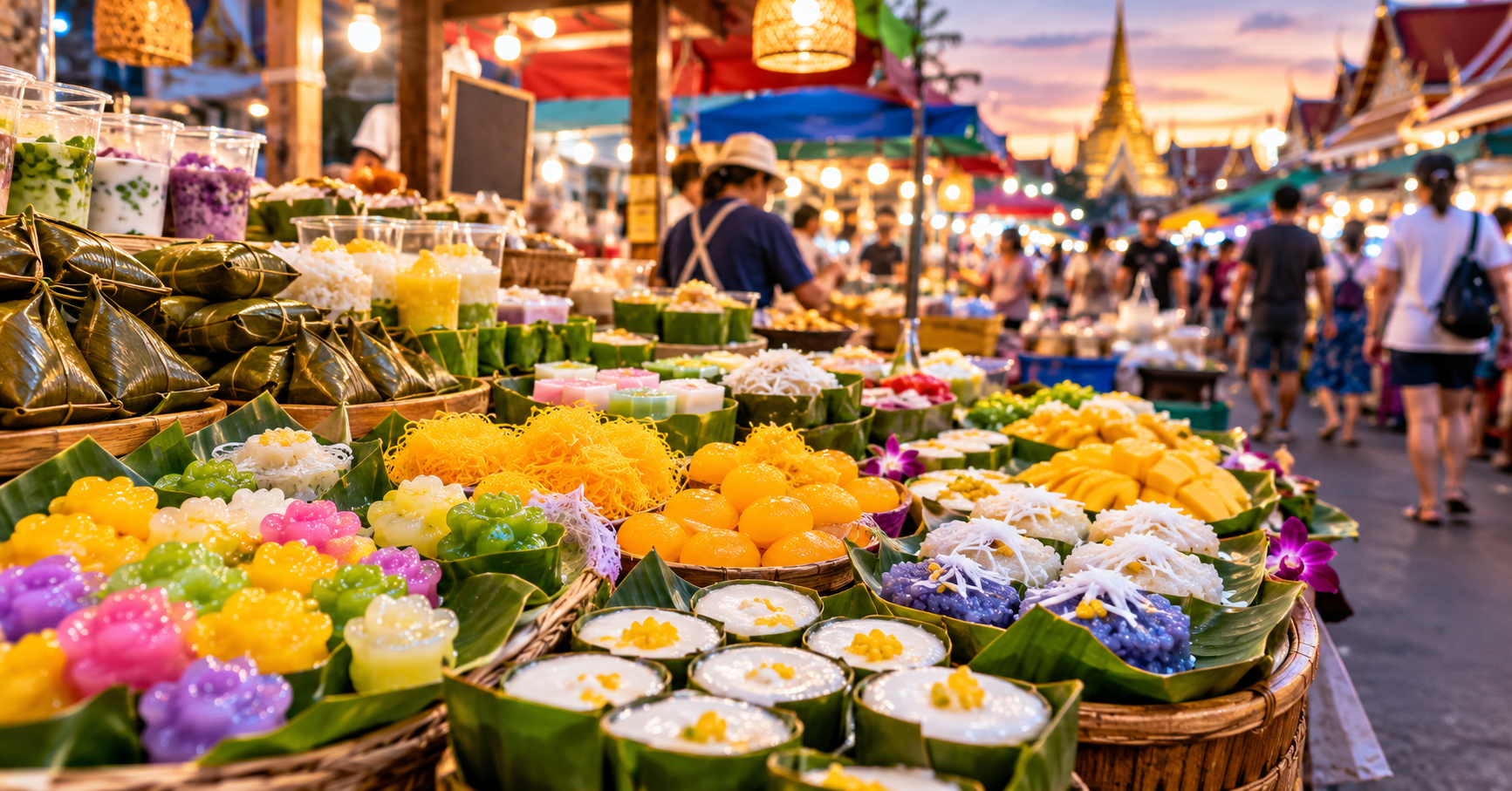
Thai desserts are part of everyday food life in Thailand. You can find them at night markets, fresh markets, roadside stalls, food courts, and specialist dessert shops.
Explore Thailand Tours

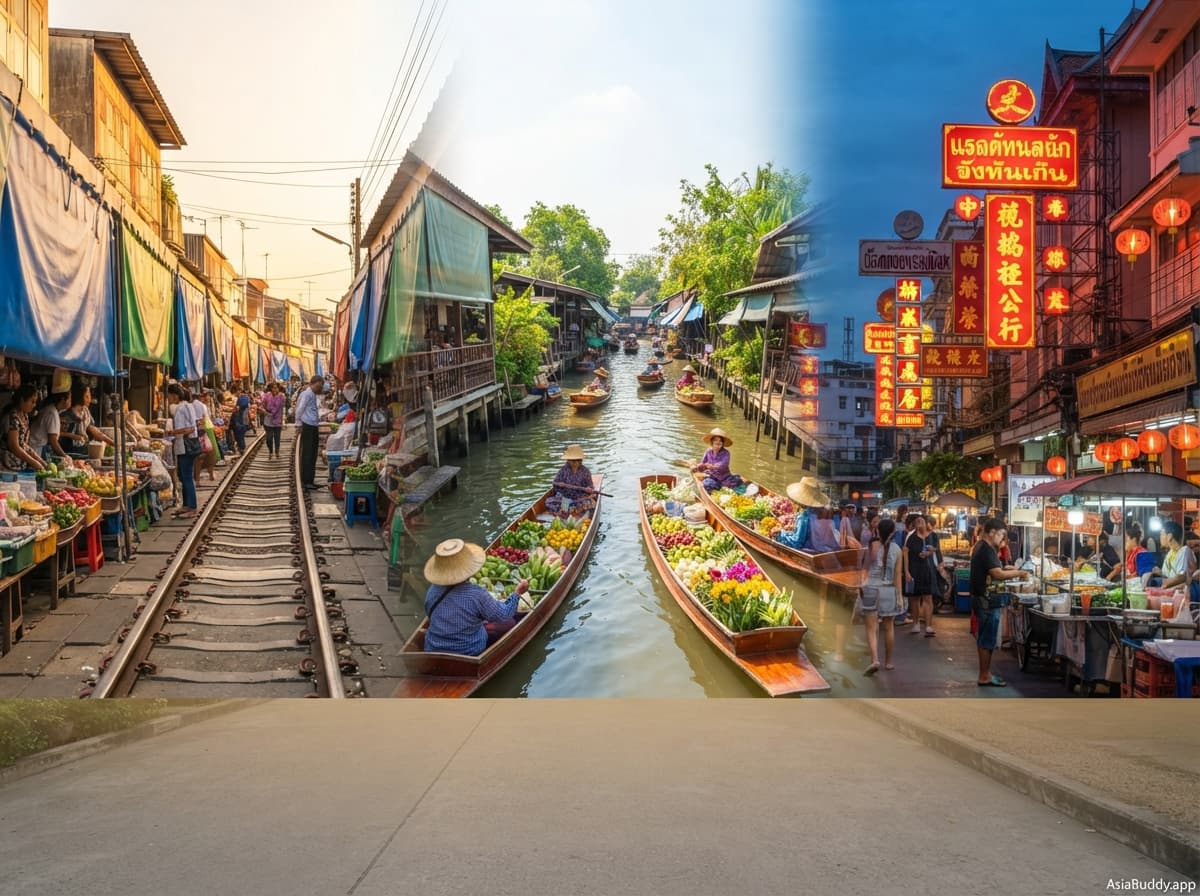

The Thai desserts to try in Thailand range from crispy and chewy to creamy, chilled, and warm, so you can sample several small portions during a market visit. Mango sticky rice, coconut ice cream, fried bananas, and khanom krok are familiar starting points, while Ayutthaya is closely associated with roti sai mai.
Which Thai desserts should you try in Thailand?
If you are new to Thai sweets, the Thai desserts to try are mango sticky rice, coconut ice cream, fried banana, and khanom krok, with roti sai mai added if you visit Ayutthaya. This guide covers 9 desserts, with notes on taste, texture, and ordering.
Each sweet offers a different combination of flavor and texture. Start with mango sticky rice, coconut ice cream, or fried banana if you prefer mild and familiar flavors.
What Thai desserts are made from
Thai sweets often combine coconut milk, rice flour, glutinous rice, palm sugar, pandan leaves, eggs, and seasonal fruit in different ways. The result can be a cold pandan jelly dessert, a crispy pancake, a warm coconut snack, or a rich egg custard.
Portions at stalls and markets are small, so you can compare several desserts during a market visit. The notes below explain what each dessert tastes like and how to order it.
Thai Desserts and What They Taste Like
Lod Chong
![Bowl of Lod Chong with green pandan jelly strands in coconut milk]
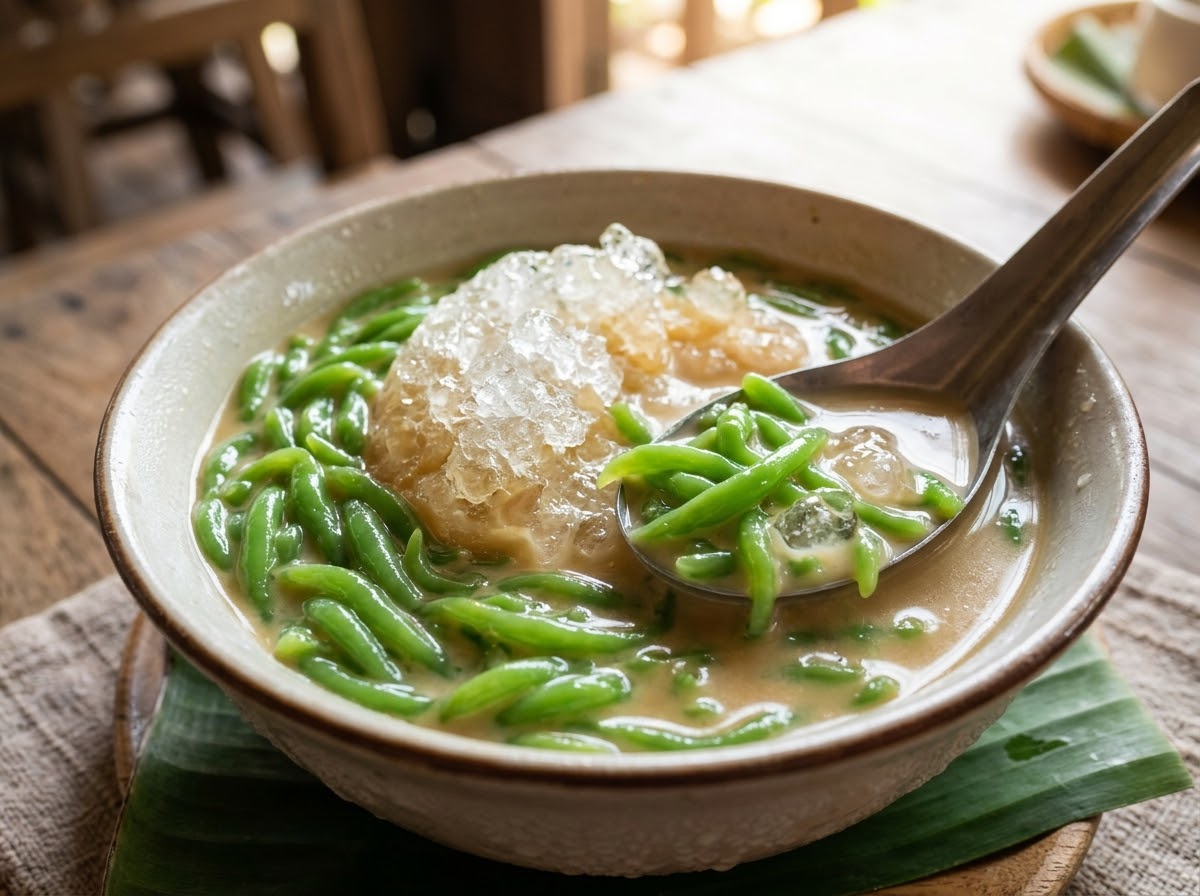
Lod Chong is a cold dessert made with soft green pandan jelly strands, coconut milk, palm-sugar syrup, and crushed ice. The strands are formed by pressing batter through a special tool into boiling water.
Taste and texture: It is sweet, creamy, lightly fragrant, soft, and slightly chewy. The ice makes it especially refreshing after walking through a hot market or temple area.
Order it with less sweetness by saying "mai wan mak," which means "not too sweet." You can usually find Lod Chong at Thai dessert stalls, markets, and some food courts.
Mango Sticky Rice
![Mango sticky rice with ripe mango slices and coconut cream sauce]
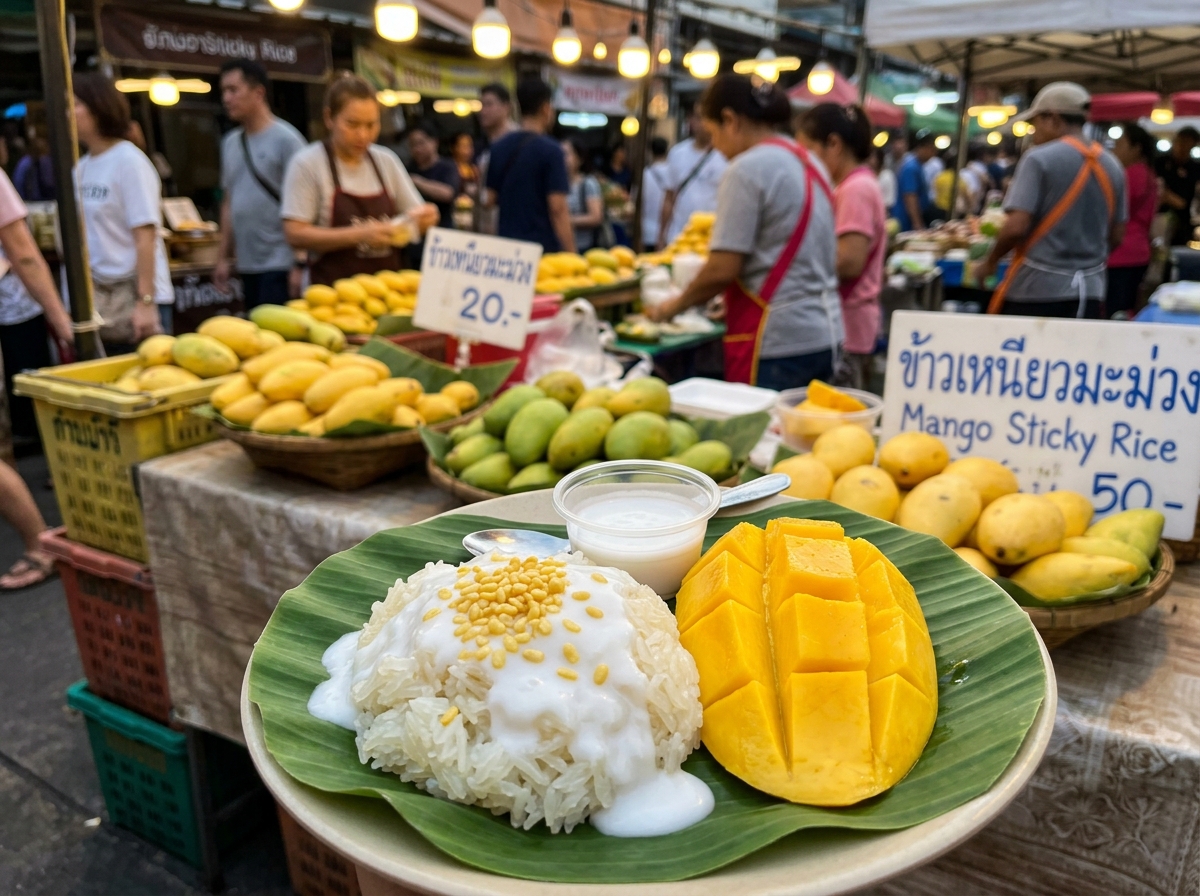
Mango sticky rice, or khao niew mamuang, combines ripe mango with warm glutinous rice cooked in sweet coconut milk. It is often finished with a salted coconut-cream sauce and topped with toasted mung beans or sesame seeds.
Taste and texture: The mango is sweet and juicy, while the rice is soft and sticky. Coconut cream adds richness, and a small amount of salt balances the sweetness.
Mango season is generally strongest from March to June, although availability varies by region and mango type. Choose a stall where the mango smells fragrant and looks fully yellow, and say "khao niew mamuang" when ordering.
Mango sticky rice is a practical starting choice because it is mild, widely available, and contains no spicy ingredients.
Khanom Krok
![Khanom krok coconut rice pancakes cooking in a round-holed pan]
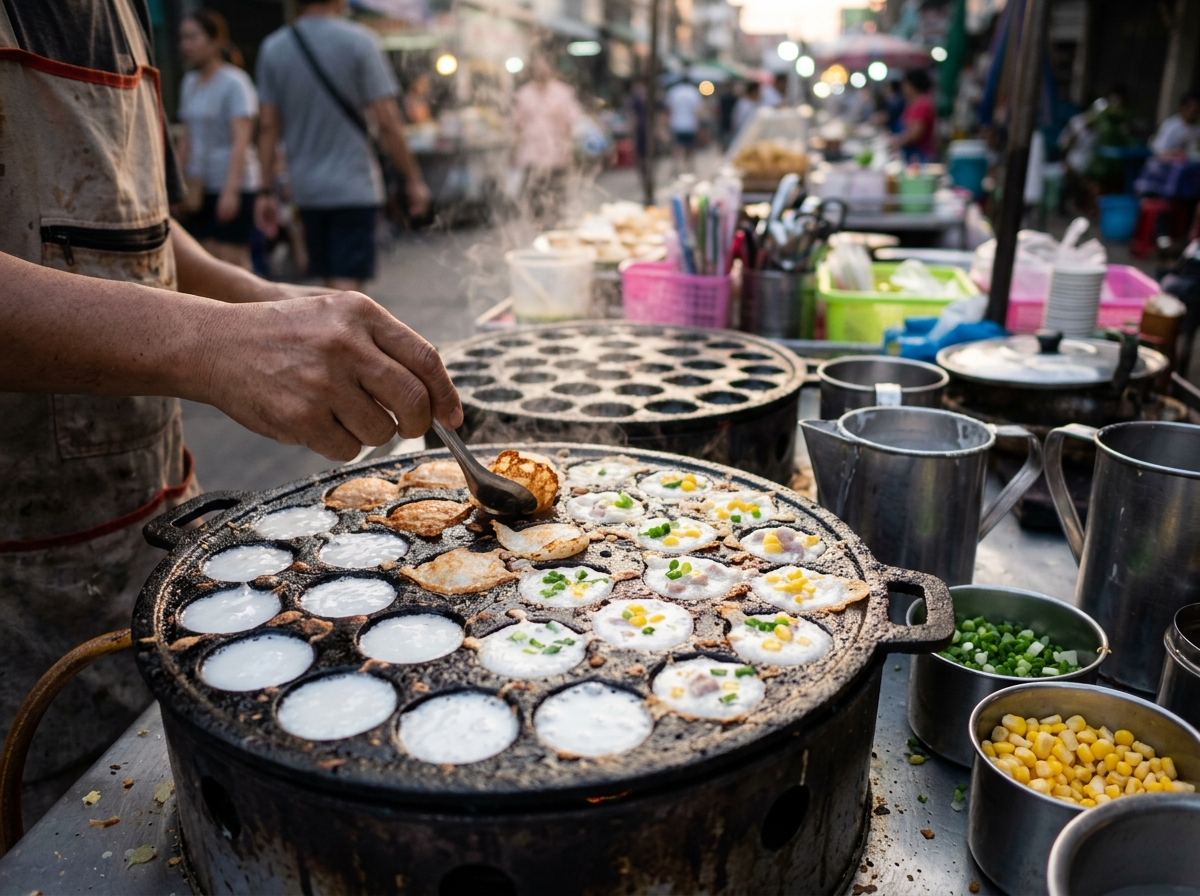
Khanom krok is a traditional coconut-rice pancake cooked in a special pan with many small round holes. Vendors commonly prepare it in front of customers, so it arrives warm and aromatic.
Taste and texture: The outside can be crisp and golden, while the center is soft and custard-like. The flavor is mildly sweet, creamy, and sometimes lightly savory.
Common toppings include spring onion, corn, taro, shredded coconut, and pandan. Eat khanom krok soon after buying it because the crispy edge softens as it cools, and try both the sweet and savory versions if a stall offers them.
Thai Coconut Ice Cream
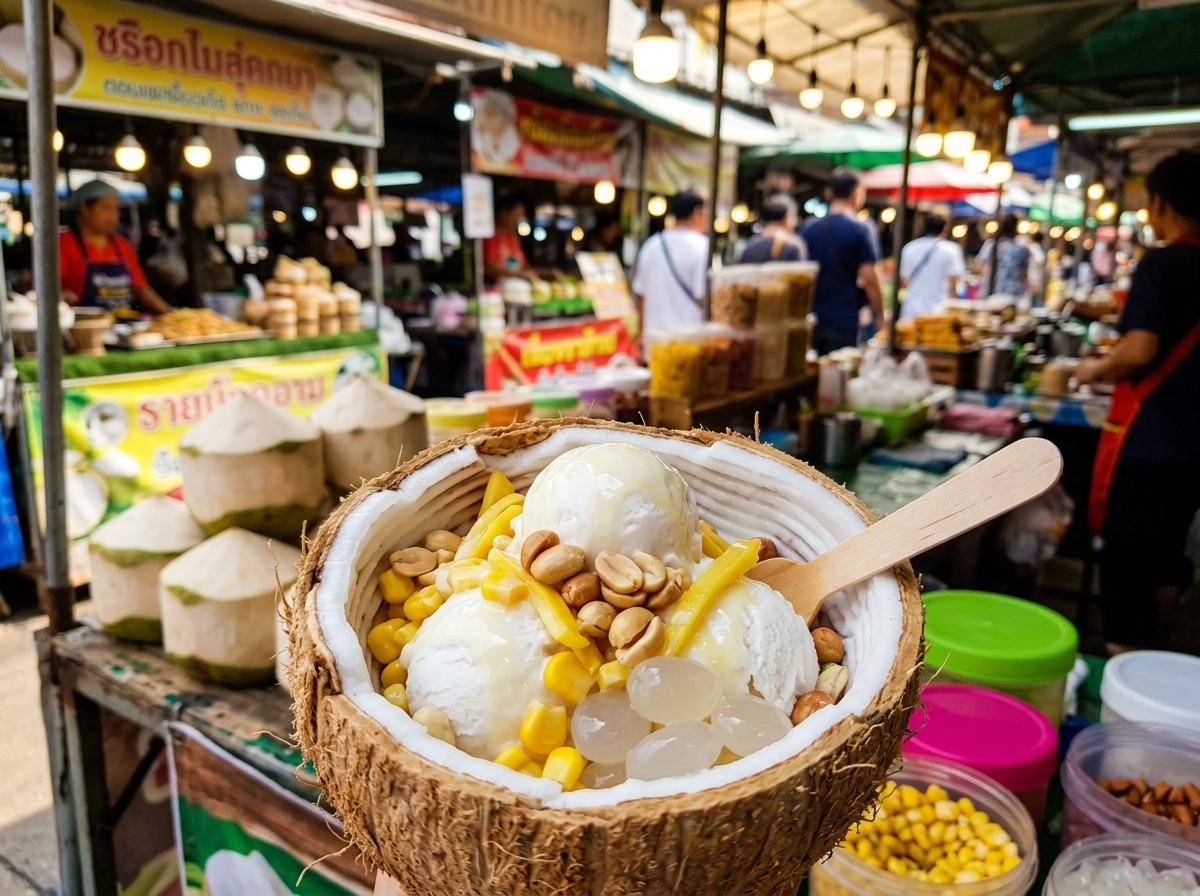
Thai coconut ice cream, or itim kati, is made mainly with coconut milk rather than dairy milk. It is often served in a cup or half coconut shell with toppings such as roasted peanuts, sticky rice, sweet corn, palm seeds, shredded coconut, or fruit.
Taste and texture: The ice cream has a natural coconut flavor and is usually not overly sweet. Peanuts add crunch, while sticky rice adds a chewy contrast.
Recipes and toppings vary by shop, so ask about ingredients if you have allergies. Coconut-shell servings are popular for travel photos, but they melt quickly in Thailand's heat.
Khanom Buang
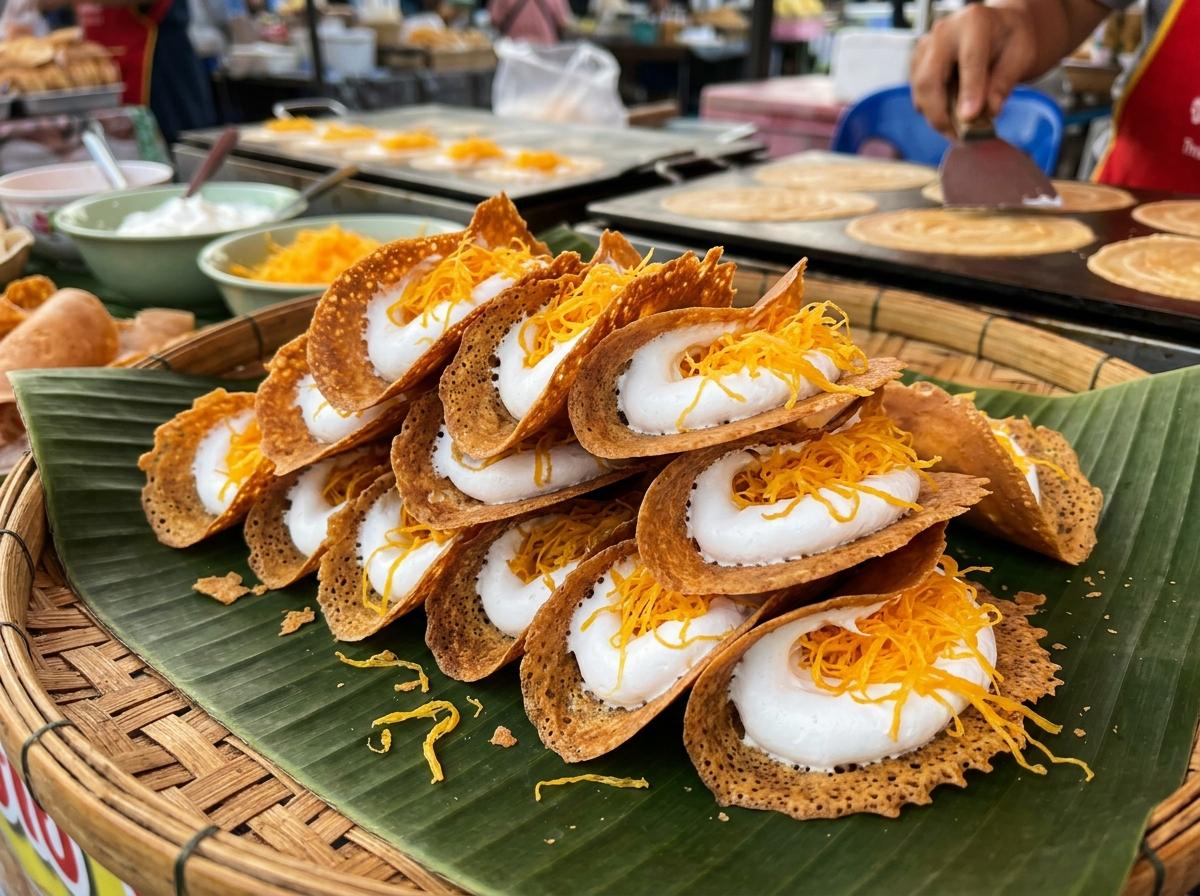
Khanom buang is a thin, crispy Thai pancake often described as a Thai taco because of its folded shape. The shell can hold sweet cream or meringue and golden egg-yolk threads called foi thong.
Taste and texture: The outside is extremely crisp, while the filling is light and creamy. Sweet versions commonly use cream and foi thong, while savory versions may contain coconut, shrimp, coriander, pepper, and other seasonings.
Khanom buang is associated with Thailand's Ayutthaya period. Its modern egg-based style is often linked to Marie Guimar, a Portuguese-Japanese woman at the Ayutthaya royal court in the 17th century, and the shells break easily, so start with a small portion.
Foi Thong
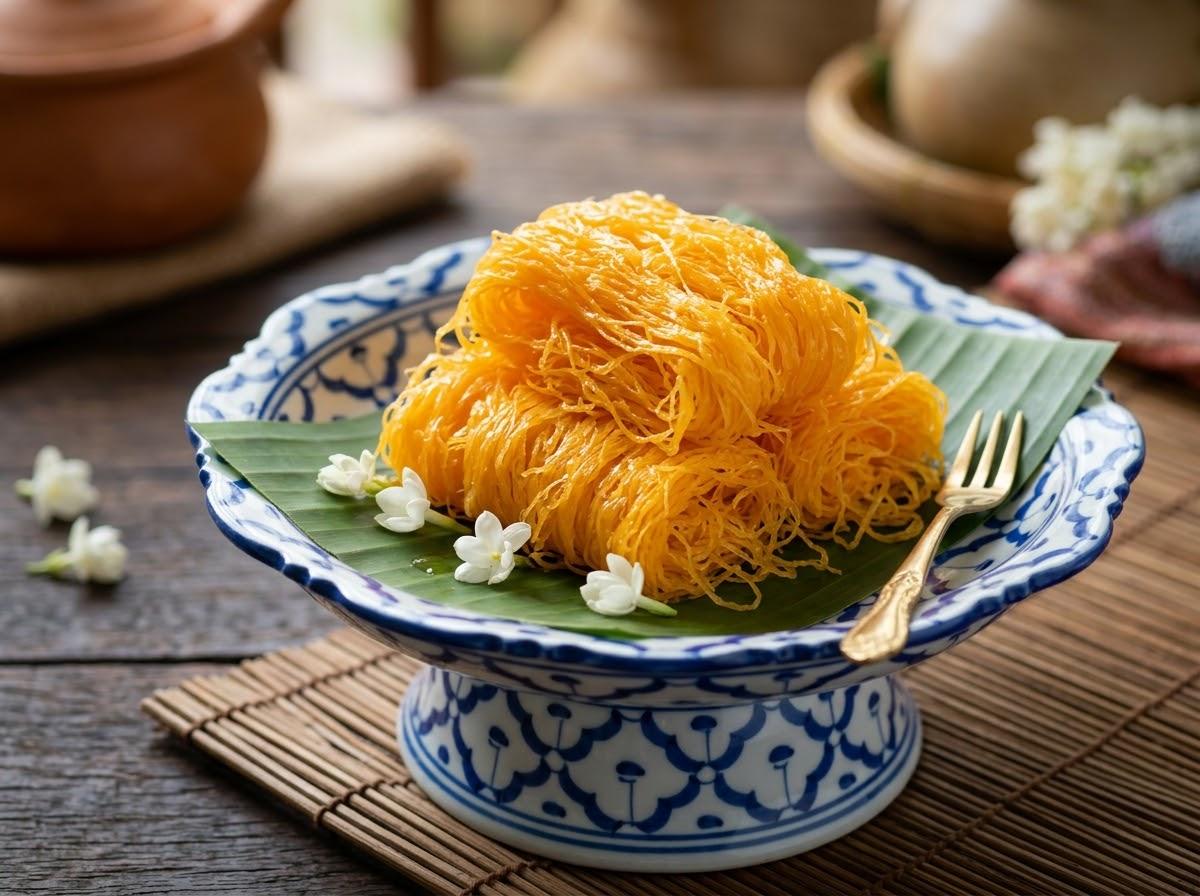
Foi thong means "golden threads." Cooks create it by pulling thin strands of egg yolk through sugar syrup, producing shiny yellow threads that resemble fine gold.
Taste and texture: Foi thong is very sweet, rich, and aromatic. The soft, silky strands release syrup when you bite them.
Foi thong is popular at weddings, religious ceremonies, and festive occasions. Its golden color is associated with prosperity and good fortune, while its Portuguese roots reflect the way outside influences entered Thai royal and festive cooking.
Try a small portion if you do not usually enjoy very sweet desserts. Foi thong is considerably sweeter than mango sticky rice or coconut ice cream.
Roti Sai Mai
![Roti sai mai thin pancake with colorful spun sugar threads in Ayutthaya]
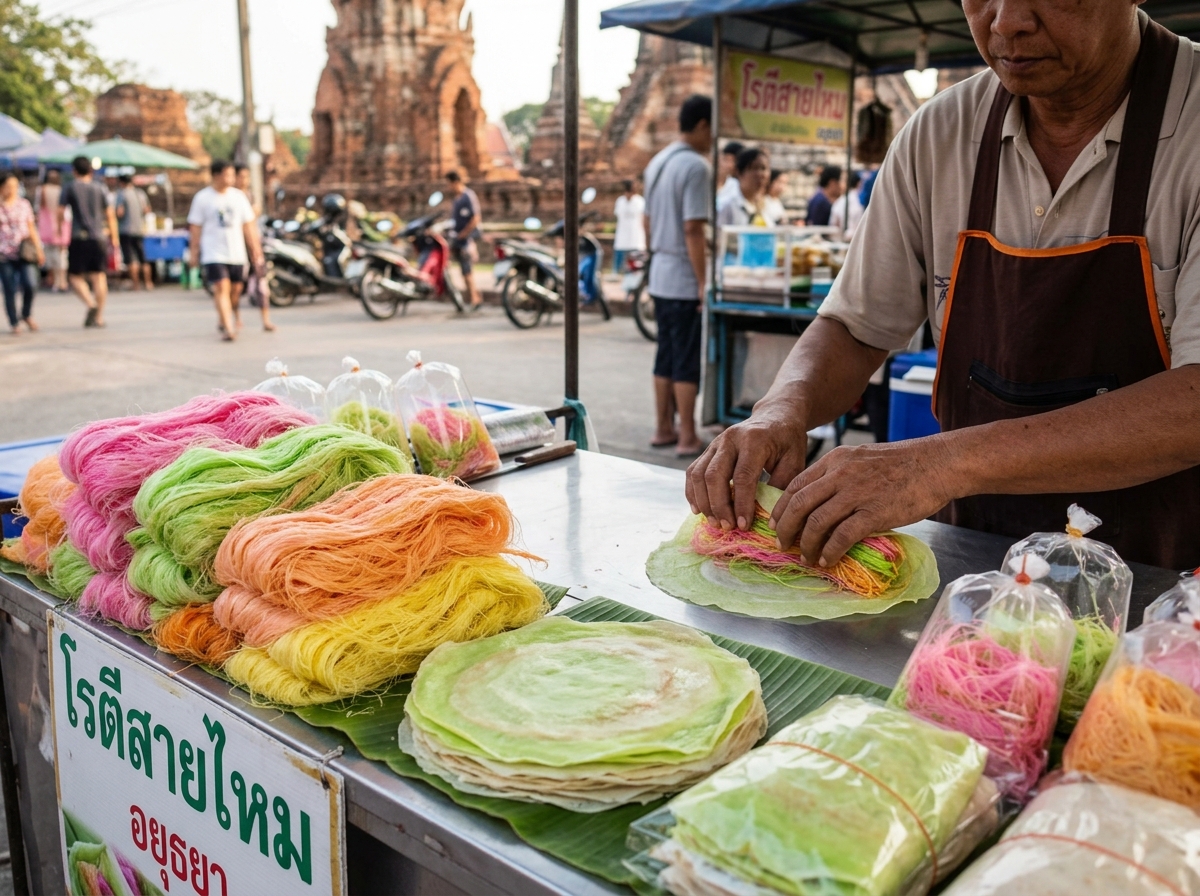
Roti sai mai is strongly associated with Ayutthaya, the former capital of the Kingdom of Siam. It combines a thin, soft pancake with colorful spun-sugar threads similar to candy floss.
Taste and texture: The sugar is sweet and melts quickly, while the pancake has a mild or slightly salty flavor. You normally roll the pancake around the sugar yourself, making it a fun activity for families and children.
Ayutthaya markets and tourist areas are good places to look for roti sai mai. Do not squeeze the roll too tightly because the sugar threads can stick together.
Fried Banana
![Golden fried banana fritters served hot at a busy Thai street stall]
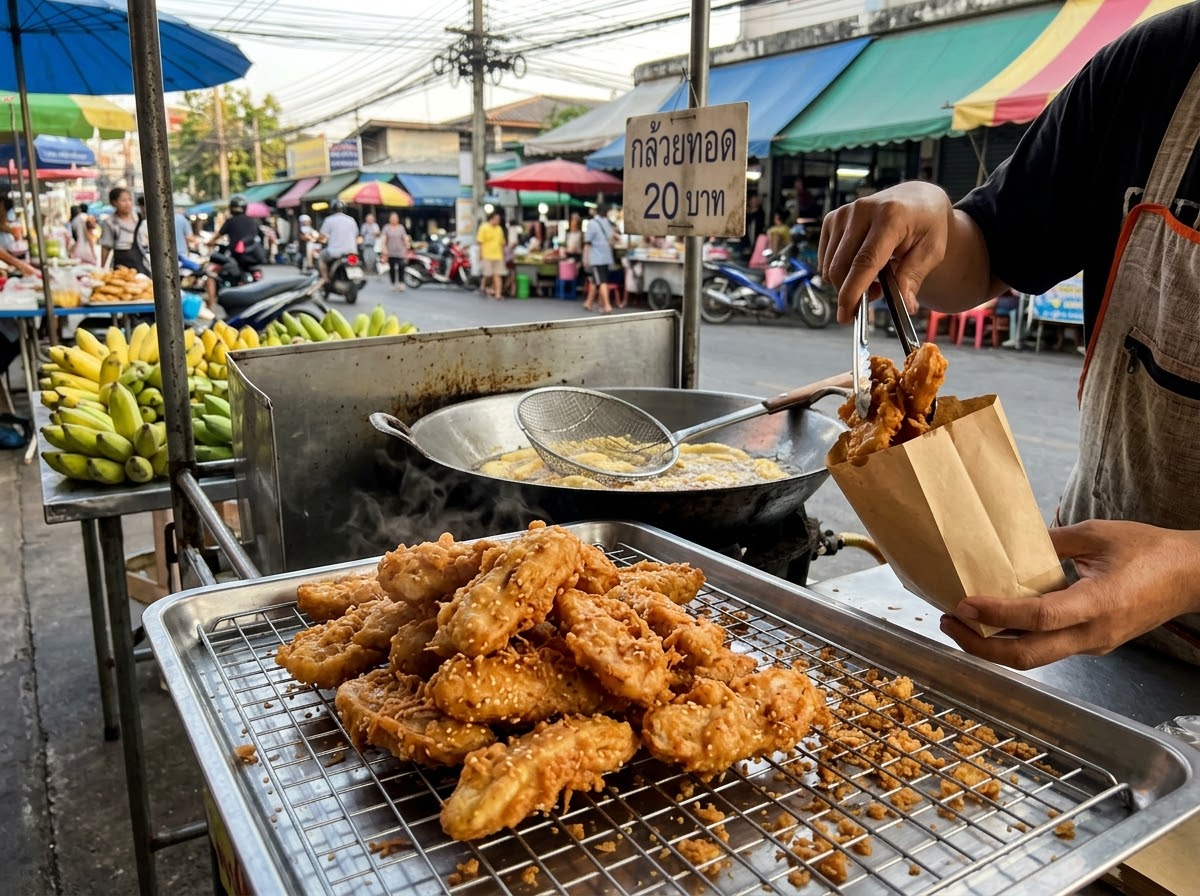
Fried banana is known as kluay kaek or kluay thot. Bananas are coated in batter made with ingredients such as rice flour, shredded coconut, sesame seeds, and sometimes tapioca flour before being deep-fried until golden.
Taste and texture: The outside is crunchy and nutty, while the banana inside is soft, warm, and sweet. Thai vendors often use small, firm nam wa bananas because they hold their shape during frying.
Fried bananas are inexpensive, filling, and easy to eat while walking. Buy them from a busy stall and eat them while hot for a crisp coating.
Sangkhaya with Sticky Rice
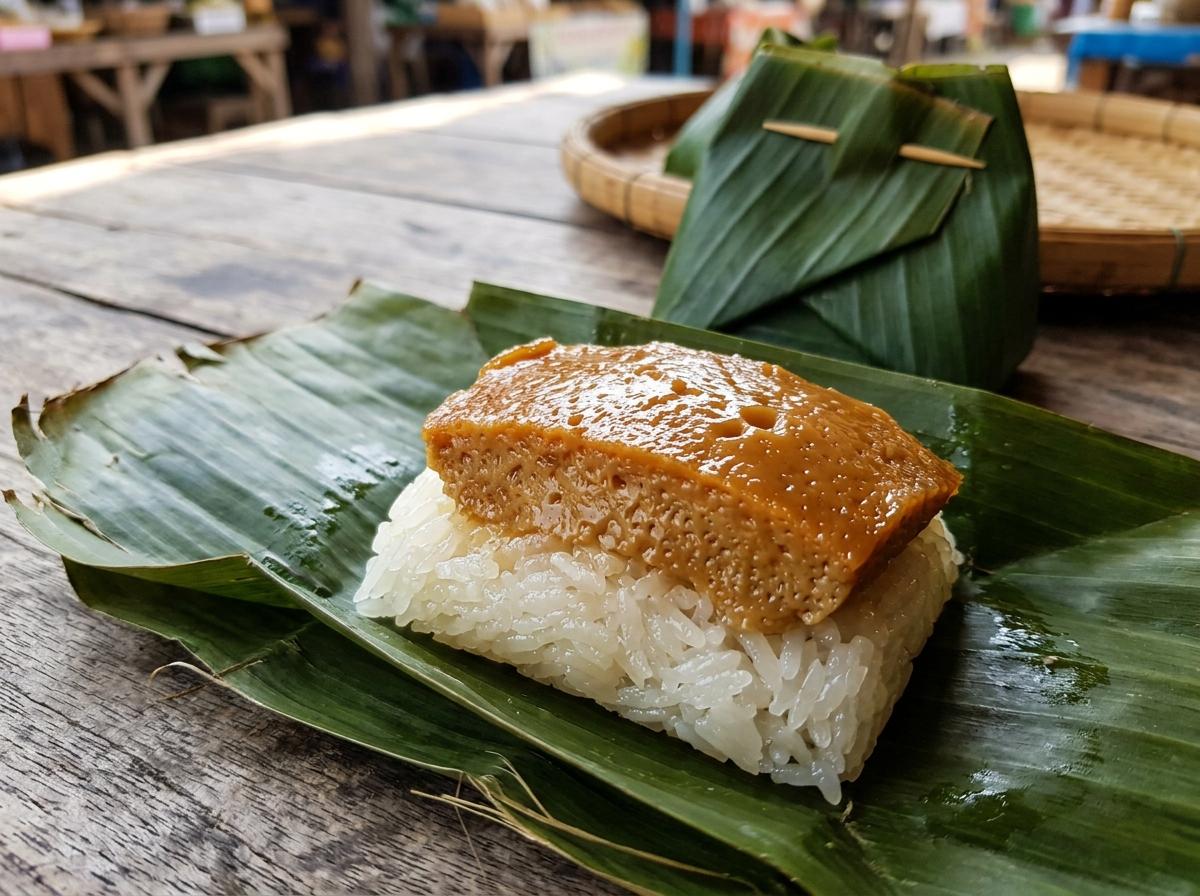
Sangkhaya with sticky rice, or khao niao sangkhaya, is made with glutinous rice topped by rich egg-and-coconut custard. It is often wrapped in banana leaves, which makes it convenient to carry while exploring.
Taste and texture: The custard is sweet, creamy, and smooth, while the sticky rice has a mild salty balance. Choose a freshly steamed piece with a glossy, set custard rather than a watery layer.
Sangkhaya is suitable for breakfast, a mid-morning snack, or a filling dessert, and you can ask for "khao niao sangkhaya" when ordering. It is among the traditional egg-based Thai sweets associated with the Ayutthaya era.
How to Choose Thai Street Desserts
Busy stalls usually have higher turnover, which can mean fresher food and more reliable quality. Fried items such as khanom krok and fried bananas taste better when eaten immediately.
Start with mango sticky rice, coconut ice cream, or fried bananas if you are new to Thai sweets. Foi thong and roti sai mai can be extremely sweet, so small portions make it easier to sample several options.
Check ingredients if you have allergies because Thai desserts may contain coconut, egg, peanuts, wheat, shrimp, or fish sauce. Many small vendors prefer cash, although larger markets and malls may accept digital payments.
Avoid leaving coconut-milk or egg-based desserts in the sun because they can spoil quickly in hot weather. If you have a sensitive stomach, try new desserts separately and drink bottled or sealed water alongside very sweet foods.
Where to Find Thai Desserts in Thailand
Night markets are useful for dessert hopping, especially if you want to compare coconut ice cream, fried bananas, khanom krok, and roti sai mai. Fresh markets, roadside stalls, food courts, and dessert shops also offer many choices.
Ayutthaya is the place to focus on if you want to try roti sai mai and learn more about traditional Thai sweets. For savory street food as well, read our guide to 25 must-try Thai dishes.
For wider planning, see these Bangkok travel planning tips and the Thailand travel guide.
Want help planning this trip? Browse AsiaBuddy's Thailand tour packages.
Frequently Asked Questions
What are the common Thai desserts for travelers?
Mango sticky rice, coconut ice cream, fried bananas, and khanom krok are common choices for travelers. They are widely available and offer different temperatures and textures.
Which Thai dessert suits newcomers?
Mango sticky rice is a simple starting point because it combines ripe fruit, coconut, and sticky rice without spicy ingredients. Coconut ice cream and fried bananas are also approachable choices.
Which Thai dessert is connected with Ayutthaya?
Roti sai mai is strongly connected with Ayutthaya and is commonly sold around local markets and tourist areas. Khanom buang and foi thong also reflect older Thai dessert traditions linked to the Ayutthaya period.
How can you ask for less sweetness in Thai?
Say "mai wan mak" when ordering. The phrase means "not too sweet" and can help when buying desserts with syrup or sugar fillings.
What should travelers check before buying Thai desserts?
Look for covered ingredients, clean cooking areas, and steady customer flow. Ask about ingredients if you have allergies, and avoid desserts that have been sitting uncovered in the heat.
More Photos
More from Thailand Travel

Thailand Year-End Flights 2026: What TAT Support Means
Thailand is using emergency funds to support year-end flights. See what the TAT plan means for fares, festival trips and...

Lamphun Lantern Festival 2026 Dates and Visit Guide
The Lamphun lantern festival 2026 runs from October 1 to November 30. Get the key dates, parade day, temple etiquette an...

Siam Amazing Park Reopening in Bangkok on November 19
Siam Amazing Park is reopening in Bangkok on November 19, 2026. See which areas open, which rides stay closed, and what...
Share this post
AsiaBuddy Team
Local experts helping travelers explore Southeast Asia with confidence — trusted guides, curated tours, and real destination knowledge.