Thailand Etiquette Tips: What Visitors Should Know
Use these Thailand etiquette tips for temples, the wai greeting, shared meals, tipping, cash and royal respect, so you can travel with confidence.
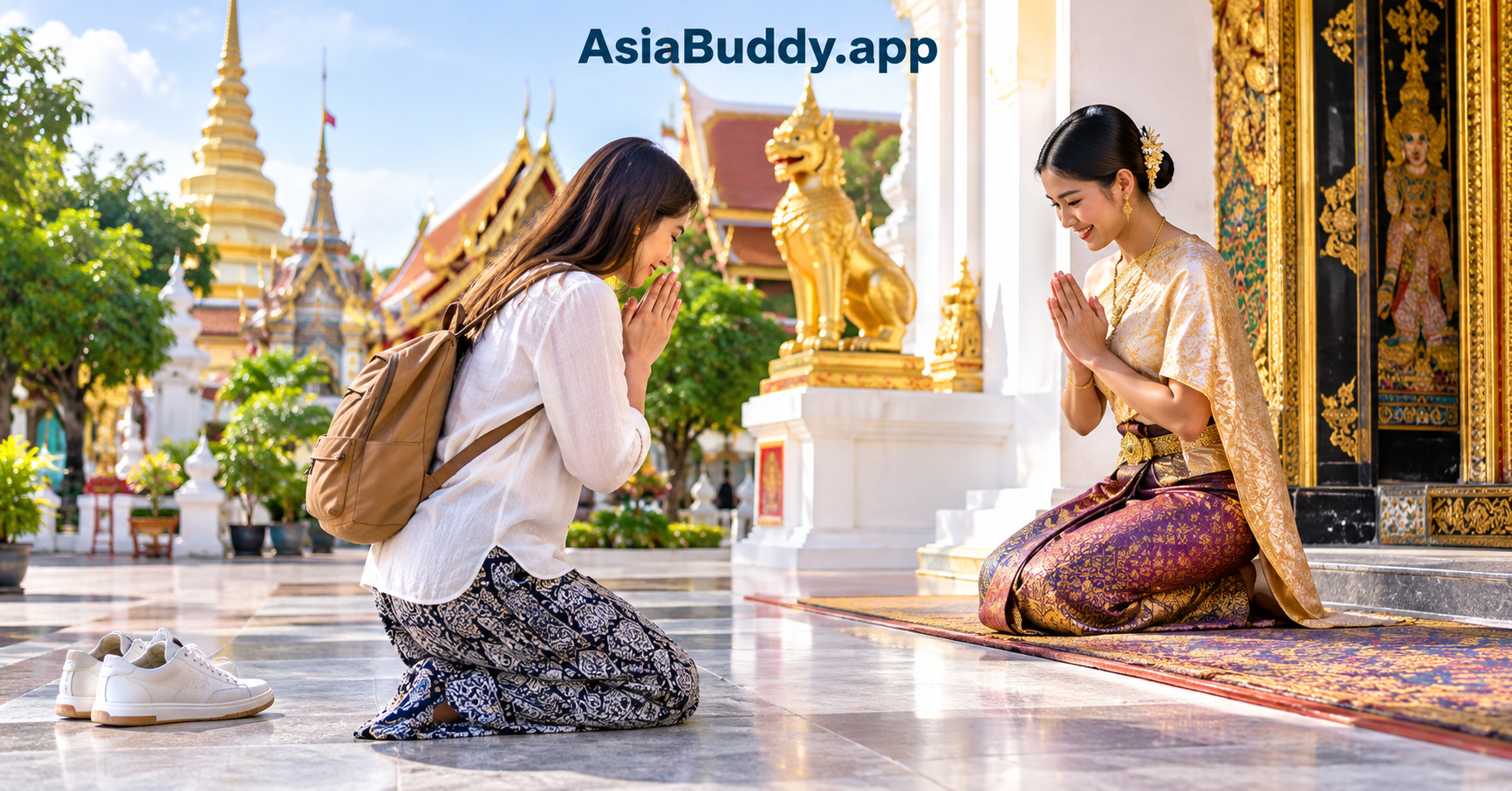
Thailand is easy to enjoy, but a few local customs can make the difference between a smooth visit and an awkward moment. These Thailand etiquette tips cover the wai greeting, temple dress, head and feet customs, shared meals, tipping, cash, and respect for the royal family.
Explore Thailand Tours
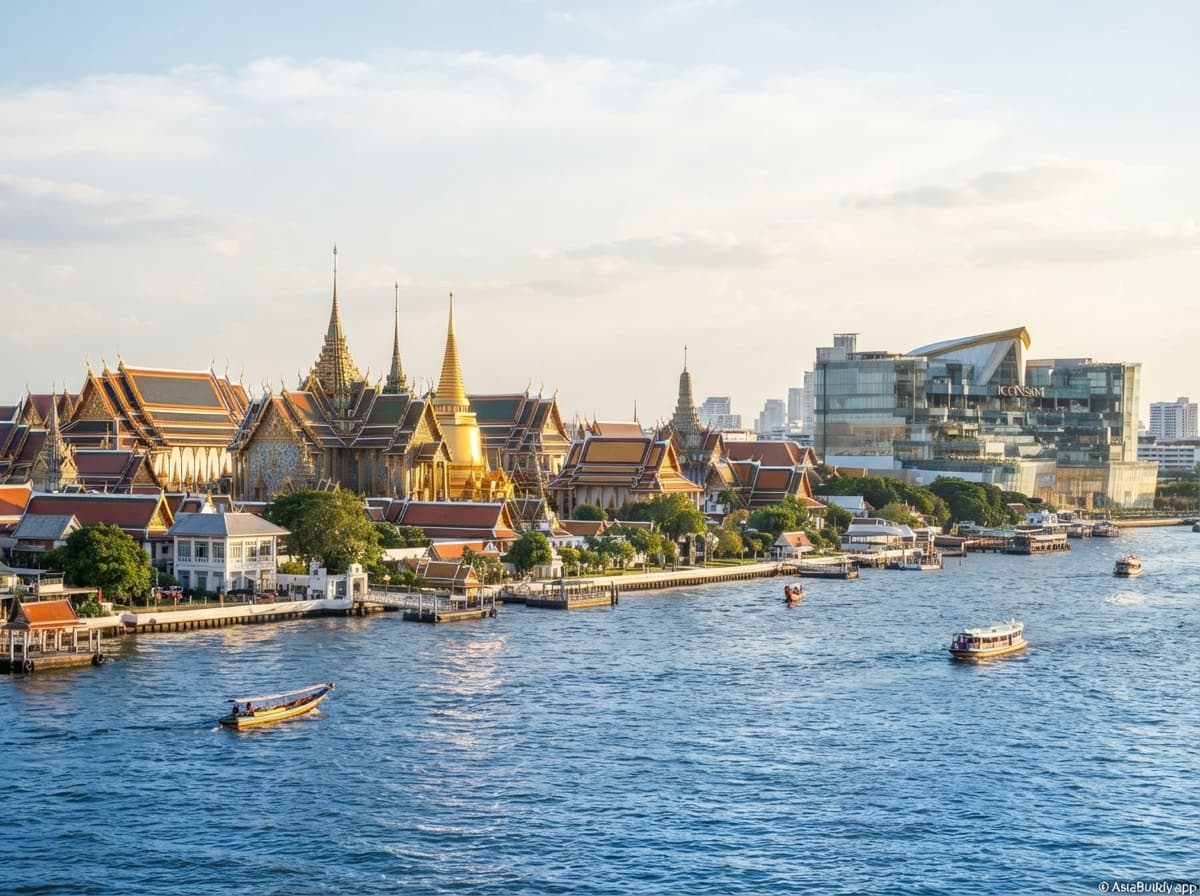
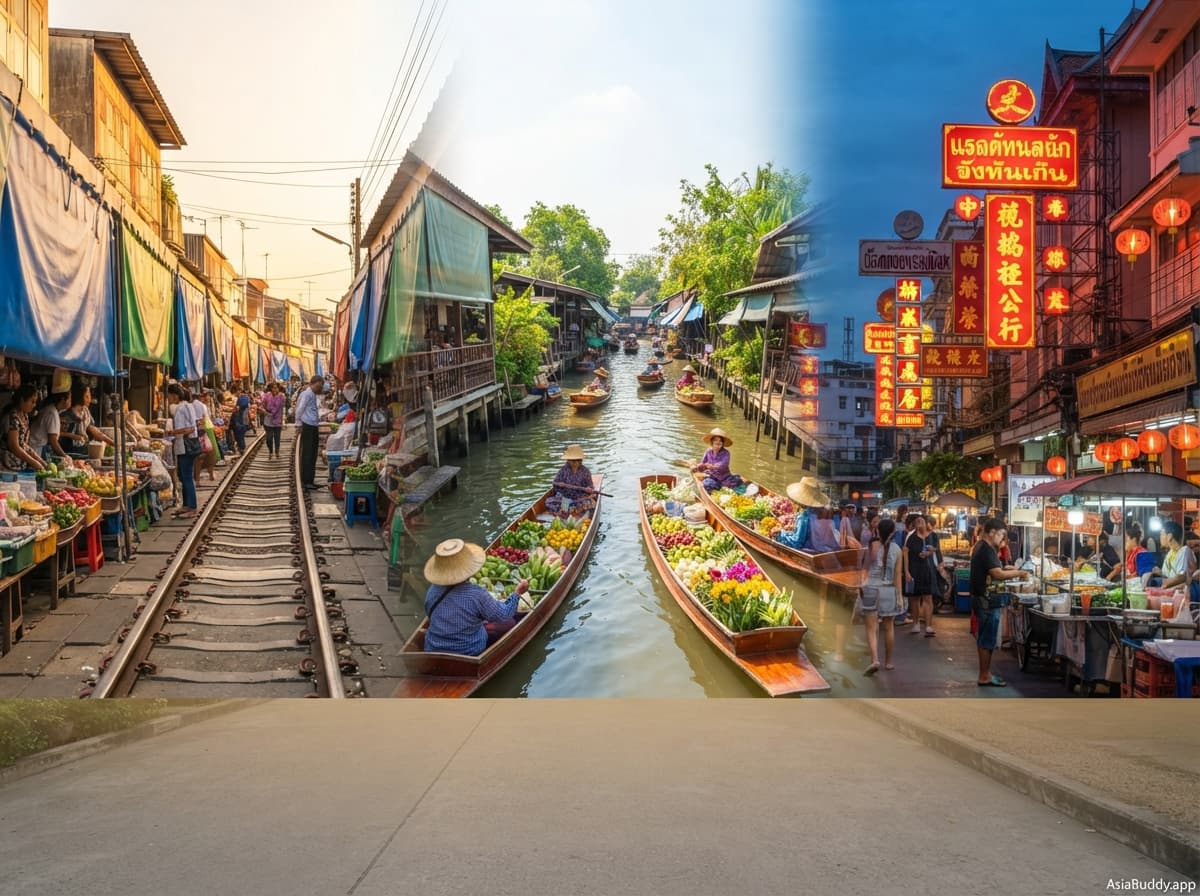

Use this guide before you visit temples, markets, and restaurants. For more planning help, read our Thailand travel mistakes to avoid guide too.
What Are the Main Thailand Etiquette Tips?
The key Thailand etiquette tips are to greet people respectfully, dress modestly at temples, avoid pointing your feet at people or Buddha images, use a serving spoon for shared food, and speak carefully about the royal family. Carry some cash for street food and markets, and follow the local lead when you are unsure.
Why Head and Feet Matter in Thailand
![A visitor sits respectfully on a Thai temple floor with feet tucked beside them]
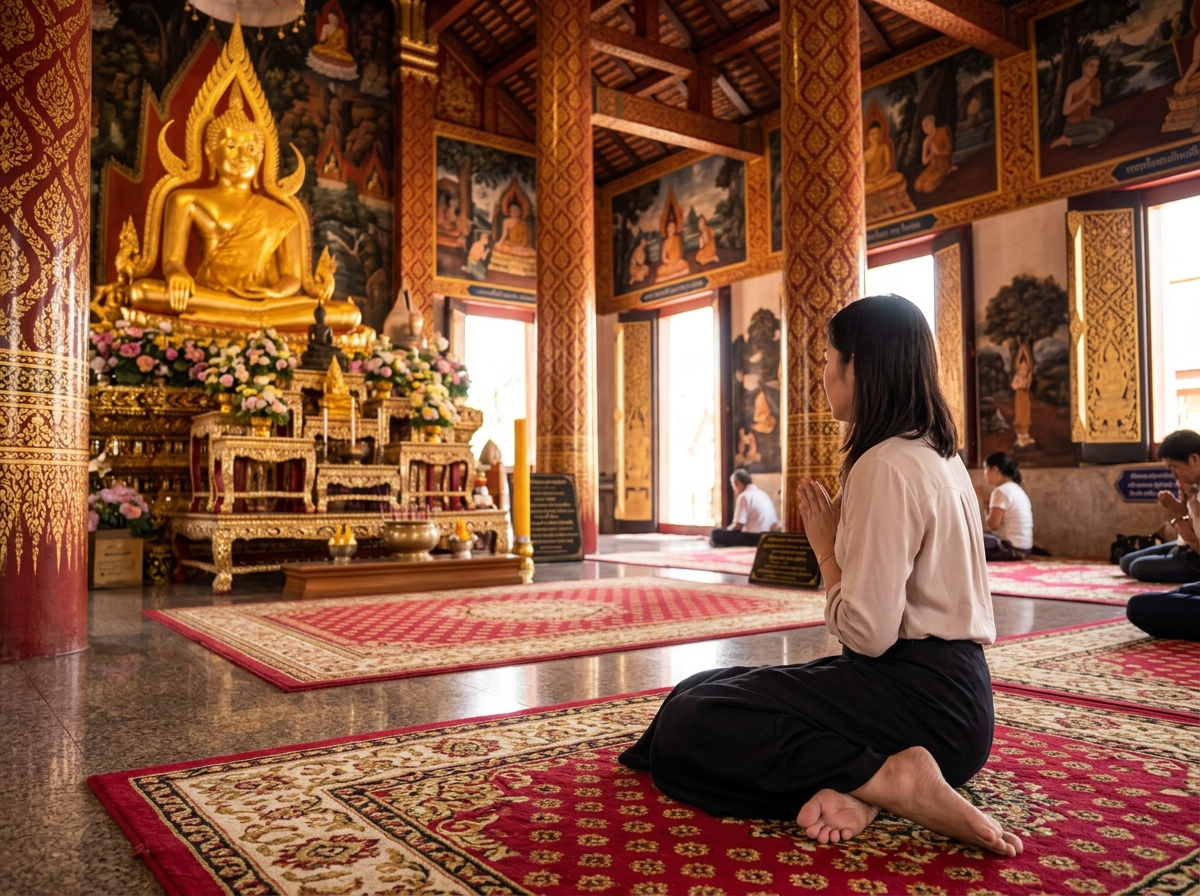
Thai culture often follows the idea of a high head and low feet. The head is treated as the highest part of the body, while the feet are treated as the lowest, so actions involving either can carry more meaning than visitors expect.
Do not touch another person's head, including a child's head, even as a friendly gesture. Avoid passing objects over someone's head, and do not use your feet to open a door, move a bag, or point at a person. These habits are easy to keep once you know why they matter.
When you sit on the floor at a temple, keep your feet tucked to the side rather than pointing them forward. If someone is sitting on the ground, walk around them when possible instead of stepping over their legs.
Use the Wai Greeting Correctly
![A traveler and a Thai person greet each other with a polite wai gesture]
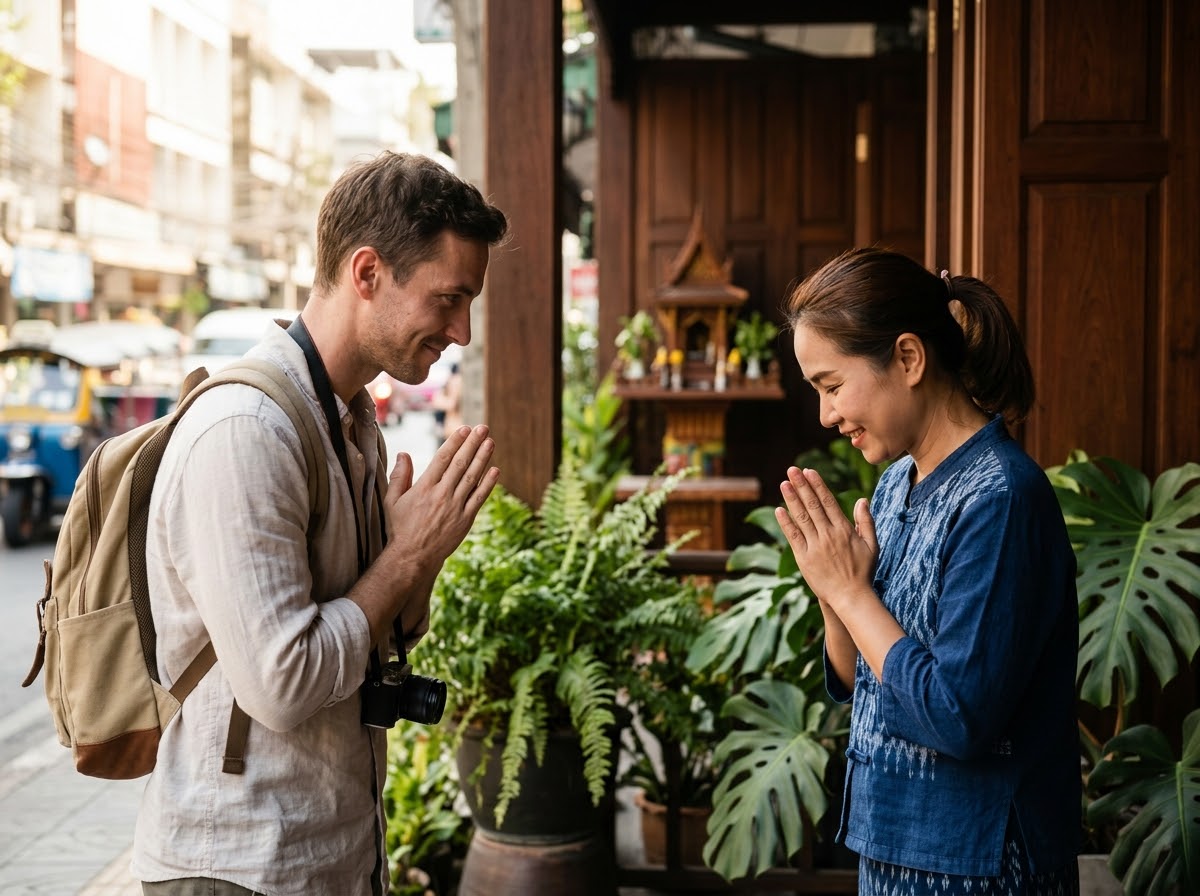
The wai is Thailand's traditional greeting. A person places both palms together near the chest and gives a slight bow.
As a visitor, you do not need to initiate a wai with everyone you meet. If a Thai person gives you a wai, returning it is a polite response.
Service staff, taxi drivers, and hotel workers may not expect a wai from a guest. A smile, a small nod, and a simple thank you are usually enough.
- •Return a wai: respond politely when someone greets you with a wai.
- •Use a nod for service staff: a smile and thank you work well in shops, taxis, and hotels.
- •Keep it relaxed: you do not need to master every formal variation as a visitor.
Follow Temple Rules in Thailand
![A traveler in modest clothing removes shoes before entering a Thai temple]
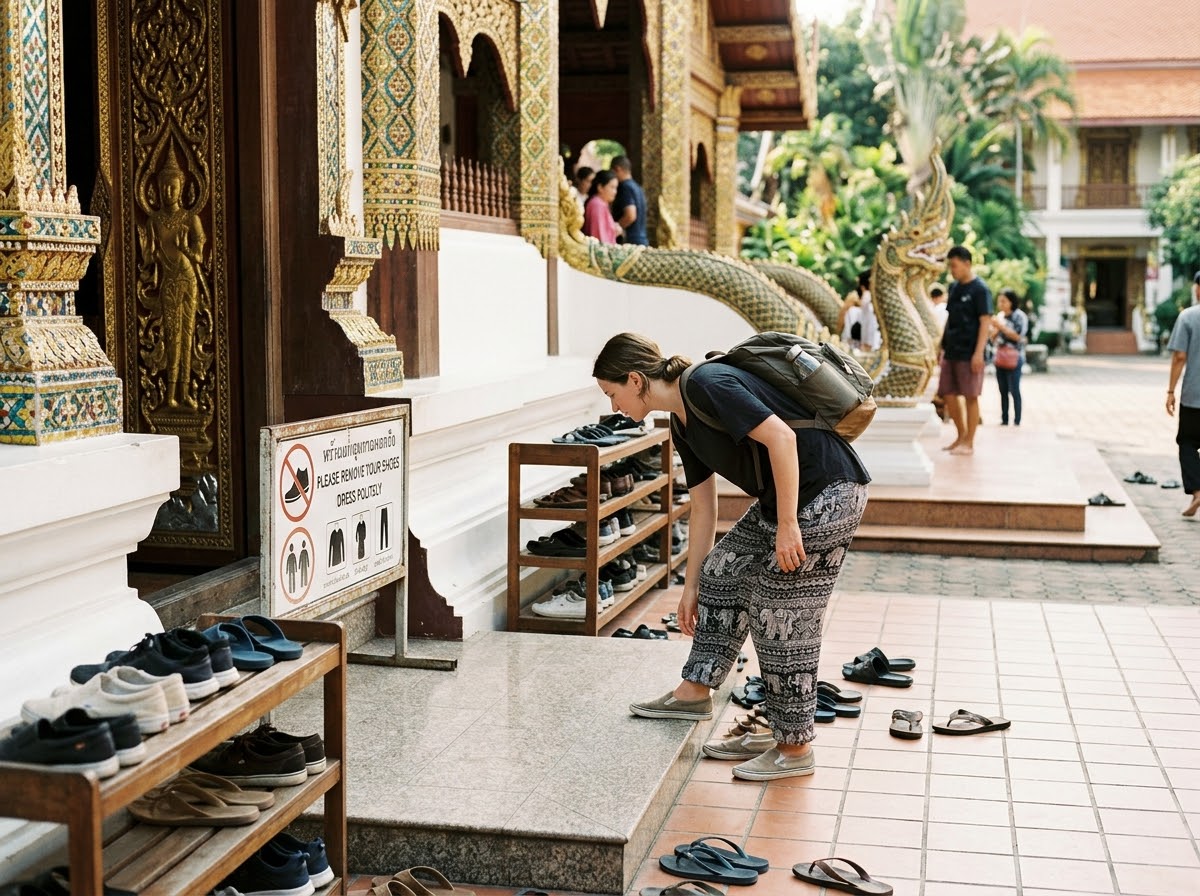
Temples are active religious sites, not only photo stops. Dress so that your shoulders and knees are covered before you enter a temple building.
Remove your shoes at the entrance and place them neatly where shoes are kept. Speak quietly, move calmly, and avoid blocking worshippers who are praying. Take photos carefully in areas where people are worshipping.
Do not point your feet toward a Buddha image. Do not climb on statues, pose disrespectfully for photos, or laugh loudly in front of Buddha images.
Women should avoid touching a monk directly. If you need to hand something to a monk, place it on a surface for him to pick up or pass it through another person.
Respect the Royal Family
![People stand quietly and still while the Thai royal anthem plays at an event]
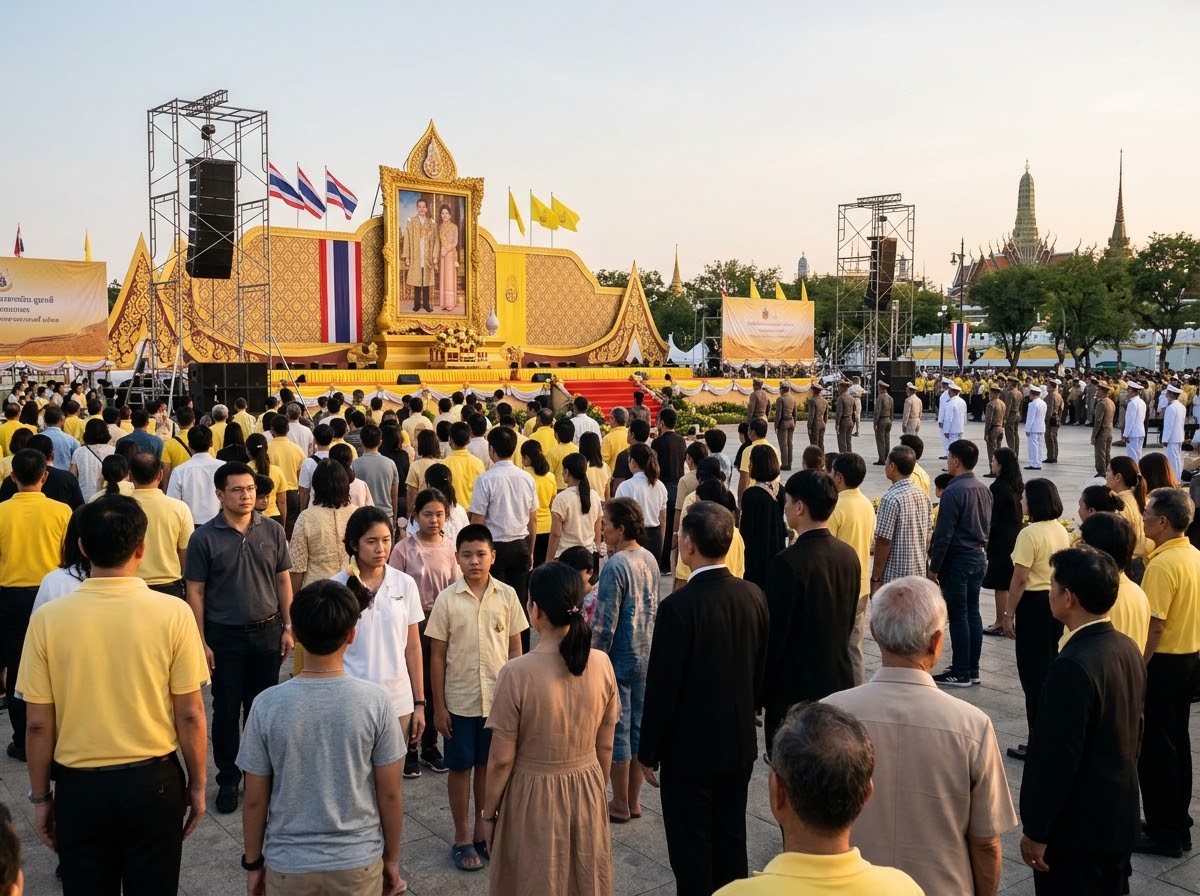
Thailand treats its monarchy with deep respect. Avoid jokes, criticism, or careless comments about the royal family in conversation or on social media.
Thailand's lese-majeste law can impose a prison sentence of 3 to 15 years for insulting the king, queen, heir apparent, or regent. This rule applies online as well as in person.
When the royal anthem or national anthem plays in public, stop talking and stand still. Following the people around you is an easy way to show respect, whether you are in a cinema, a transport station, or a public event.
Share Meals the Thai Way
![A shared Thai meal on a table with serving spoons and individual rice bowls]
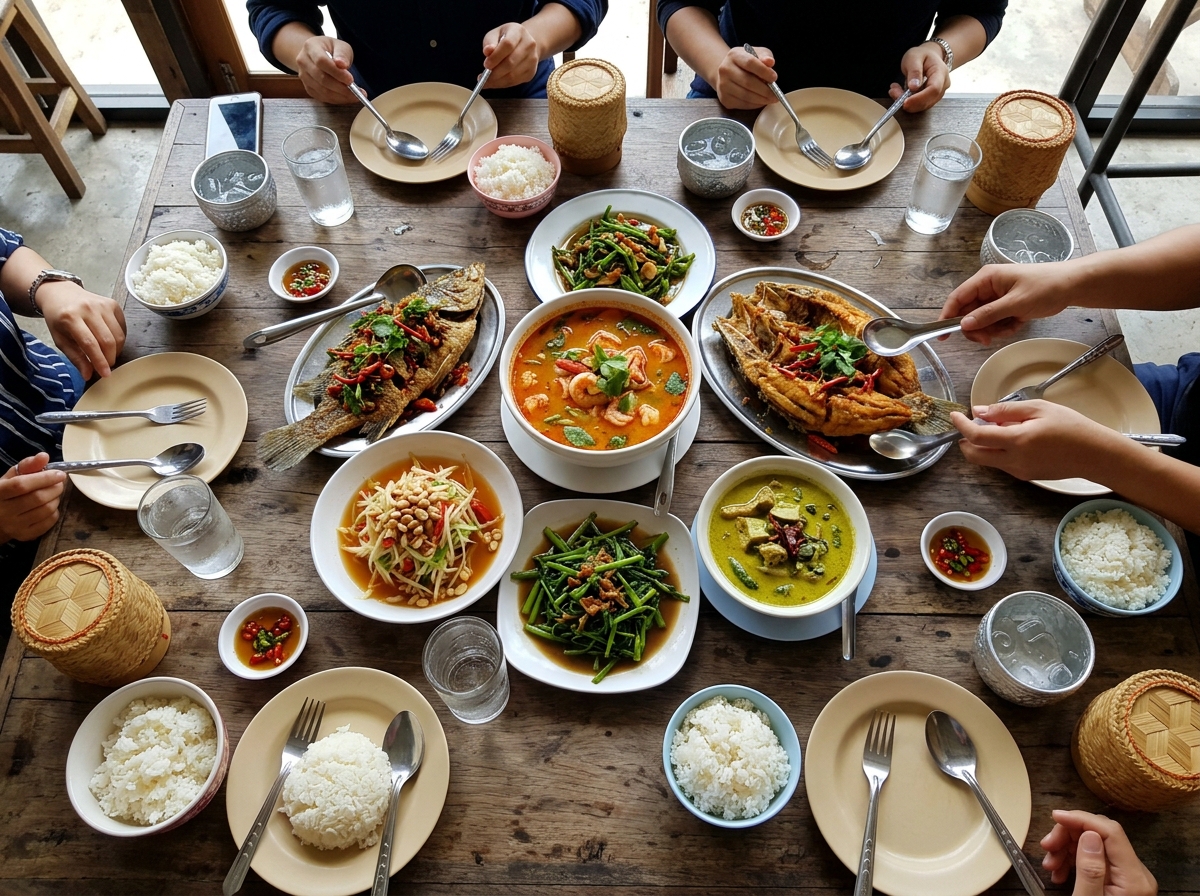
Thai dining is built around shared dishes. A table may include rice, a curry, a stir-fry, soup, and dipping sauces that everyone takes from together. This style makes it easy to try several flavors without ordering a separate plate for each person.
Use the serving spoon provided to take food from a shared dish, rather than using your own eating spoon or reaching across another person's plate. Do not take a large portion before others have served themselves. Take a little at a time so everyone can enjoy the meal.
The usual utensils are a fork in the left hand and a spoon in the right hand. Chopsticks appear with some noodle dishes, but follow the utensils placed on the table. If you are unsure, watch how the people around you use them.
Wait until the oldest person at the table starts eating when you are a guest in a private home. In a restaurant, simply follow the group and use the serving utensils. If you want to explore Thai food, our must-try Thai dishes guide is a useful starting point.
Tipping in Thailand
Tipping is not required in Thailand, but it is appreciated for good service. Many midrange and higher-end restaurants add a 10 percent service charge, so check the bill before adding more. A small tip works best when you pay in cash and can hand it directly to the person who helped you.
- •Street food and markets: tipping is optional.
- •Restaurants without a service charge: around 5 to 10 percent is a reasonable tip.
- •Hotels and spas: a small cash tip can be a kind gesture for helpful staff.
- •Cash tips: 20 THB or 50 THB notes are easy for staff to receive directly.
Carry Some Cash in Thailand
Cards and QR payments work in many hotels, malls, large restaurants, and tourist areas. Cash is still important at street-food stalls, night markets, local markets, and smaller shops in rural areas.
Keep 20 THB, 50 THB, and 100 THB notes separate in your wallet. Paying for a small bowl of noodles with a 1,000 THB note can be inconvenient for a small vendor, so ask for change when you exchange money or withdraw cash.
PromptPay QR payments are mainly designed for people with Thai bank accounts, so short-term visitors should not depend on them. Keep cash as a backup, especially outside major cities.
Learn a Few Thai Phrases
A few simple Thai phrases can make everyday interactions warmer. Thai people often appreciate visitors who try even a short greeting.
- •Sawasdee khrap/kha: hello.
- •Khop khun khrap/kha: thank you.
- •Mai phet khrap/kha: not spicy, please.
- •Phet nit noi: a little spicy, please.
- •Gep tang: the bill, please.
- •Mai ao: no, thank you.
At a street stall without a menu, pointing is normal. You can also say nueng for 1 item or song for 2 items.
Keep Public Behavior Calm
Thai culture generally values calm, gentle behavior. Raise your voice only when necessary, avoid public arguments, and keep affection modest in temples and family areas. A calm tone also helps in busy markets, transport hubs, and tourist areas.
Dress more conservatively at temples, government buildings, and rural communities than you might at a beach or nightlife area. A light shirt with sleeves and long pants or a long skirt is an easy choice.
If you make a mistake, apologize politely and adjust. Locals usually do not expect visitors to know every custom, but they notice respectful effort. Small gestures, such as removing shoes on time or lowering your voice in a temple, often matter more than perfect Thai language.
Plan Your Thailand Trip With Confidence
Good etiquette helps you enjoy temples, markets, street food, and local neighborhoods with fewer misunderstandings. Prepare modest temple clothing, small cash notes, and a few Thai phrases before you leave your hotel.
If Bangkok is on your route, our Bangkok travel planning tips cover the basics.
Want help planning this trip? Browse AsiaBuddy's Thailand tour packages.
Frequently Asked Questions
Do visitors need to wai everyone in Thailand?
No. Visitors do not need to initiate a wai with every person they meet. If someone gives you a wai, returning it politely is a good response.
Can women speak to monks in Thailand?
Yes, women can speak to monks, but they should avoid touching a monk directly. Hand items to a monk through another person or place them on a surface for him to collect.
Is tipping necessary in Thailand?
No, tipping is not required. It is appreciated for good service, and many restaurants already add a 10 percent service charge to the bill.
How much cash should I carry in Thailand?
Carry enough small notes for street food, local markets, taxis, and rural areas. Keeping 20 THB, 50 THB, and 100 THB notes handy is more practical than relying only on large notes.
More from Thailand Travel

Thailand Year-End Flights 2026: What TAT Support Means
Thailand is using emergency funds to support year-end flights. See what the TAT plan means for fares, festival trips and...
Lamphun Lantern Festival 2026 Dates and Visit Guide
The Lamphun lantern festival 2026 runs from October 1 to November 30. Get the key dates, parade day, temple etiquette an...

Siam Amazing Park Reopening in Bangkok on November 19
Siam Amazing Park is reopening in Bangkok on November 19, 2026. See which areas open, which rides stay closed, and what...
Share this post
AsiaBuddy Team
Local experts helping travelers explore Southeast Asia with confidence — trusted guides, curated tours, and real destination knowledge.