Bangkok BTS or MRT: Which Rail System Suits Your Trip
Choosing Bangkok BTS or MRT depends on your hotel location and daily routes. This guide compares both rail systems to help you pick the right one.
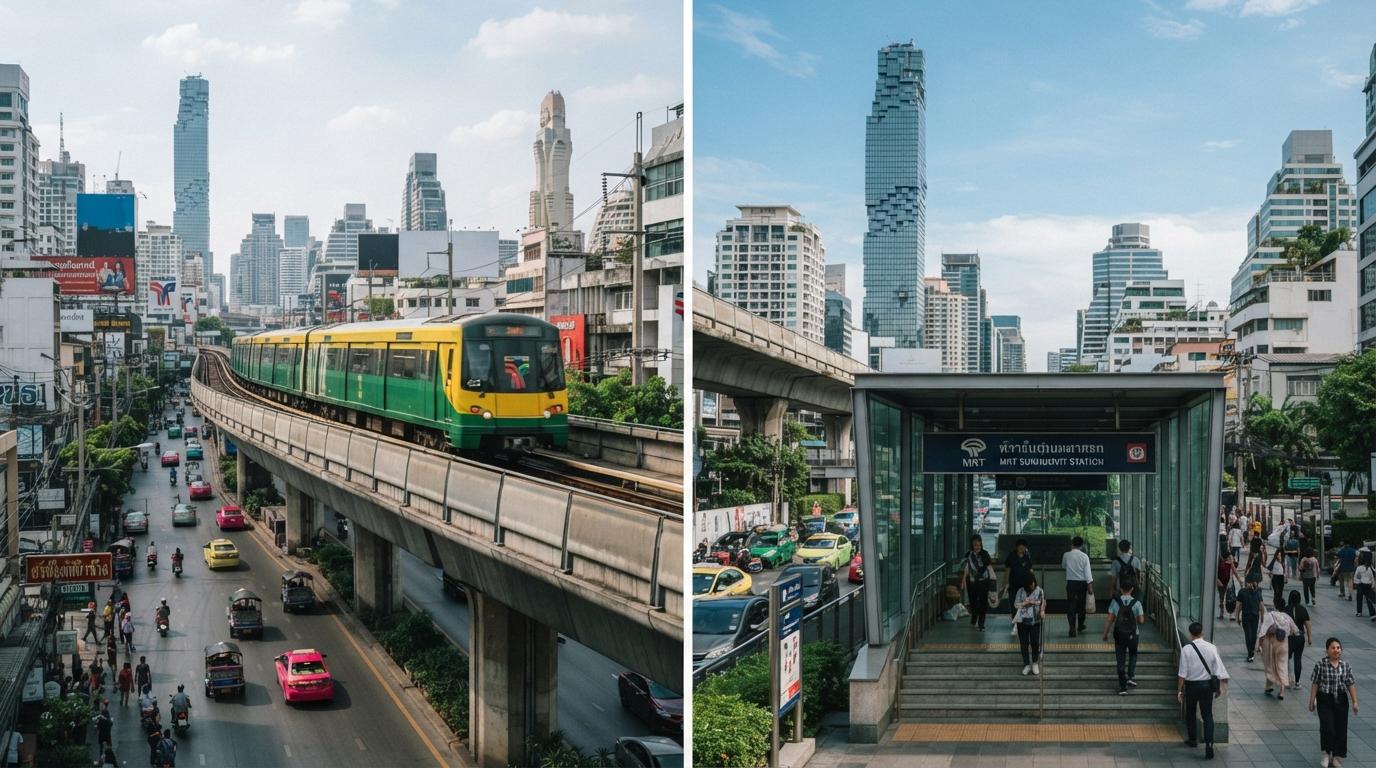
Bangkok's public transport network splits into two separate systems: the BTS Skytrain and the MRT metro. Deciding between Bangkok BTS or MRT starts with where you are staying, since each system covers different neighborhoods and connects to different attractions.
Explore Thailand Tours
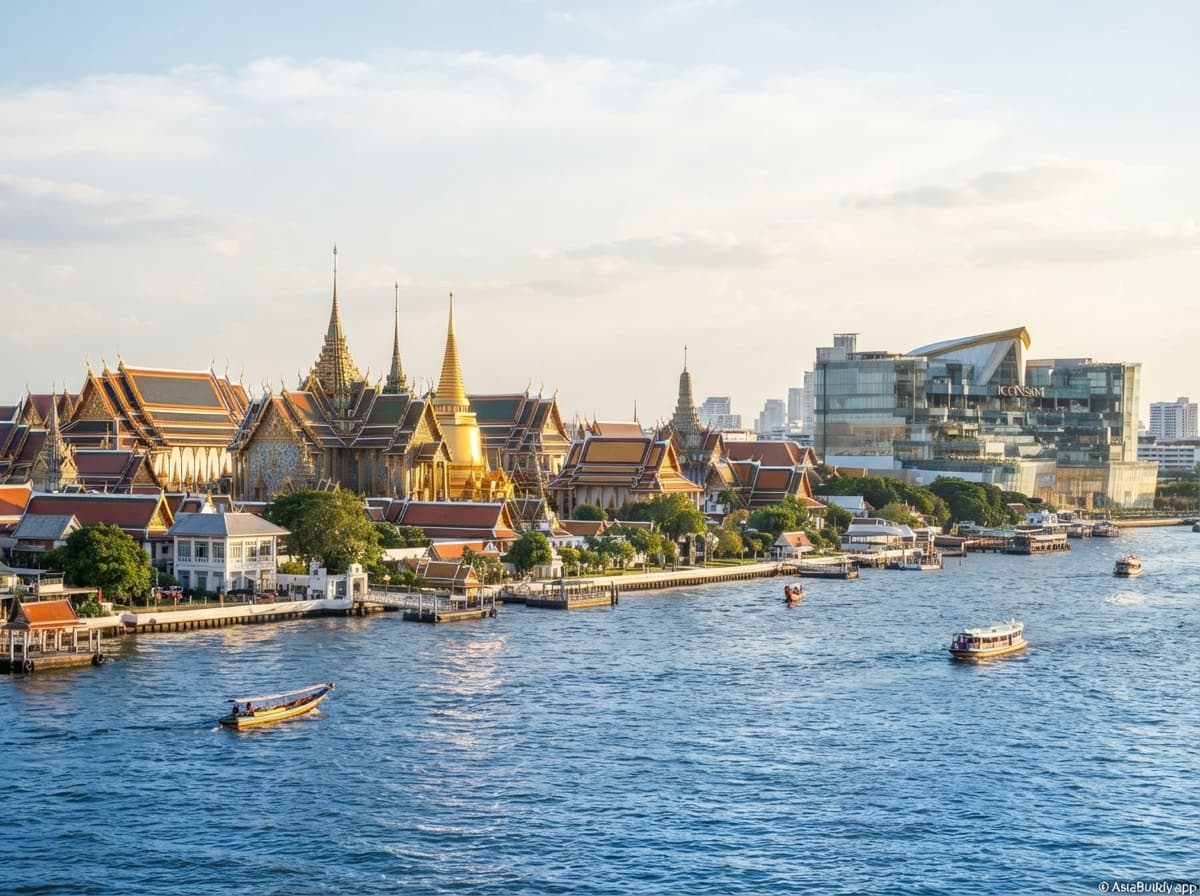

This guide covers routes, interchange stations, payment cards and fares for both networks, so you can plan your trip with confidence. For more first-time advice, see our Bangkok travel planning tips.
Choosing Between Bangkok BTS or MRT
For most visitors, deciding between Bangkok BTS or MRT comes down to location: choose BTS if your hotel sits near Sukhumvit, Siam or Silom, and choose MRT if you are staying near Rama 9, Ratchada, Chinatown or the Old City. Many trips end up using both systems, since the two networks meet at several interchange stations across the city.
Bangkok BTS or MRT Coverage by Area
Checking which rail lines run near your accommodation and daily destinations is the fastest way to decide. Each system covers different parts of the city, and your choice affects travel time and convenience throughout your stay.
BTS Skytrain for Sukhumvit, Siam and Silom
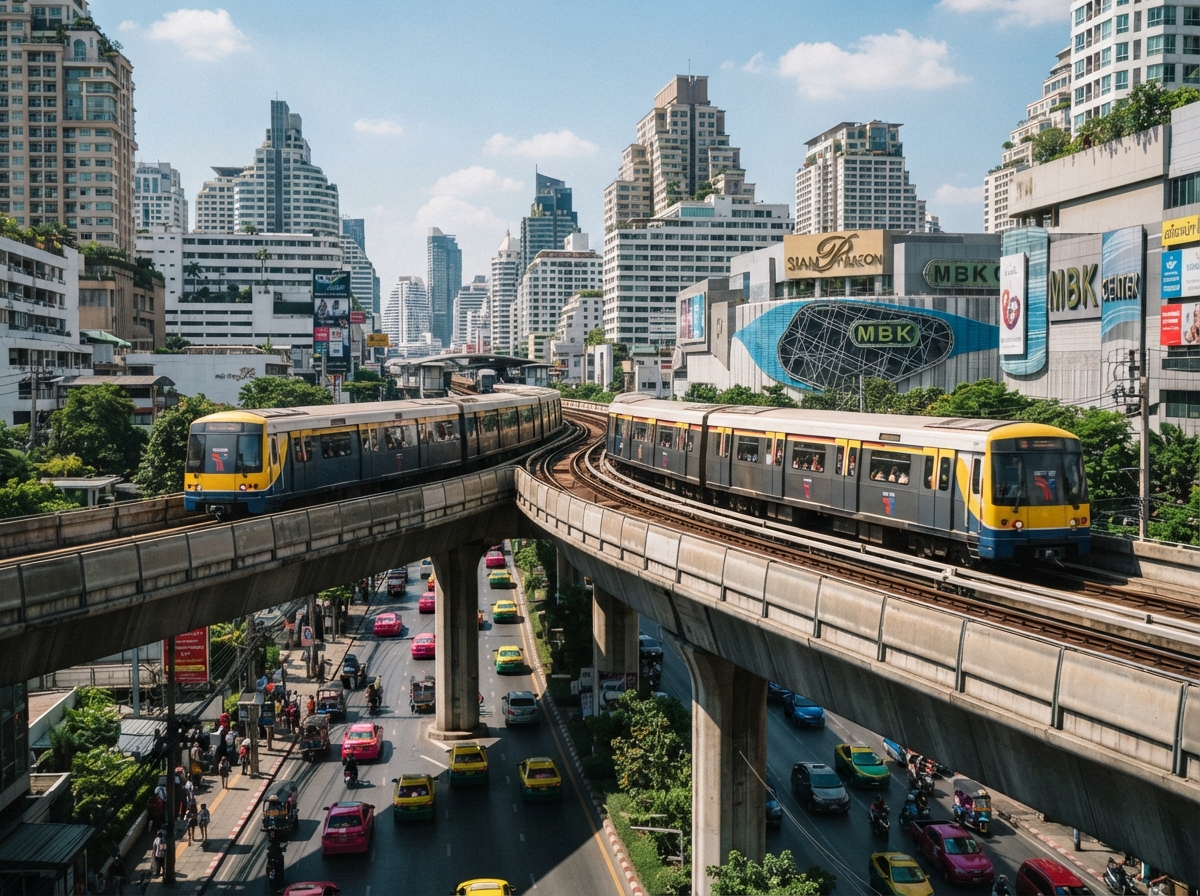
BTS Skytrain runs on elevated tracks above street level, with two main lines serving central Bangkok's commercial and shopping districts.
The Sukhumvit Line (light green) runs from Mo Chit near Chatuchak Market through Ari, Victory Monument, Phaya Thai (connects to Airport Rail Link), Siam (interchange with Silom Line), Chit Lom, Phloen Chit, Nana, Asok (interchange with MRT Sukhumvit), Phrom Phong (Emporium and EmQuartier malls), Thong Lo, Ekkamai and On Nut.
The Silom Line (dark green) runs from National Stadium near MBK Center through Siam, Sala Daeng (Silom Road), Chong Nonsi, Saphan Taksin (Chao Phraya River boat pier) and Bang Wa (interchange with MRT Blue Line).
BTS works best if you stay or work in Siam, Chit Lom, Phrom Phong, Thong Lo, Ekkamai, Ari, Victory Monument, Phaya Thai or Silom.
![BTS Skytrain trains running on elevated tracks above a Bangkok street]
MRT Metro for Rama 9, Ratchada, Chinatown and the Old City
MRT is Bangkok's underground metro system, serving areas that BTS does not reach, including newer business districts and historic neighborhoods.
The Blue Line runs from Lat Phrao through Ratchada, Huai Khwang, Thailand Cultural Centre, Rama 9, Phetchaburi (connects to Airport Rail Link at Makkasan), Queen Sirikit National Convention Centre, Lumphini, Sam Yan, Hua Lamphong (main railway station), Wat Mangkon (Chinatown) and Sanam Chai (near Old City and Grand Palace).
The Purple Line runs from Tao Poon to Khlong Bang Phai, serving Nonthaburi and Bang Yai areas northwest of central Bangkok. Bangkok is also expanding its rail network with the MRT Orange Line, which will connect eastern and western suburbs once fully open.
MRT works best if you stay or work in Rama 9, Huai Khwang, Ratchada, Chinatown, the Old City near Sanam Chai, or Nonthaburi and Bang Yai.
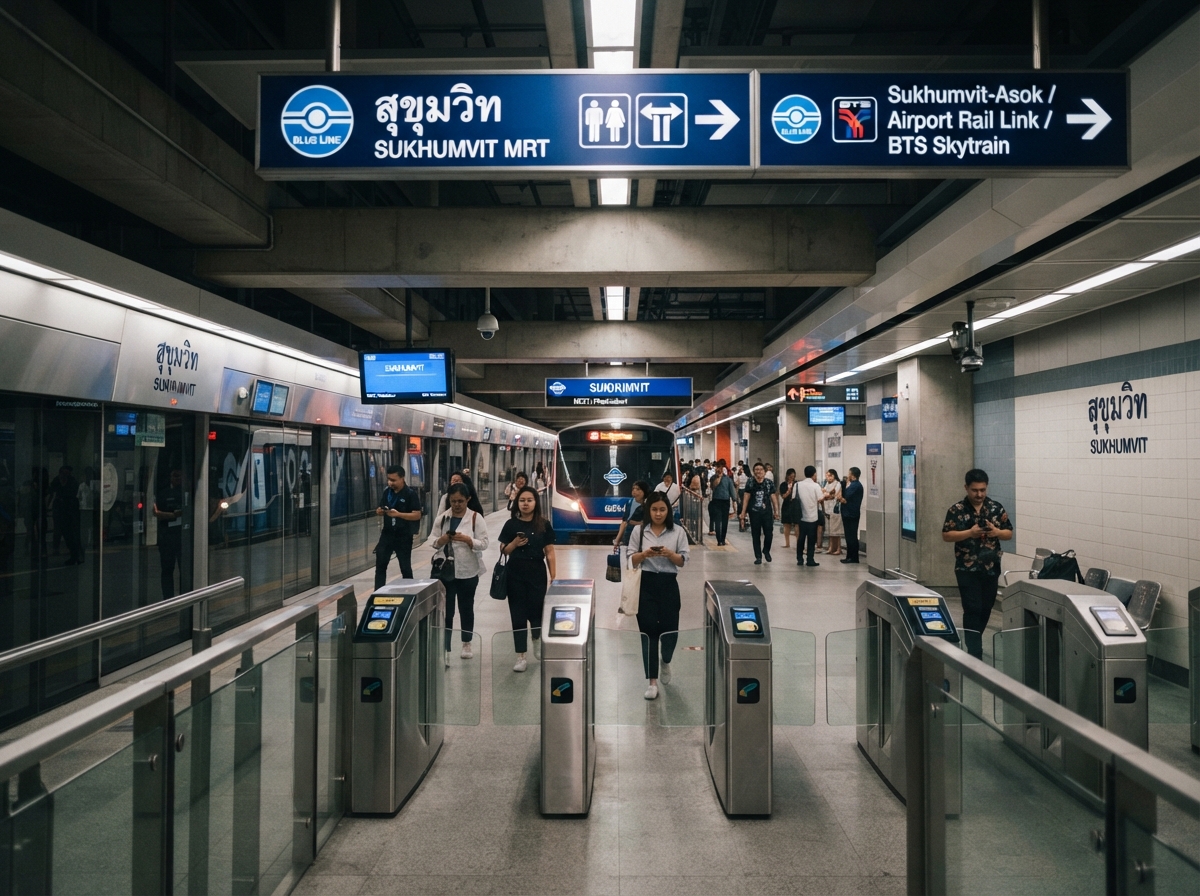
![MRT Blue Line underground station platform with modern fare gates and signage]
Interchange Stations Where BTS and MRT Connect
You can transfer between BTS and MRT at several stations, but you must tap out, walk to the other station and tap in again, since there is no through-fare integration yet.
Key interchange points include Asok (BTS) and Sukhumvit (MRT), Sala Daeng (BTS) and Si Lom (MRT), Mo Chit (BTS) and Chatuchak Park (MRT), Bang Wa (BTS) with MRT Blue Line, Samrong (BTS) with MRT Yellow Line, and Wat Phra Sri Mahathat (BTS) with MRT Pink Line.
For airport access, connect to Airport Rail Link at Phaya Thai from BTS, or at Phetchaburi from MRT with a short walk to Makkasan station.
Payment Methods and Fare Cards
Understanding how to pay for BTS and MRT rides helps you avoid confusion at fare gates, since the two systems use different payment methods.
BTS Uses Rabbit Card
For regular BTS riders, the Rabbit Card remains the best option, and it also works on the newer Yellow Line and Pink Line monorail routes.
MRT Stopped Accepting Old Stored-Value Cards
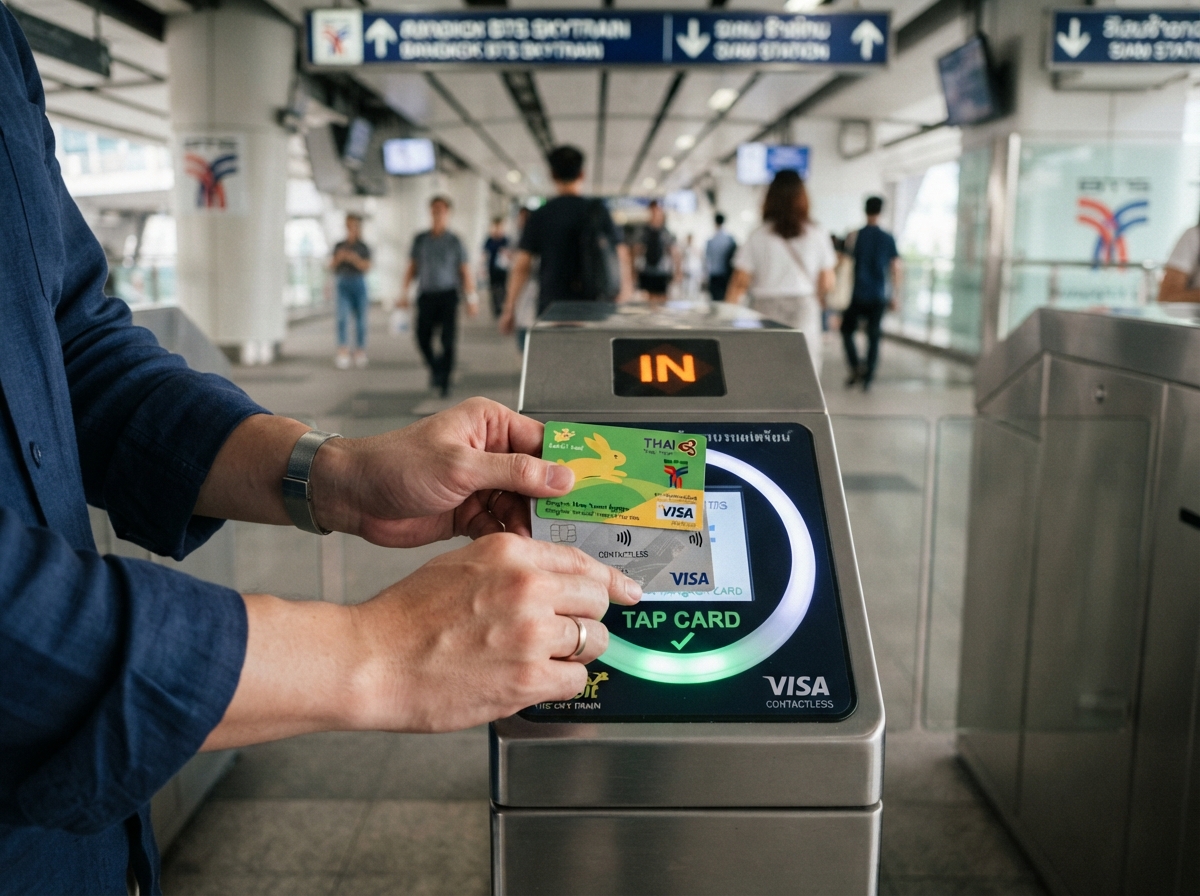
As of June 1, 2026, MRT no longer accepts its old stored-value cards, the MRT Card and MRT Plus, on the Blue Line and Purple Line. Current options are the MRT EMV Visa Card, which requires Bangkok MRT App registration with eKYC and a Thai phone number and suits residents and long-term visitors, and contactless Visa or Mastercard, which taps directly at fare gates and suits most tourists. Apple Pay and Google Pay NFC systems are not yet supported at MRT fare gates.
![Rabbit Card and a contactless payment card being tapped at a fare gate]
Fares and Costs
As of 2026, BTS Sukhumvit and Silom Line fares range from 17 THB to 65 THB depending on distance traveled, while MRT Blue Line and Purple Line fares range from 17 THB to 44 THB. MRT is slightly cheaper than BTS for comparable distances, but the gap is not large enough to be a deciding factor for most travelers. Both systems also sell single-journey tickets from ticket machines at each station, which suits travelers who only need one or two rides and do not want a stored-value card.
Getting From the Station to Your Final Stop
Rail systems alone will not take you everywhere. For the last part of your trip after leaving a station, consider walking, a motorcycle taxi, a regular taxi or a ride-hailing app such as Grab, Bolt or inDrive.
As of 2026, there is still no single integrated payment card, such as the proposed Mangmoom Card, that works across both BTS and MRT. You will need separate payment methods for each system based on your travel patterns.
Need a private car with a driver? AsiaBuddy arranges car rental and airport transfers with no deposit.
Frequently Asked Questions
Can I Use One Card for Both BTS and MRT?
No, BTS and MRT use separate payment systems. You need a Rabbit Card for BTS and either an MRT EMV Visa Card or a contactless bank card for MRT.
Which System Is Cheaper for Tourists?
MRT fares are slightly lower, ranging from 17 THB to 44 THB compared to BTS fares of 17 THB to 65 THB, but the difference is small for typical tourist journeys.
Where Can I Transfer Between BTS and MRT?
You can transfer at Asok and Sukhumvit, Sala Daeng and Si Lom, Mo Chit and Chatuchak Park, Bang Wa, Samrong, and Wat Phra Sri Mahathat. You must exit one system and enter the other separately.
Is BTS or MRT Better for Airport Transfers?
Both connect to Airport Rail Link. BTS connects at Phaya Thai station, while MRT connects via Phetchaburi station with a walk to Makkasan station.
More from Thailand Travel
Thailand Year-End Flights 2026: What TAT Support Means
Thailand is using emergency funds to support year-end flights. See what the TAT plan means for fares, festival trips and...
Lamphun Lantern Festival 2026 Dates and Visit Guide
The Lamphun lantern festival 2026 runs from October 1 to November 30. Get the key dates, parade day, temple etiquette an...
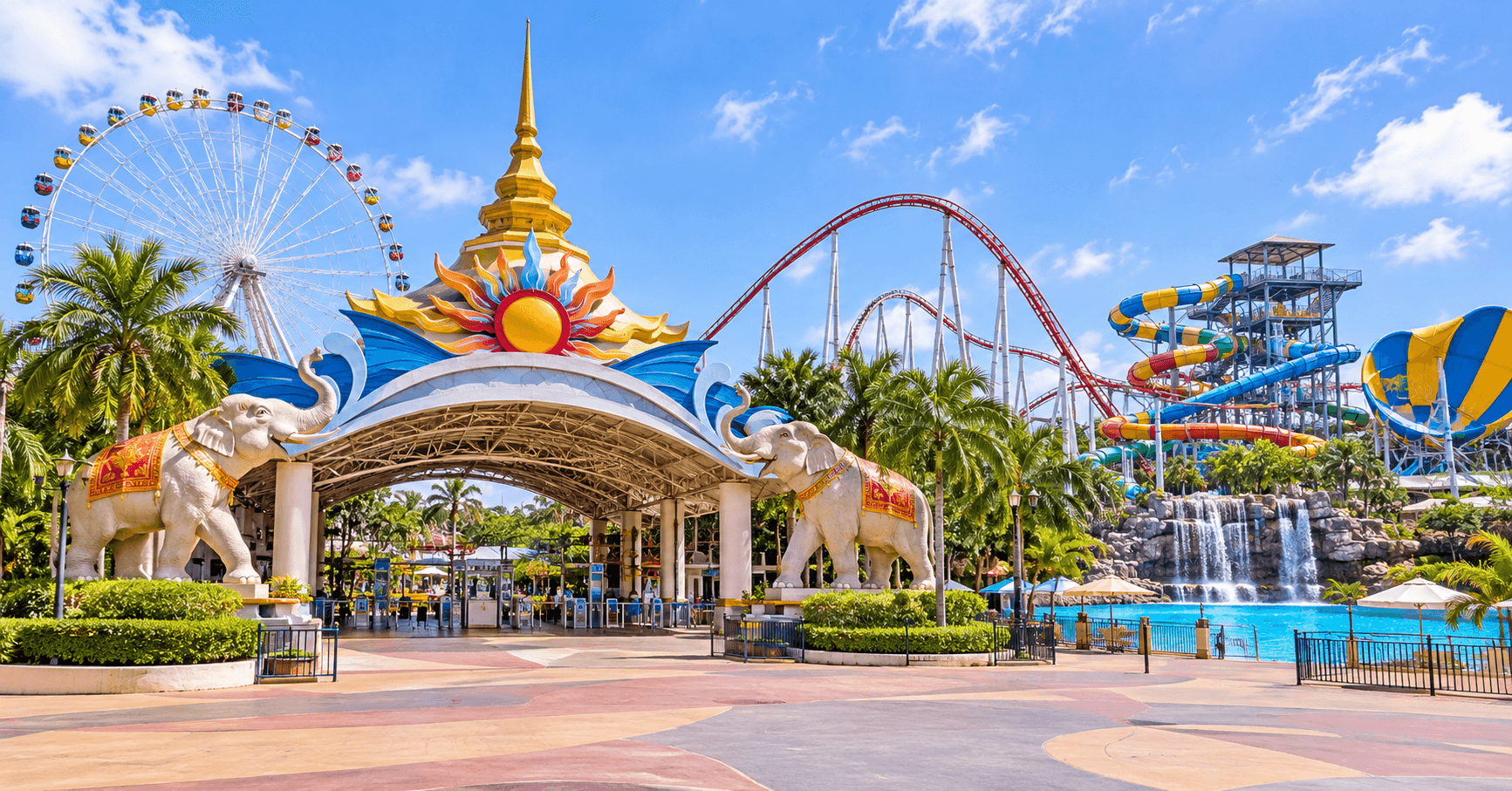
Siam Amazing Park Reopening in Bangkok on November 19
Siam Amazing Park is reopening in Bangkok on November 19, 2026. See which areas open, which rides stay closed, and what...
Share this post
AsiaBuddy Team
Local experts helping travelers explore Southeast Asia with confidence — trusted guides, curated tours, and real destination knowledge.